
From Estonia
Why is it that every time I hear the bell over Augustus’s door to his tobacco shop I feel comforted by its announcement of my presence, my existence? The heavy aroma of the tobacco soothes my senses rather than overwhelming them as, really, they should. More sensitive souls would turn and leave, but I am drawn in.
“Let me guess,” says Augustus. “You are out of Elfish Gold.”
“That is my favorite, but I also need an ounce of Angel’s Glory.”
“Quite so, but let me make two requests of you today. First, to sample my latest blend, Elven Quest, and second, to listen to a story.”
“I am always happy to try out your blends, but, Augustus, you have never told me a story before; I have always brought the story.”
Augustus smiles. “That I know. However, I have come across a tale that I like and think I should despise.”
“Well, let’s have to.”
We retreat to Augustus’s testing room, complete with comfy chairs, and light up.
“It’s Estonian,” he says, “called The Wood of Tontla.”
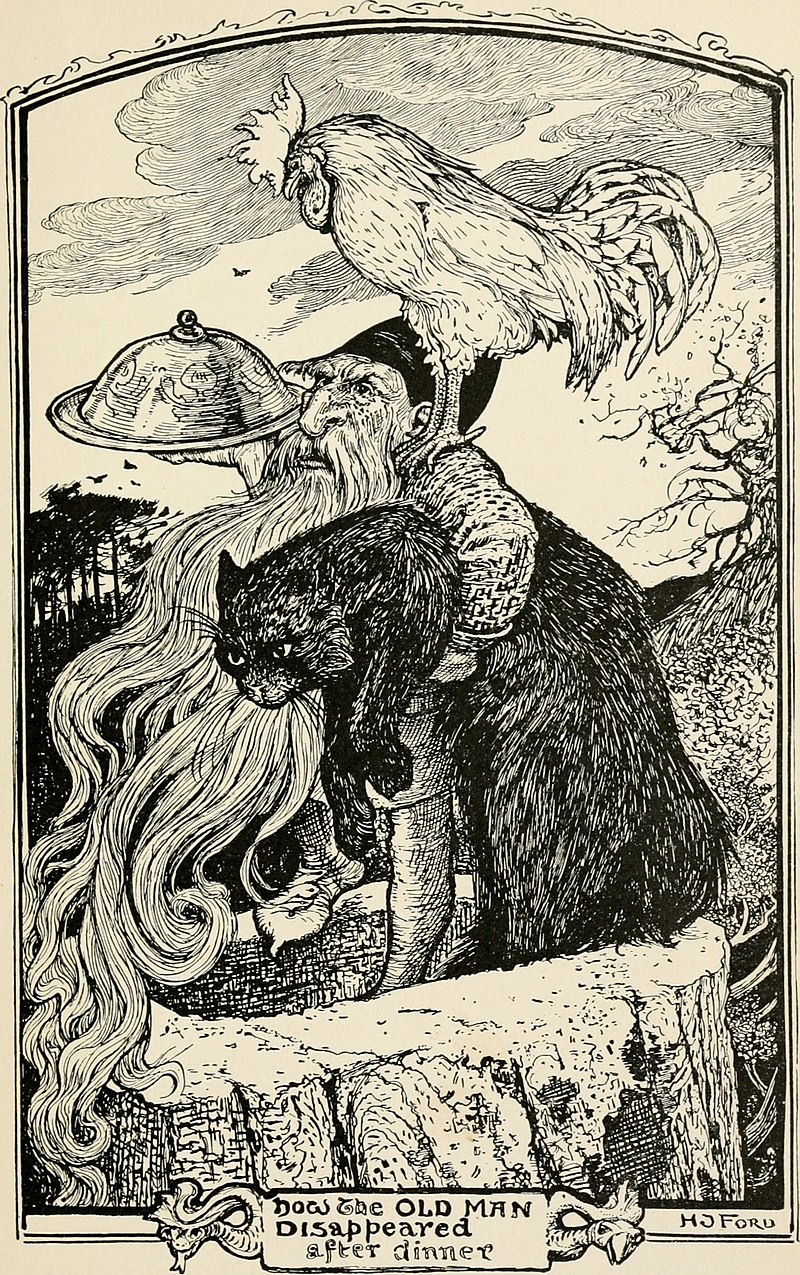
There once stood a forest in the middle of which many people claim to have seen an abandoned house, and in its environs were questionable gypsy-like beings. Tales told of a dwarf with a long beard and a huge black cat. When a woodsman tried to cut down a Tontla tree, it shrieked and bled.
Near Tontla, in a village, lived an unfortunate girl named Elsie . . .
“Hold on,” I say. “That first part sounded like a preamble. Fairy tales do not have preambles.”
“Quite right. Which is one of the reasons I should not like this story, but stay with me for a bit.”
Near Tontla, in a village, lived an unfortunate girl named Elsie whose mother had died, and her stepmother hated her.
One day she picked strawberries with a group of village children when they realized they had wandered too close to Tontla and ran away, but not Elsie, who did not fear the wood.
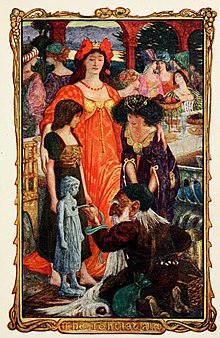
She was approached by a young girl dressed all in silk, who asked Elsie to be her friend and playmate, taking her into the wood. To Elsie’s wonder, they came to a magnificent garden in the center of which sat a grand house built of glass and precious stones. The young girl, Kiisike, asked her mother if Elsie could stay.
“Both main characters have names? Will everyone have a name? That is a very Disney sort of thing to do, giving everyone names.”
“No, no, those are the only two, but I will agree, it is a little unusual.”
Elsie, in tears, explained her hardship to the mother, who promised to think on it and allowed the two girls to play together.
Kiisike, taking magical items out of a box, transformed the garden into the open sea, the two girls in a boat made from a mussel shell, surrounded by other boats with people laughing and singing. When called to supper, Kiisike transformed the sea back into the garden.
“Well, that is rather delightful,” I muse, drawing on my pipe.
Fairy Tale of the Month: September 2023 The Wood of Tontla – Part Two
Magical Devices
In the hall were twenty-four beautifully dressed women, plus the lady of the house, Kiisike’s mother, seated on a golden chair. They ate and talked softly in a language Elsie could not understand.
To Elsie’s joy, at the end of the meal, the lady of the house announced she wished to adopt Elsie, but a copy of Elsie must be sent back to the village. An old man with a long beard appeared and molded an image of Elsie in clay. Three salt herrings and a bit of bread were placed in the hollow body, along with a black snake and a drop of Elsie’s blood drawn by a golden needle.
The doll was placed in a case and, by morning, appeared to be alive. Dressed in Elsie’s old clothing, the doll was sent to the village to be, as the mother explained, beaten and abused by the stepmother, but it would feel no pain, being made of clay.
“I will guess that qualifies as a magical device,” I say, relighting my pipe. “I believe I ran across a similar doll in a Baba Yaga story. Oh yes, Vasilisa the Beautiful.”
“Hmmm.” Augustus frowns a little.
A rock of granite stood near the house. Every day, the old man with the long beard went to the rock, drew a silver wand, and struck the rock three times. A large golden cock sprang out and perched on the rock, flapping his wings and crowing. Out of the rock and into the house came a table and chairs, followed by one dish after another. When everybody had eaten enough, the old man knocked on the rock a second time with his silver wand. The golden cock crowed, and the bottles, dishes, plates, chairs, and table went back into the rock. But when the thirteenth dish came, from which nothing was eaten, a great black cat ran after it and sat on the rock with the cock. The old man took the dish in one hand, the cat under his arm, the golden cock on his shoulder, and disappeared with them under the rock. Not only food and drink, but everything else required for the household, even clothes, came out of the rock upon the crowing of the cock.
“OK, another magical device, but how extraordinary and complex,” I ponder.
Augustus glances at me warily, then blows a smoke ring.
One day Elsie asked why the thirteenth dish came to the table every day, although nobody ate anything from it. The lady of the house explained it was the dish of hidden blessing. They dare not touch it, or their happy life would come to an end. To not return anything in gratitude to the Heavenly Dispenser would be avarice.
“Ah! Here it comes.” I wave a finger in the air. “Elsie, human and sinner that she is, will not be satisfied until she samples the thirteenth dish!”
“Nope. Does not happen. How could you think that of our precious Elsie?” Augustus quips.
“No. Wait. Who collected this tale, and did they alter it like the Grimms did theirs?”
“Dr. Friedrich Reinhold Kreutzwald. He was an Estonian writer, considered to be the father of Estonia’s national literature, and author of several moralistic folk books. So, yes, he put his mark on what he collected. Another reason for me to not like the story, but let me continue.”
Fairy Tale of the Month: September 2023 The Wood of Tontla – Part Three
The Departure
Nine years passed. Kiisike and Elsie were educated together by the governess. Elsie grew into a young lady, learned easily, and even learned their language. However, Kiisike preferred childish games and never grew any older.
With great sadness, the lady of the house informed Elsie that it was time for her to leave now that she was grown. Elsie pleaded, but to no avail. The lady told her that they—she, Kiisike, and the others—were beings of a higher order that Elsie could not comprehend. The lady consoled Elsie with the knowledge there was happiness in her future.
“Let me stop you here.” I feel my eyebrows frowning. “Are they fairies?”
“I’m thinking not,” Augustus returns. “The lady makes reference to their ‘Heavenly Dispenser.’ The fairies are fallen angels, not receiving aid from their former lord.”
“Are they then angels?”
“Again, I think not. They appear to be earthbound. A step below the angels, perhaps. Maybe an Estonian thing.”
The story shifted to the clay doll, again being beaten by the stepmother, when the stepmother’s rage overtook her, and she strangled the doll. Out of the doll’s mouth sprang the black snake, biting the woman’s tongue, and she fell dead.
After the wake was held for the deceased, the husband found the bread and three herrings on his table. He ate them and was dead by morning. The clay doll had disappeared.
“Wait again.” I puff on my pipe. “What did the husband do to deserve death?”
“He allowed the abuse and was culpable. Kreutzwald was strict in his morals. Now be quiet and let me finish,” Augustus glares.
Elsie spent one more night in her beloved home, and in the morning, the old man gently touched her head with his silver wand, and Elsie transformed into an eagle. For days, she flew southward until shot down by an arrow.
When Elsie awoke from her swoon, she was on the ground, in her human form, unharmed. In her company was a handsome prince—her soon-to-be husband—declaring that for half a year he had dreamt of finding her. This morning he shot an eagle and, while searching for it, found her.
On their wedding day, fifty loads of treasure arrived, a gift from Elsie’s foster mother. Elsie became queen and, in her old age, related her adventures. But no one has ever heard any more of the Wood of Tontla.
“It is certainly literary,” I say. “I never liked Anderson for that reason.”
“I agree, but the images of this story captured me.” He knocks the ashes out of his pipe.
“And here I will express another annoyance,” Augustus continues. “I first read Andrew Lang’s version, actually Lady Lang’s version, under the title A Tale of the Tontlawald in the Violet Fairy Book, which was inferior. Translations are always a problem. Let me make an example.”
Augustus rummages around on a desk in the corner of the room and comes up with the Violet Fairy Book.
“This is from the story’s preamble as translated by Mrs. Lang from a German version. ‘One old crone had a broad iron ladle in her hand, with which every now and then she stirred the fire, but the moment she touched the glowing ashes, the children rushed away, shrieking like night owls, and it was a long while before they ventured to steal back.’”
Augustus picked up a page of a computer printout. “I found this other version of the story on the Sacred Stories site, titled The Wood of Tontla. I could not find who translated it, but I suspect it came directly from the Estonian language.
“‘An old woman held a broad iron shovel in her hand, and every now and then scattered the red-hot cinders over the grass, when the children flew up into the air, fluttering about like owls in the rising smoke, and then sinking.’”
“Oh!” I say. “What a different image. I see your point.”
“How can I trust the Langs ever again, when through my own ignorance, I don’t know to spot a discrepancy? I caught it this time, but I could easily be seduced at another time.”
“And you like this tale, despite all your objections; for what reason?” I challenge.
Augustus pauses. “I think it is the images Kreutzwald creates in my mind that pull me in.”
Well, isn’t that what good literature and fairy tales do?
Your thoughts?
 Fairy Tale of the Month