
A Daughter
I got to bed a little early and fell asleep immediately. But now it is four in the morning, and I am wide awake. There is something about four in the morning that is different than any other hour except for, perhaps, midnight.
For a reason I cannot remember, a copy of Dawkin’s More Greek Folktales is on my nightstand. I sit up in bed, fluff up my pillows, and use Thalia’s method to choose a story. I close my eyes and stab my finger at the table of contents. The Wild Man and His Daughter will help to put me back to sleep.
A king has three daughters, whom he asks to dream of him and then relate their dreams. The first two daughters tell of glorious images of their father. The third and youngest tells of a dream where the moon bows down to a star and washes her hands.
The king interprets the dream to mean he will one day humble himself to this daughter. Incensed, he banishes her, leaving her deep in a forest to be devoured by animals. Through her wit, she survives and comes to a white tower in which she finds food to eat.
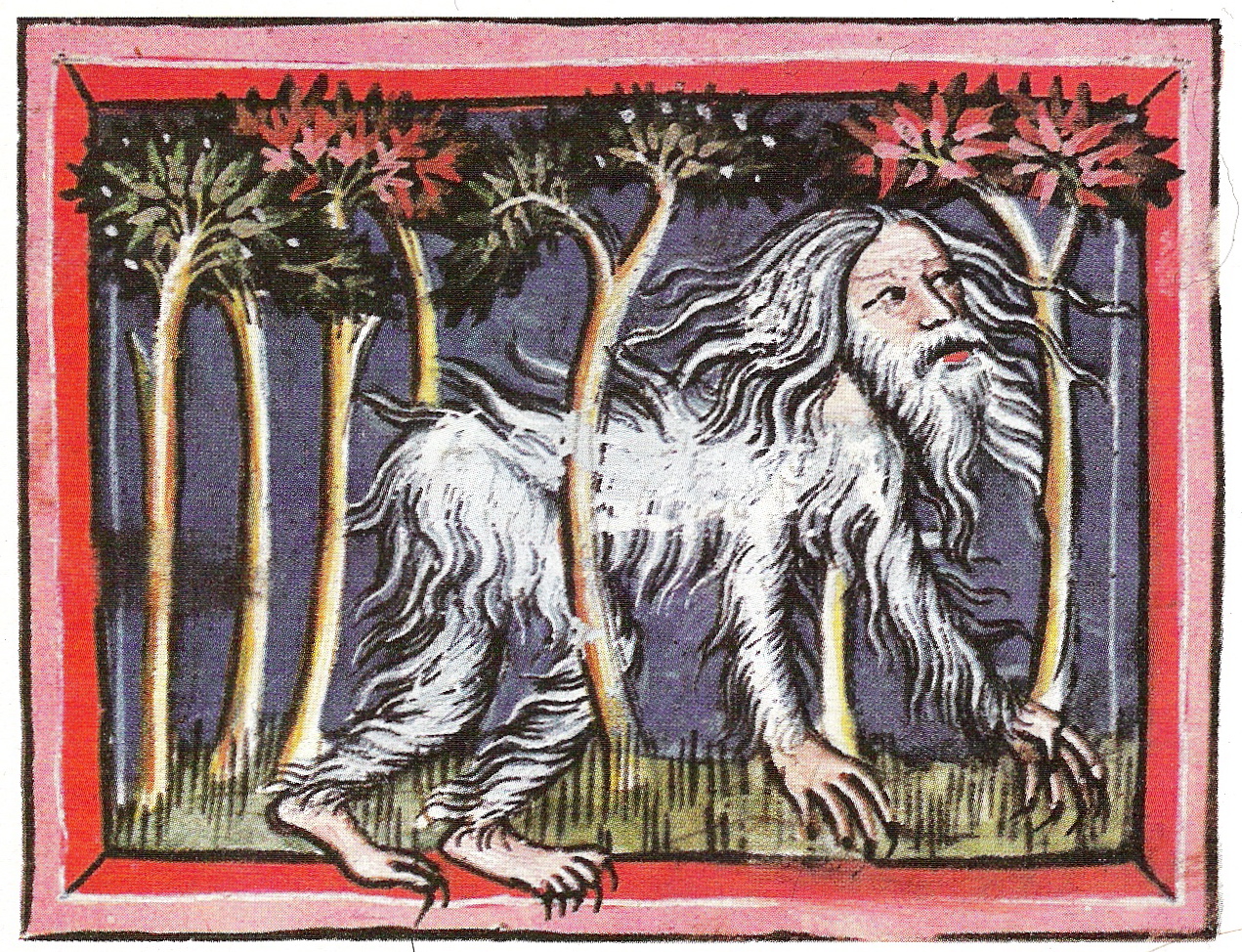
Uncertain as to who lives there, she sets the table for a meal, then hides herself in a lemon tree in the garden. A wild man shows up and calls out to whoever has done him this kindness. The girl, afraid to answer him, stays silent. This goes on for days, the girl keeping his house when he is gone, and not until the wild man swears great oaths not to harm her does she show herself.
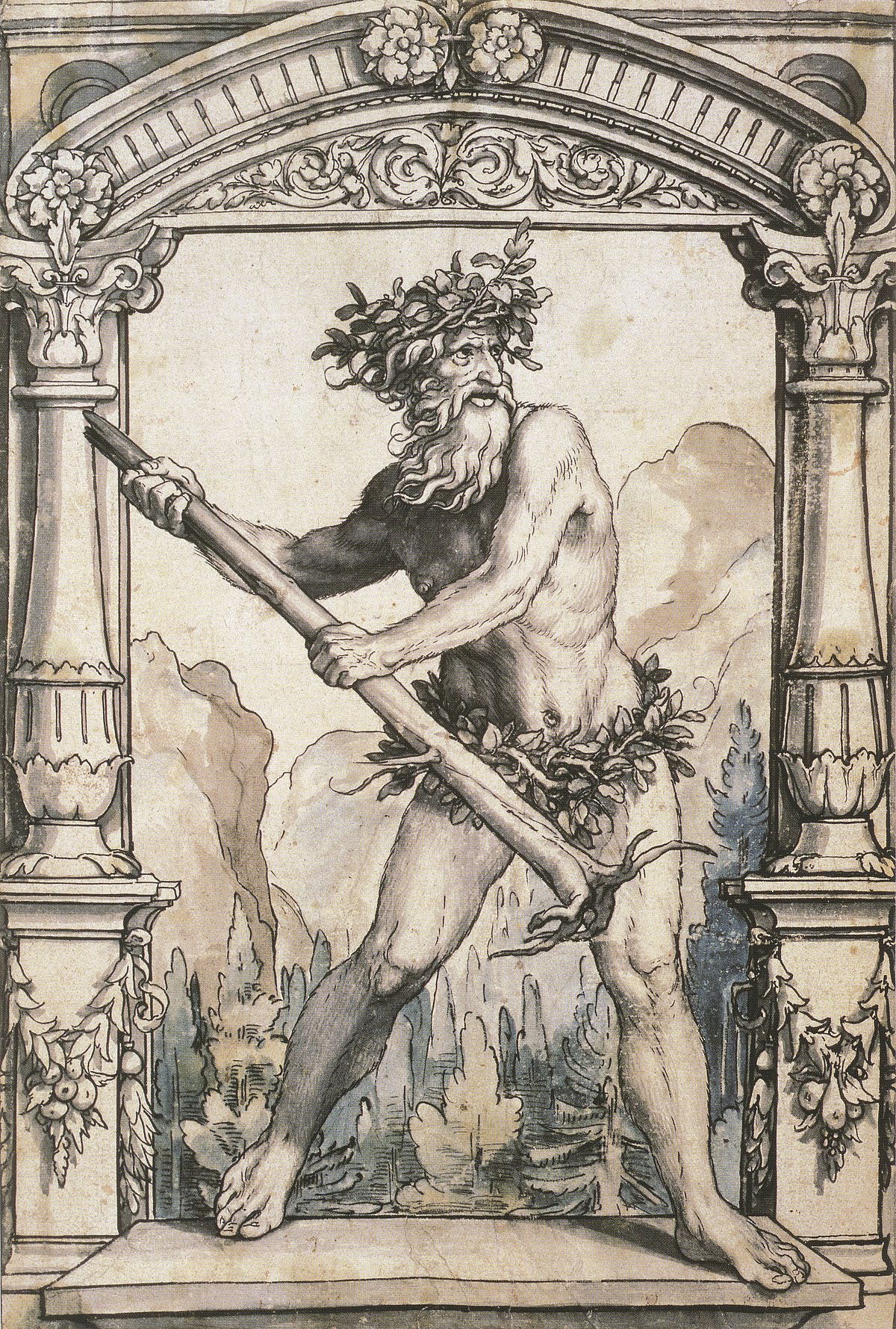
The wild man takes her in as his daughter. After some time, when she offers to clean his head, she discovers the keys to the wild man’s forty storerooms in his hair, bundled into a piece of cloth. He allows her to enter all of the rooms except for the last one. It takes three days, but she succumbs to curiosity. The storeroom proves to be empty, but a window opens up into a royal garden. She makes herself comfortable there, under a lemon tree, to sit and work on her embroidery.
A golden bird comes to sit in the lemon tree and tells her the wild man plans to fatten her up and then eat her. After she returns home, the wild man sees her sadness, knows she has entered the last storeroom, and asks her what she saw there. The girl tells him of the golden bird.
He instructs her to tell the golden bird the story that the king of the royal garden is fattening the bird to eat him. She will dine on him on her wedding day to the king, and her father, the wild man, will drink his blood from a china cup.
This conversation between the girl and the bird happens three times, each time scaring feathers off of the bird. The king of the royal garden, wanting to know why the golden bird is losing its feathers, investigates and spies the girl.
Wishing to marry her, he sends his mother to bring her presents. The wild man anticipates this and tells his daughter to make light of the gifts. A golden chain is used to hang a lamp, bracelets are used as collars for puppies, and pearls are thrown before chickens. At last, the king sends his mother with a ring of betrothal, which the wild man tells her to accept.
Not long after the marriage, the wild man tells his daughter he will soon suffer an epileptic fit—a disease of the moon—during which she must cut off his head. His body will turn into a golden throne for her to sit upon, and his head must be planted in the ground, from which will grow an immense tree, its flowers turning overnight into pearls and piling themselves on the ground. She must share this wealth with all, rich and poor.
Her birth father, whose fortunes had fallen away after he banished his youngest daughter, hears of this generous queen and travels to visit her. When she sees him coming, she and her husband open the gate and call for a feast. During the feast, the father humbles himself before this queen and washes her hands. She tells him who she is, and they are reconciled. She sends him home with much wealth.
The tale does not help me sleep. I think of my own daughter and our contentions with each other. My mind is still in that mode as I see the sun rising.
Wild Man and His Daughter – Part Two
Forbidden Room
Augustus’s newest blend, named after the last Greek fairy tale I related to him, Dove Maiden, is quite delightful. Unusually mild for Augustus, made up mostly of Cavendish and Izmir Turkish with a secret ingredient he will not divulge. We sit on our comfy chairs in his testing room, filling it with our pipe smoke.
“And what tale offering do you have today?” Augustus asks.
“Tale offering?” I say. “What makes you think I have a tale offering?”
His eyebrows rise in pretend alarm.
“Oh, okay,” I relent, “of course I do. The Wild Man and His Daughter. Another Greek Dawkins tale like the last one I told you.’
“Oh good.” Augustus settles back into his chair as I tell the tale.
When I finish, it is followed by minutes of contemplative silence before he says, “What a charming blending of some standard motifs along with a surprise or two. I am going to compare it with Cap O’ Rushes, although the similarities are superficial.
“Let’s start with the motif of a king asking his three daughters to demonstrate their love for him, and the youngest is banished for her answer. I think of this as the King Lear thing, but Shakespeare borrowed the motif from the fairy tales and did not invent it. He also turned it into a tragedy when the fairy-tale conclusions are not.
“Both our tale and Cap O’ Rushes start with the King Lear thing, and the heroines end up in a kitchen as maids. Both have three events in their ordeal: three balls or three evenings of dancing. Both end with reconciliation with the father. There the comparison ends.
“In Cap O’ Rushes, the heroine takes charge of her life when abandoned by her father. In The Wild Man and His Daughter, the heroine is adrift until adopted. The wild man dictates her life going forward. I think Melissa would agree with me.”
“While holding an ax to grind, I’m sure she would,” I nod.
Augustus smiles and continues after relighting his pipe. “The wild man interests me. The story gives little description?”
“None,” I say.
“The girl,” Augustus continues, “finds a packet of keys hidden in his hair. That does suggest voluminous growth, but I may be conjecturing. The term ‘wild man’ in Greek may imply something other than what we think.
“Now, the forty rooms is a Greek thing. I have come across that before. That the fortieth room holds the key to her future, a room the wild man wanted her to avoid, is, for me, the turning point in the story.
The forbidden room in fairy tales is always life-changing for the heroine or hero, although it is usually entered by a heroine and not a hero. The event leads to a challenge. In the case of Bluebeard, the room is filled with body parts of other women victims. In our case, it is the entrance to a royal garden, where, nonetheless, the girl meets the golden bird and his seeding of doubt. The daughter’s mistrust of her wild-man father proves to be a momentary blip in the tale. She follows his instructions to the letter and in that way wins the heart of the king.”
Augustus pauses to repack and light his pipe. “When the heroine and king are happily married, many stories would end there. Not so in this tale. In our tale, the wild man makes the ultimate sacrifice. Remember, this is a Greek fairy tale. Alexander the Great was Greek. Alexander suffered from epilepsy. That the wild man suffers the same, I think no coincidence. Our unknown storyteller purposely made the connection.
“Cutting off the head of the story’s helper, often a fox or a horse, is a common enough motif. They usually transform into a prince, the brother of the story’s princess, or some such.
“Here, his body transforms into a throne for her to sit upon. His head becomes a source of wealth, which she is obliged to share with all and not profit from personally. That act leads to the reconciliation with her father.”
Augustus nods, drawing a contented puff on his pipe at his conclusions.
I still have questions.
Wild Man and His Daughter – Part Three
Disappearing Fathers
“I am thinking,’ I say, repacking my pipe, “dads get a bad rap in the fairy tales. Particularly regarding daughters.”
“Oh, how’s that?” Augustus puffs contentedly.
“Well, beyond the King Lear thing, let’s take Donkey Skin. The inciting incident comes when the father, the king, wishes to marry his daughter. This is hardly a role model for us elderly gentlemen.”
“Completely scandalous,” Augustus agrees.
“In Snow White,” I state, “her father remarries and allows the new queen to demote, then attempt to kill his daughter. He not only abandons her to the queen’s machinations but abandons the story completely. We never hear of him again. Oh, the disappearing father is quite common in the tales.
“In The Goose Girl, we come to a wise and effective king, but, like the wild man, he is a substitute father figure. The goose girl is not his daughter. Her father died years ago, another disappearing dad. We are right up there with the evil stepmother.”
“Let me think on this aloud.” Augustus’s eyes unfocus as he stares toward the billows of smoke in the room. “There is the Beauty and the Beast/East of the Sun and West of the Moon type of story. After the merchant/father’s near-fatal encounter with a beast, the youngest daughter is given over with her consent, a noble sacrifice that protects the family. The father does not disappear from the story but becomes ineffectual, I will agree.”
Augustus takes a few more puffs. “Ah! The Juniper Tree. The father is present throughout this story. The relationship is really between the father and the son, although there is a stepdaughter involved. Oh! But if I recall correctly, the stepmother tricks him into eating his son. No. No. Not a good role model either. The father is at best a fool.”
Augustus takes a few more puffs. “So, you are saying fathers get disrespect in the tales?”
“I am saying fathers of daughters are fated to come off badly. Fathers of sons is a different matter. The usual storyline is that a father/king has three sons, whom he sends off on some sort of quest. Typically, the two elder brothers gang up on the youngest, but that is another story. The father means them no harm and rewards the young hero at the end. The Three Feathers is an example of my argument.”
Augustus taps out his pipe. “Almost off topic, but can we think of any stories with an evil stepfather?”
“Well, that’s a conversation stopper,” I chuckle. “While that would be the ultimate bad PR for dads to bolster my argument, I can’t think of any at the moment. There has got to be one out there, but certainly not as common as evil stepmothers and stepsisters. We will not consider evil step-uncles, evil step-aunts, evil step-grandparents, evil step-cousins, or evil step-second cousins twice removed. The tales just don’t go there.”
I grin, and Augustus shakes his head, then looks at me sidelong. “Does your obsession with the fairy-tale father and daughter thing have anything to do with you and your daughter?”
There’s a conversation stopper. Augustus knows me too well.
I knock out my pipe, repack it, and light up. Augustus is still looking at me, waiting for an answer.
“When her husband committed suicide, I could not help but feel she was complicit. When she—let’s say devolved—the court gave me guardianship over Thalia.”
“And your wife died about the same time,” Augustus adds.
“Yes. Overwhelmed, I bought another house, demarcating a new beginning for me. In my daughter’s eyes, I had sold her childhood home and stolen her daughter.
“Not until I read The Wild Man and His Daughter last night did I ever consider her point of view. Will she and I ever reconcile?”
Augustus sets down his pipe. “Isn’t it interesting how fantasy and fairy tales can get us to consider our real lives?”
I know Augustus is my tobacconist. I didn’t realize he was my analyst.
Your thoughts?
 Fairy Tale of the Month