
Cooling Off
As I enter the Magic Forest, I am greeted with the forest’s cool comfort. The fan in my study was not sufficient for such a hot July day. I head to the pond and my rock to sit upon and absorb the pond’s peaceful quietude. It won’t be quiet long. I hear what I know will be Ultima approaching from the other bank.
“You called?” I hear her speaking before I can clearly see her through the underbrush.
“I don’t know that I called you, but I knew you would come.”
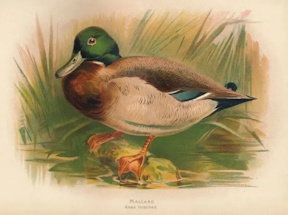
“That amounts to the same thing.” She settles on the rock beside me. She takes a breath and is about to start gushing about something when our attention is caught by a little mallard winging its way through the tree branches. It glides down upon the pond, swims toward us, waddles out of the water, and, to our alarm, sheds its feathers.
Before us stands a beautiful girl in a royal-purple gown, with a tiara gracing her hair. With no more ado or introduction, she clasps her hands in front of her and tells us this story.
There was a woman with three children, although she preferred her natural daughter over the other two, who were her stepdaughter and stepson. The stepson went off to search for his place in the world, leaving his sister at the mercy of the woman.
Because of the stepmother’s trickery, the poor girl found herself at the bottom of a well. However, opening a rusted iron door in the wall of the well, she entered a room where a man and a woman were busily baking bread while their baby cried. The girl offered to and did take care of the baby.
She was rewarded with three “wishes” that were made for her by the couple. First, when the girl lets down her hair, it will emit a bright light. Second, when she spits, it will turn into a gold ring. And third, if she is in fear of drowning, she will turn into a little mallard.
When the girl returned home, the stepmother, astonished at the girl spitting out gold rings and her hair filling the room with light, threw her own daughter into the well, but with disappointing results. Her girl returned with toads falling from her mouth, darkness in her hair, and a fox tail growing from her forehead, for which, ever after, her name became Fox’s Brush.
Meanwhile, the stepson had taken up a position in the king’s court, about whose conduct the king was well pleased. However, the lad appeared to worship an idol. The king questioned him. The lad replied that he had carved in wood an image of his sister, for whom he prayed to God for her protection. The king suggested he bring his sister to court, with thoughts of marriage in the back of his mind.
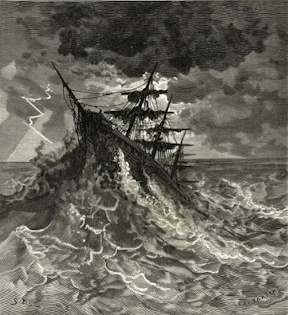
The lad returned home, bringing precious garments to his sister for when she was to be presented to the king. The stepmother insisted they all return together. The quickest way of return was by sea. During the confusion of a storm, the stepmother stole the clothing and pushed the stepdaughter into the sea. Because of the third wish, she turned into a little mallard and swam through the storm.
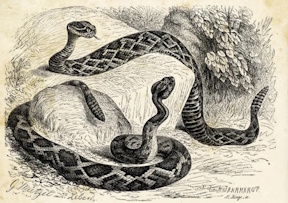
When the ship arrived, the king mistook the remaining daughter, Fox’s Brush, as the lad’s sister. Enraged, he had the brother thrown into a snake pit.
That evening, the little mallard waddled up the gutter drain of the king’s kitchen, shed its feathers—but remained a duck—warmed herself by the fire, and talked to the dog lying under the table.
“Is the king asleep? Does the old servant sleep in the oven? Does my brother sleep in the snake pit? Are Fox’s Brush and my stepmother asleep?” She then gave the dog a stick to give to her brother to ward off the snakes.
Then the mallard spat out a gold ring for the serving maid, who sat in the corner, for letting her warm herself by the fire, saying she would be back two more times, and if not saved, she would return no more.
The old servant in the oven—a warm place for weary bones—also heard everything but did not know what to do. After the second visit, the old servant went to the king. The third night, the king hid in the oven to see these things. He took the mallard feathers, then tried to grab her, but she turned into a whirlwind that he cast into the fire. She turned into a grain of corn, then into an eel. The king took a knife and cut off its head.
Before him stood a most beautiful girl. The king released her brother from the snake pit—the snakes having done him no harm because of his innocence. Fox’s Brush and the stepmother, still malingering about the court, were put into a barrel lined with spikes and rolled by four wild horses until dead. The usual marriage ensued.
Here the story ends. As Ultima and I look at each other in wonder, the girl dons her feathers and, as a little mallard, leaves our company in a flurry of wings.
“Well, that was unusual!” Ultima says, perplexed.
“Ah, but,” I say, “we are in the Magic Forest.”
Part Two
Dragon’s Blood
“My friend, fairy tales are a thing of your world, not mine,” Ultima states, “although I’ve read a good many from books I’ve borrowed from your library.”
“Yes,” I say. “How do you do that? I never see you.”
“I never see you there either. It must be before thought. In any case, I find myself prepared to trade with you.”
“Trade? What for what?”
“Your explanation of this fairy tale—because these tales and their motifs confound me—for my sharing with you this bottle of Dragon’s Bloodthat I happened to bring with me.”
She produces from the deep pockets of her robe a bottle of bluish liquid from one side and two fine wine glasses from the other.
“Dragon’s blood,” I echo. “No, really, not necessary.”
Ultima titters. “The name is a joke. It rather looks like dragon’s blood but is brewed from Dragon’s Berry, which is a joke within a joke. Dragons detest fruit, and to have a berry named after them turned into Dragon’s Blood. . . well, my dragon rolls his big yellow eyes every time it’s mentioned.”
“Brewed, you say? We may be talking the same language. Also, I am glad to know there is humor in your world.”
“Oh, certainly,’ she says. “What danger there would be without it.”
Smiling, she pours me a glass. It is sweet. Very sweet. Then the alcohol hits. “I will drink this slowly.”
Ultima smiles again, and we get down to business.
“What is this ‘step’ thing? I’ll assume it has to do with your marriage thing we talked about last time.”
“Quite,” I say. “‘Stepchildren’ means from another marriage and not one’s biological children. ‘Stepparent’ means not one’s biological father or mother. The word ‘stepmother’ in the fairy tales is equated with the word ‘evil.’ Stepsisters are nasty, but they don’t come up to par with their mothers. Stepfathers and stepbrothers are pretty nonexistent, evil or otherwise.”
Ultima scrutinizes me with a look. “That sounds wrong!”
“Not my fault,” I defend.
“Good enough. What about this well?”
“Ah, yes.” I take a breath. “Here we enter the shadowy recesses of my world’s psyche.
“In fairy-tale terms, the well is a threshold between our world and the underworld. To be thrown into a well is to descend into a trial, or even death and rebirth.
“In our case, the heroine enters through an iron door, iron being a talisman against evil, into an underworld realm. The situation she encounters tests her character.”
“And the meaning of the rewards?”
“In both cases, that of the heroine and the stepsister, the first two gifts are metaphorical. When they let their hair down, we see their inner light or darkness. From their mouths comes something of value or something to be loathed.
“But the third gift, or wish, as the underworld couple calls it, is different. For the heroine, they give her something that will save her in the future, indicating they know something about what will happen to her. For the stepsister, it is a strange punishment.
“As to the meaning of the fox tail growing from her forehead, I have no clue. There are tales of people’s noses growing long, which makes a sort of sense, but tails growing from foreheads is certainly rare.”
I take another sip of Dragon’s Blood.
Why do I feel like I’m floating?
Part Three
Hard Questions
“That brings us,” Ultima says as I try to focus on her, “to the girl being thrown into the sea.”
“Ah, I believe that harkens back to our biblical story of Jonah, who is thrown overboard, but in his case as a sacrifice to end the storm, not as a crime as with the stepmother.
“This is an attempt, in this motif, at the stepmother trying to replace the stepdaughter with her own to receive benefits. The plot never works, but the fairy-tale stepmothers use it over and over again.”
Ultima taps her chin. “I have come across the evil stepmother in other tales. She has always struck me as selfish, self-centered, but more importantly, unreasonable.
This includes unreasonable expectations. That she can substitute her ugly daughter for the beautiful stepdaughter is obviously out of reach, but she can’t see it and makes poor, self-destructive choices.
“I don’t want to think of her as evil simply because she is a stepmother. Her instincts for her biological children should not be overlooked. It is her unreasonable nature that leads her down a path at the end of which are evil acts.”
I take another sip of the wine. “I’ll bly . . . I’ll buy that.”
“OK, so,” Ultima continues, “the girl turning into a little mallard is the center of the story. What is going on there?”
I try to collect my thoughts.
“Transformation. If the fairy tales are about nothing else, they are about transformation.
“The heroine may lose her status as a princess and become a goose girl, and then, after an ordeal, turn back into a princess.
“Or the youngest, simpleton son can evolve into the role of a king.
“I know of another Danish tale where a wyvern becomes a man.”
“What’s a wyvern?”
Oops.
“A little dragony sort of thing. Very nasty.”
“Why would it want to be a man?”
“Look, the dragon’s PR department did a lousy job in my world.”
“Alright, alright, I know that. Go on.”
Whew.
“In the fairy tales, physical transformation is not an easy process. Beings cannot willy-nilly turn themselves into one creature or another. That is a literary device, much beloved in T. H. White’s Once and Future King. It’s in my library; you should find it.
“Nonetheless, in the fairy tales, physical transformation demands a cost. The underworld couple gave her the gift of changing into a little mallard to save her life—not to drown but to swim through the storm. Changing back to her human form was another matter. She had died as a human and needed to be resurrected. Resurrection in these cases involved yet another death, usually a beheading.”
“Oh, the eel!”
“Yes, the eel.”
“Wait, before that, she was a whirlwind, then a kernel of corn. What about that?”
“It’s part of the tradition of physical transformation. The best amblization . . . explanation I can stink of is from the ballad of Tamlin, where the fairies try to trick a woman, but she has gotten instructions from her lover.
They’ll turn me in your arms, lady,
Into an esk and adder,
But hold me fast, and fear me not,
I am your baby’s father.
They’ll turn me to a bear so grim,
And then a lion bold,
But hold me fast, and fear me not,
And ye shall love your child.
“Again they’ll turn me in your arms
To a red het gand of iron,
But hold me fast, and fear me not,
I’ll do you no harm.”
“And last they’ll turn me in your arms
Into the burning gleed,
Then throw me into well water,
O throw me in with speed.
“And then I’ll be your own true-love,
I’ll turn a naked knight,
Then cover me with your green mantle,
And hide me out o sight.”
When did I memorize that?
“Oh, that’s lovely. Can you say more?”
I drain the last of Dragon’s Blood from my glass. “Isez a long pom. Many werses.”
“What?”
I can no longer respond.
Your thoughts?
 Fairy Tale of the Month