Fairy Tale of the Month: July 2025 The Little Mallard – Part One

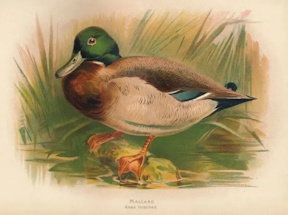
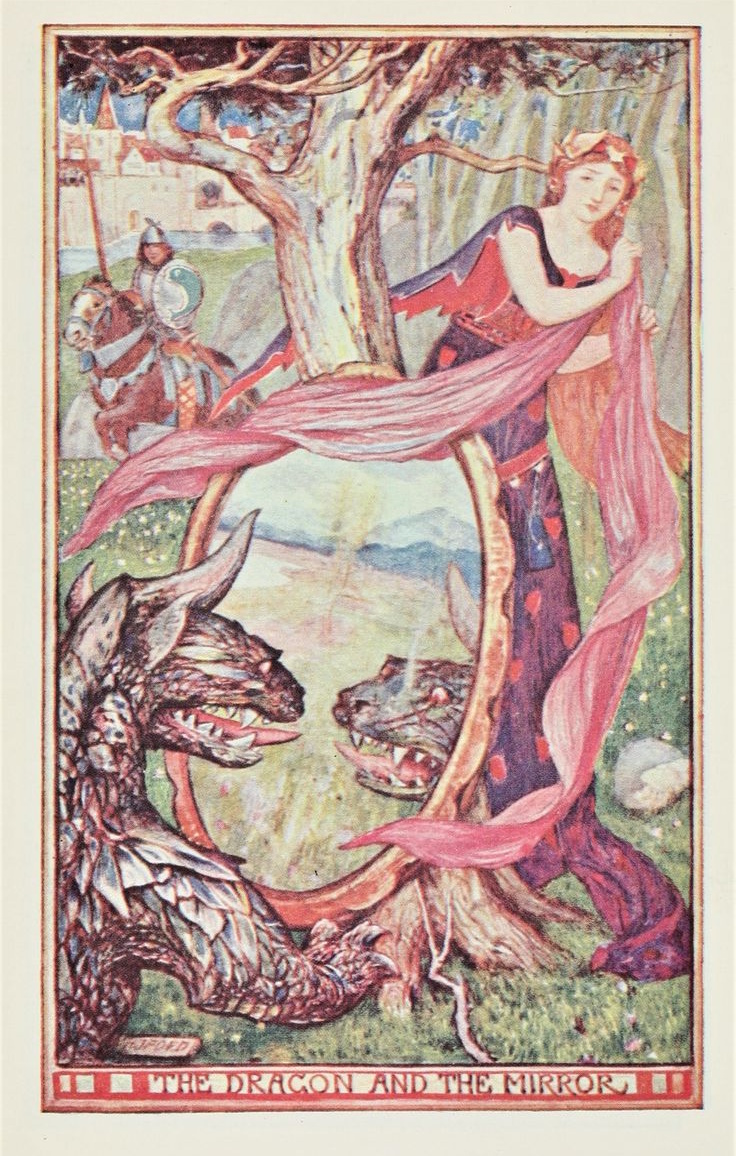
Charles Whymper 1900

Cooling Off

As I enter the Magic Forest, I am greeted with the forest’s cool comfort. The fan in my study was not sufficient for such a hot July day. I head to the pond and my rock to sit upon and absorb the pond’s peaceful quietude. It won’t be quiet long. I hear what I know will be Ultima approaching from the other bank.

“You called?” I hear her speaking before I can clearly see her through the underbrush.

“I don’t know that I called you, but I knew you would come.”

“That amounts to the same thing.” She settles on the rock beside me. She takes a breath and is about to start gushing about something when our attention is caught by a little mallard winging its way through the tree branches. It glides down upon the pond, swims toward us, waddles out of the water, and, to our alarm, sheds its feathers.

Before us stands a beautiful girl in a royal-purple gown, with a tiara gracing her hair. With no more ado or introduction, she clasps her hands in front of her and tells us this story.

There was a woman with three children, although she preferred her natural daughter over the other two, who were her stepdaughter and stepson. The stepson went off to search for his place in the world, leaving his sister at the mercy of the woman.

Because of the stepmother’s trickery, the poor girl found herself at the bottom of a well. However, opening a rusted iron door in the wall of the well, she entered a room where a man and a woman were busily baking bread while their baby cried. The girl offered to and did take care of the baby.

She was rewarded with three “wishes” that were made for her by the couple. First, when the girl lets down her hair, it will emit a bright light. Second, when she spits, it will turn into a gold ring. And third, if she is in fear of drowning, she will turn into a little mallard.

When the girl returned home, the stepmother, astonished at the girl spitting out gold rings and her hair filling the room with light, threw her own daughter into the well, but with disappointing results. Her girl returned with toads falling from her mouth, darkness in her hair, and a fox tail growing from her forehead, for which, ever after, her name became Fox’s Brush.

Meanwhile, the stepson had taken up a position in the king’s court, about whose conduct the king was well pleased. However, the lad appeared to worship an idol. The king questioned him. The lad replied that he had carved in wood an image of his sister, for whom he prayed to God for her protection. The king suggested he bring his sister to court, with thoughts of marriage in the back of his mind.

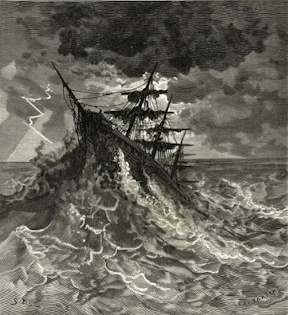
The lad returned home, bringing precious garments to his sister for when she was to be presented to the king. The stepmother insisted they all return together. The quickest way of return was by sea. During the confusion of a storm, the stepmother stole the clothing and pushed the stepdaughter into the sea. Because of the third wish, she turned into a little mallard and swam through the storm.

When the ship arrived, the king mistook the remaining daughter, Fox’s Brush, as the lad’s sister. Enraged, he had the brother thrown into a snake pit.

That evening, the little mallard waddled up the gutter drain of the king’s kitchen, shed its feathers—but remained a duck—warmed herself by the fire, and talked to the dog lying under the table.

“Is the king asleep? Does the old servant sleep in the oven? Does my brother sleep in the snake pit? Are Fox’s Brush and my stepmother asleep?” She then gave the dog a stick to give to her brother to ward off the snakes.

Then the mallard spat out a gold ring for the serving maid, who sat in the corner, for letting her warm herself by the fire, saying she would be back two more times, and if not saved, she would return no more.

The old servant in the oven—a warm place for weary bones—also heard everything but did not know what to do. After the second visit, the old servant went to the king. The third night, the king hid in the oven to see these things. He took the mallard feathers, then tried to grab her, but she turned into a whirlwind that he cast into the fire. She turned into a grain of corn, then into an eel. The king took a knife and cut off its head.

Before him stood a most beautiful girl. The king released her brother from the snake pit—the snakes having done him no harm because of his innocence. Fox’s Brush and the stepmother, still malingering about the court, were put into a barrel lined with spikes and rolled by four wild horses until dead. The usual marriage ensued.

Here the story ends. As Ultima and I look at each other in wonder, the girl dons her feathers and, as a little mallard, leaves our company in a flurry of wings.

“Well, that was unusual!” Ultima says, perplexed.

“Ah, but,” I say, “we are in the Magic Forest.”

Part Two

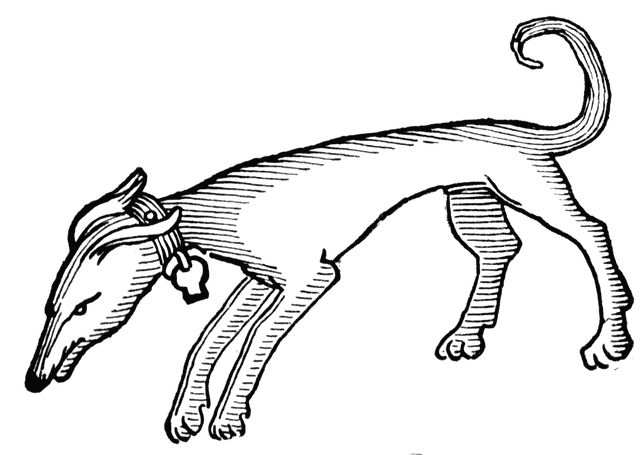
Gustave Dore

Dragon’s Blood

“My friend, fairy tales are a thing of your world, not mine,” Ultima states, “although I’ve read a good many from books I’ve borrowed from your library.”

“Yes,” I say. “How do you do that? I never see you.”

“I never see you there either. It must be before thought. In any case, I find myself prepared to trade with you.”

“Trade? What for what?”

“Your explanation of this fairy tale—because these tales and their motifs confound me—for my sharing with you this bottle of Dragon’s Bloodthat I happened to bring with me.”

She produces from the deep pockets of her robe a bottle of bluish liquid from one side and two fine wine glasses from the other.

“Dragon’s blood,” I echo. “No, really, not necessary.”

Ultima titters. “The name is a joke. It rather looks like dragon’s blood but is brewed from Dragon’s Berry, which is a joke within a joke. Dragons detest fruit, and to have a berry named after them turned into Dragon’s Blood. . . well, my dragon rolls his big yellow eyes every time it’s mentioned.”

“Brewed, you say? We may be talking the same language. Also, I am glad to know there is humor in your world.”

“Oh, certainly,’ she says. “What danger there would be without it.”

Smiling, she pours me a glass. It is sweet. Very sweet. Then the alcohol hits. “I will drink this slowly.”

Ultima smiles again, and we get down to business.

“What is this ‘step’ thing? I’ll assume it has to do with your marriage thing we talked about last time.”

“Quite,” I say. “‘Stepchildren’ means from another marriage and not one’s biological children. ‘Stepparent’ means not one’s biological father or mother. The word ‘stepmother’ in the fairy tales is equated with the word ‘evil.’ Stepsisters are nasty, but they don’t come up to par with their mothers. Stepfathers and stepbrothers are pretty nonexistent, evil or otherwise.”

Ultima scrutinizes me with a look. “That sounds wrong!”

“Not my fault,” I defend.

“Good enough. What about this well?”

“Ah, yes.” I take a breath. “Here we enter the shadowy recesses of my world’s psyche.

“In fairy-tale terms, the well is a threshold between our world and the underworld. To be thrown into a well is to descend into a trial, or even death and rebirth.

“In our case, the heroine enters through an iron door, iron being a talisman against evil, into an underworld realm. The situation she encounters tests her character.”

“And the meaning of the rewards?”

“In both cases, that of the heroine and the stepsister, the first two gifts are metaphorical. When they let their hair down, we see their inner light or darkness. From their mouths comes something of value or something to be loathed.

“But the third gift, or wish, as the underworld couple calls it, is different. For the heroine, they give her something that will save her in the future, indicating they know something about what will happen to her. For the stepsister, it is a strange punishment.

“As to the meaning of the fox tail growing from her forehead, I have no clue. There are tales of people’s noses growing long, which makes a sort of sense, but tails growing from foreheads is certainly rare.”

I take another sip of Dragon’s Blood.

Why do I feel like I’m floating?

Part Three

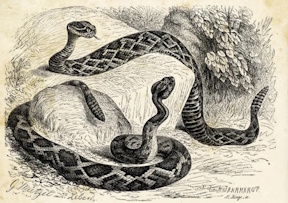
Karl Gustav Jahrmargt

Hard Questions

“That brings us,” Ultima says as I try to focus on her, “to the girl being thrown into the sea.”

“Ah, I believe that harkens back to our biblical story of Jonah, who is thrown overboard, but in his case as a sacrifice to end the storm, not as a crime as with the stepmother.

“This is an attempt, in this motif, at the stepmother trying to replace the stepdaughter with her own to receive benefits. The plot never works, but the fairy-tale stepmothers use it over and over again.”

Ultima taps her chin. “I have come across the evil stepmother in other tales. She has always struck me as selfish, self-centered, but more importantly, unreasonable.
This includes unreasonable expectations. That she can substitute her ugly daughter for the beautiful stepdaughter is obviously out of reach, but she can’t see it and makes poor, self-destructive choices.

“I don’t want to think of her as evil simply because she is a stepmother. Her instincts for her biological children should not be overlooked. It is her unreasonable nature that leads her down a path at the end of which are evil acts.”

I take another sip of the wine. “I’ll bly . . . I’ll buy that.”

“OK, so,” Ultima continues, “the girl turning into a little mallard is the center of the story. What is going on there?”

I try to collect my thoughts.

“Transformation. If the fairy tales are about nothing else, they are about transformation.

“The heroine may lose her status as a princess and become a goose girl, and then, after an ordeal, turn back into a princess.

“Or the youngest, simpleton son can evolve into the role of a king.

“I know of another Danish tale where a wyvern becomes a man.”

“What’s a wyvern?”

Oops.

“A little dragony sort of thing. Very nasty.”

“Why would it want to be a man?”

“Look, the dragon’s PR department did a lousy job in my world.”

“Alright, alright, I know that. Go on.”

Whew.

“In the fairy tales, physical transformation is not an easy process. Beings cannot willy-nilly turn themselves into one creature or another. That is a literary device, much beloved in T. H. White’s Once and Future King. It’s in my library; you should find it.

“Nonetheless, in the fairy tales, physical transformation demands a cost. The underworld couple gave her the gift of changing into a little mallard to save her life—not to drown but to swim through the storm. Changing back to her human form was another matter. She had died as a human and needed to be resurrected. Resurrection in these cases involved yet another death, usually a beheading.”

“Oh, the eel!”

“Yes, the eel.”

“Wait, before that, she was a whirlwind, then a kernel of corn. What about that?”

“It’s part of the tradition of physical transformation. The best amblization . . . explanation I can stink of is from the ballad of Tamlin, where the fairies try to trick a woman, but she has gotten instructions from her lover.

They’ll turn me in your arms, lady,

Into an esk and adder,

But hold me fast, and fear me not,

I am your baby’s father.

They’ll turn me to a bear so grim,

And then a lion bold,

But hold me fast, and fear me not,

And ye shall love your child.

“Again they’ll turn me in your arms

To a red het gand of iron,

But hold me fast, and fear me not,

I’ll do you no harm.”

“And last they’ll turn me in your arms

Into the burning gleed,

Then throw me into well water,

O throw me in with speed.

“And then I’ll be your own true-love,

I’ll turn a naked knight,

Then cover me with your green mantle,

And hide me out o sight.”

When did I memorize that?

“Oh, that’s lovely. Can you say more?”

I drain the last of Dragon’s Blood from my glass. “Isez a long pom. Many werses.”

“What?”

I can no longer respond.

Your thoughts?

Writer’s Journey: July 2025

Over the next couple of monthly entries, I am going to assemble a story for you. Yes, just for you, faithful readers.

For my Fairy Tale of the Month in June, I presented The Fish Knights and thought I could develop that into a longer, more reflective piece. I have never rewritten a fairy tale before, but I want to explore the notion.

I also want to explore the notion of using ChatGPT as a writing tool and aid. (Did I just hear a gasp of dismay?) Please notice, I said “tool” and “aid.”

But first, why rewrite a perfectly good fairy tale? I don’t intend to change the tale; rather, I intend to probe the story. What about the relationship between the twins? Are they ordinary boys? Have they been assigned a destiny?

Fairy tales are, by some, considered to be a subcategory of folktales. The distinction between the two is that fairy tales have the element of magic. It hurts me to say “sub-category.” In my mind, fairy tales are equal to folktales and perhaps the origins of myth.

Yes, there is an argument among folklorists about whether fairy tales come out of myths or if myths come out of fairy tales. I suggest the answer is “yes.”

Literary fairy tales are, of course, fairy tales written down by a known author with an eye on the literate reader, one used to literary conventions. His name is Hans Christian Andersen.

Ok, maybe that is not fair, but he does exemplify the literary treatment of fairy tales.

Traditional fairy tales have their own unique structure.

•             Few characters have names. Typically, they are identified by their position: king, queen, youngest son, or old soldier.

•             Descriptions are sparse. We are told little of how things look.

•             Tales are in the third-person objective. We never get inside the characters’ heads.

•             Tales are not dialogue-driven. Dialog is used to highlight parts of the story.

•             There is more telling than showing. Showing is a wordier process than telling. Telling is succinct, as are the tales.

Outside of the fairy tale genré, the above is considered bad writing.

Moving beyond structure:

•             There is a propensity for the number three. For example, in The Goose Girl, we see three drops of blood. Later on in the story, there are three streams to cross and three passages through the dark gateway.

•             Royalty has magical powers. This is always assumed, perhaps a reflection of the times.

•             Animals can talk, and not simply animals talk to animals, but also animals talk to humans.

•             Evil must be punished and good rewarded. Typically, evil is destroyed in rather graphic terms.

•             The story usually ends happily. You can have a fairy tale without fairies, but happy endings are the rule. However, there are cautionary tales that do not end so happily.

The Fish Knights embraces almost all of the points made above and, I think, a good subject for my attempt to “translate” a fairy tale into a short story.

Next month, I will evoke the demon AI and see if I can get it to do my bidding.

Fairy Tale of the Month: June 2025 The Fish Knights – Part One

H J Ford

Sinister Castle

At the girls’ insistence, Duckworth and I are rowing Thalia and Jini up and down the Isis, which is to end in a picnic at Christ Church Meadow. We’ve done this before. It may become a summer tradition.

I know much attention was given to the picnic basket this morning in my kitchen, a space the girls took over to the extent that I could only grab a cup of tea and a cold scone for my breakfast.

I also know the seriousness with which they are taking this outing. They want to commune with nature so much that they have left their smartphones behind.

I can’t help but also notice they both wear the leaf pendant around their necks that the nixie gave to them.

We’ve only been rowing for a few minutes when Thalia reaches into the picnic basket and retrieves Lang’s The Brown Fairy Book.

The Fish Knights,” Thalia announces and reads aloud to us.

A cobbler, despite working from dawn to dusk, cannot bring in enough money to feed himself and his wife and turns to fishing to find food. The first fish he catches is marvelous and speaks to him, telling the cobbler to cook him and divide him into four pieces, two for his wife and two to be buried in the garden. Before long, his wife gives birth to two identical boys. Two plants grow in the garden, budding two knight’s shields.

When the lads grow to be young men—tired of the quiet life and being mistaken by everyone to be their identical other—they set off on their life’s journey in opposite directions, although with fond farewells.

Thalia pauses here in her reading to take in a deep breath of fresh air and see the willow trees along the bank before continuing.

One of them travels to a city that appears to be in mourning. Inquiring into this despair, he hears that every year the city must sacrifice a maid to a dragon. This year it is the king’s daughter, a girl loved by all. Borrowing a horse, lance, and mirror, the youth rushes off to save her.

He places the mirror against a tree and instructs the princess to put her veil over the mirror and stand in front. When the dragon charges for her, she is to pull away the veil and slip behind the tree.

What the dragon perceives is the princess disappearing and another dragon facing him. He attacks the mirror, which shatters. Confused by the multiple images of himself scattered on the ground, he is distracted long enough for the lad to charge up on his horse and thrust the lance down its throat.

The lad and the princess are soon married, and all is well for a short time until he notices a sinister, black marble castle in the distance. Although warned by his wife that no one returns from visiting it, he is compelled to investigate.

Again, Thalia pauses to take in the river’s ambiance with a contented sigh as Duckworth and I happily labor at the oars.

The lad knocks on the door of the black marble castle, asking for a night’s shelter as if he were a wandering knight. The witch of the castle allows him in, but she soon insists he marry her. He refuses. Through her trickery, he meets his death.

Meanwhile (fairy tales are full of meanwhiles), after a time, his identical brother shows up in the city, and everyone is jubilant at his “return.” Realizing he has once again been confused for his brother and fearing his brother is in peril, he continues the ruse. When asked what happened to him at the sinister castle, he says his mission is not over and he must return.

After the witch allows his entry, she recognizes him as her last victim’s ghost. She tries to flee, but he wounds her with his sword. She begs him to restore her to life and gives him the potion formula to do so. This he does, but also applies it to his brother and all the former victims, including the girls sacrificed to the dragon.

The witch, seeing her evil undone, dies of rage. As she takes her last breath, her black marble castle crumbles.

Thalia snaps the book shut as Duckworth and I beach the boat at our picnic grounds.

Part Two

H J Ford

The Picnic

We find a large oak under which to spread our blanket. The girls unpack the basket in a deliberate—and I suspect—prearranged manner. They are so fastidious, you would think Melissa was here.

“OK,” says Duckworth, settling himself and eyeing the delectables coming out of the basket, “so, talking fish is one of those motifs you talk about?”

“Oh, yes,” I say. “Common as cockroaches. I doubt there is a culture, country, or ethnic group that doesn’t have a talking-fish fairy tale.”

“Oh!” Jini pipes up, “Like the tale of Matsya.”

“I don’t know that one,” I inquire.

“Well,” Jini concentrates, “more myth than fairy tale. King Manu saves a little, talking fish, which grows into the huge fish, Matsya, who is actually an avatar of Vishnu, and warns Manu of the coming world flood. Our Manu is your Noah.”

Duckworth raises his eyebrows, but it is at the Wiltshire Ham she just loaded out. That was thoughtful of the girls to remember his weakness for this delicacy.

“I have a personal theory about talking fish.” I seize the moment to pontificate. “Fish are subterranean; that is, they live under the surface. I believe the fairy tales, sprung from our imaginations, equate that with the subconscious. I say the talking fish are messengers from our collective unconscious. But what the talking fish say and do is in the language of dreams and no easier to understand than the dreams themselves.”

I end my little lecture and observe they have not forgotten the potato salad.

“I thought the fish getting cut into four pieces was pretty cool,” Thalia comments.

“It sacrificed itself,” Jini observes.

“I’m guessing it knew the future,” Thalia adds as she sets out the Scotch eggs.

“Did it? I think we can’t know.” Jini’s expressive face holds worry.

“It must have,” Thalia returns. “It knew the cobbler’s wife would have two sons and the garden would grow two shields; don’t you think?”

“OK,” says Jini, “but beyond that, were the guys predestined? Were the fish’s two knights meant to go out in the world to do good, or were they specifically there to destroy the witch?”

Thalia nodded at the dilemma.

“We have here,” I say, returning to lecture mode, “a linear tale, as opposed to a circular tale.”

Both Thalia and Jini cock their heads toward me. Good. I have their attention.

“A circular tale example is the Grimms’ The Fisherman and His Wife, where Isabelle and the fisherman start out living in a miserable hovel, but through her demands upon the enchanted flounder—another talking fish—who was spared from death by the fisherman, she attains great wealth and position until she asks for too much and ends up back in their miserable hovel.

“Tolkien’s The Hobbit: Or There and Back Again is another example of a circular tale.

“Our story is a linear tale. It starts with a cobbler deciding to go fishing and ends with a black marble castle crumbling into dust. Each step of the story goes forward, and there is no turning back. We move from a hungry cobbler to the death of a witch. We do not end where we started.”

“Yeah,” says Thalia thoughtfully. “Well, time to eat.”

Part Three

Canva AI

The Spread

The spread is admirable. Besides the Wiltshire ham, Scotch eggs, and potato salad, there are quiche, egg and cress sandwiches, charcuterie, crisps, cut fruit, and Victoria sponge cupcakes, as well as iced tea to drink. I thought to bring a flask of Pimm’s Cup, minus the sprigs and slices, for Duckworth and me to pass back and forth.

“How about the twin thing?” Duckworth is already munching on the Wiltshire. “Is that unique to this tale?”

“No,” I say, between bites of potato salad. “I can think of two more, at least: the Grimms’ The Two Brothers and a Lang tale, The Twin Brothers. Both are long stories, and, as I recall, the Lang tale has a fish, not a talking fish, but a goldfish that gets cut up into six pieces: one for the fisherman and one for his wife, who will birth two identical boys; one for their dog, who will bear two identical puppies; one for the mare, who will bring forth two identical foals; and two pieces that are buried in the ground on either side of their front door, from which grow cypress trees. How’s that for the start of a story?”

“Oh, I want to read that,” Thalia chimes in.

“The more I remember about The Two Brothers and The Twin Brothers, the greater their resemblance, and all three end with one brother saving the other.”

“Another motif,” Duckworth sighs as he samples some Stilton from the charcuterie as the girls titter.

“I’m still thinking about the fish.” Jini takes a bite of an egg and cress sandwich. “The fish is hacked up into pieces, but he is not really killed.”

Jini stops to think for a second. “Transformed.”

“Yes,” I say, “the fairy tales are all about transformation.”

 “And about magic,” Jini continues. “Yet some of this is a stretch for me. The fish’s body is transformed into two identical boys and two shields that show the boys are to be knights. All well and good.

“But to the rest of the world, they are the sons of a cobbler. They had no formal training to be knights. No one has knighted them, and yet no one in the story questions their humble birth. Isn’t that asking too much of magic to have poor boys become knights, and one marry a princess?”

Thalia eyes her friend through lowered lids. “No. They are heroes. The first one comes to a city and sees injustice being done. On his own, with little support—they lend him stuff—he saves the princess and destroys the dragon. That is noble! The second one heroically saves the first hero.

“Why get picky about how they were born? Jeez, even the Beatles were knighted. I don’t think any of them even rode a horse.”

“Ah…,” Duckworth raises a finger, “only Paul and Ringo were knighted, and Paul’s wife, Linda, was big into horses.”

 Thalia rolls her eyes, and I raise my eyebrows.

I didn’t know Duckworth was a Beatles nerd.

“I think with the fairy tales,” I conclude, “we need practice Samuel Taylor Coleridge’s ‘willing suspension of disbelief.’”

“OK, I’ll buy that for now.” Still, Jinni looks skeptical as she reaches for a Victoria sponge cupcake.

Yes, the Victoria sponge cupcakes!

Your thoughts?

Writer’s Journey : June 2025

The Skinny on Skin.

For those of you who also follow the Fairy Tale of the Month portion of my blog, you will have read the bit of dialogue where Melissa uses the cliché gets under your skin.

While writers should avoid clichés, these are certainly useful in dialogue because that is the way people speak. I certainly use clichés in my day-to-day conversations. Not infrequently, I say to myself—and sometimes out loud—“Where does that come from?”

There are a good handful of clichés involving the word “skin.” I dedicate this blog to gets under your skin, thin-skinned, thick-skinned, skinflint, skin of one’s teeth, what’s the skinny, and skin the cat.

Gets under your skin: Origin is probably the early 20th century. In my hasty research for this blog, it appears this does not refer to any medical procedure but more likely to an itch or bug bite, the point being an irritation. More nuanced, it can be an obsession. Cole Porter used this notion in his 1936 song I’ve Got You Under My Skin. As in most clichés, the expression is meant metaphorically.

Thin-skinned: 17th century. It describes people who are easily offended, emotionally sensitive, and quick to take things personally. Over time, it came to be applied most often to political and public figures. No one less than Samuel Johnson has used the term.

Thick-skinned: 19th century. I find this a surprisingly late arrival, being the opposite of thin-skinned, but the origin is different. The allusion is to thick-skinned animals, such as elephants and rhinoceroses, which are pachyderms, a word of Greek origin; pachys = thick, and derma = skin. (Are there any thin-skinned animals?)

The term, of course, refers to someone insensitive to criticism or emotions.

Skinflint: 17th century again. Used to describe a person of obsessive thrift. Its progenitor was to skin a flint, an obvious absurdity, not unlike squeezing water from a stone. By the 19th century, skinflint became a literary character type—like Scrooge in A Christmas Carol—with the implications of moral judgement and mean-spiritedness.

By the skin of one’s teeth: Biblical, Book of Job. This surprised me. Not unlike skinflint in its use of something that does not exist. It illustrates how narrow a margin one has escaped from some situation.

We could say its usage came in with the 17th century—like a number of other clichés above—after the King James Bible was published in English. The 17th-century timeline also includes a number of Shakespeare’s plays, the source for all sorts of expressions and clichés. One has to wonder if there were clichés in English before Shakespeare. (OK, probably, but someone will have to point them out to me.)

What’s the skinny: World War II (most likely). Or in other words, just the facts, ma’am. A quick, lean summary. Also, getting to the truth quickly. There is also the suggestion floating around that the term came out of African American vernacular.

In any case, the image is of something stripped down to essentials, no fat.

Skin the cat: 19th century. The full expression is that there is more than one way to skin a cat. Meaning, there is more than one way of doing a thing. Skin the cat is also the name of a gymnastic move.

What is meant by the “cat” is all over the place.

  • The “cat” may refer to small game animals.
  • It may be a polecat. (Think weasel)
  • It may be a fishing cat. (Catfish)
  • It may only be a fanciful notion.

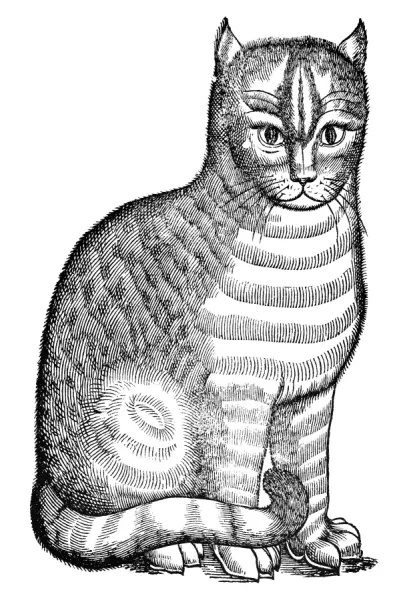
The skinning of cats was not common, but not unheard of, more likely in poor rural communities where nothing was wasted. Cat hides were sometimes used for fur trimming on garments and as a blanket—which took numerous cats—purported to help with rheumatism. Also, it could be used for drumheads and tambourines. (Again, not common, and why is my cat staring at me as I write this? I’d best stop here.)

Fairy Tale of the Month: May 2025 The Mark of the Dog, Pig, and Cat – Part One

Woodcut

Three Boys

Today is the last Monday in May, which means it is the Late May Bank Holiday. The Early May Bank Holiday, with its Maypole dancing, has come and gone. Today is simply a day to visit with friends.

I have invited Duckworth and Melissa over, and I know how much they both enjoy espresso. I am on my way to the third floor to retrieve the machine from storage. It should only take a moment. I know exactly where it is. It is the first room on the left when I come up the stairs. I keep all the electrical devices in storage there.

Up the stairs I go, into the room, grab the espresso machine, and step back into the hallway.

 Except it is no longer the hallway.

I am in a large, barren room containing only one chair, in which is seated an old woman, the same old woman I encountered the last time I came for the machine. I guess I should have known better.

I approach her, sit down at her feet, the espresso machine in my lap, and wait for the story.

An evil queen poisoned her husband, the king, so that she would rule until her son came of age. When he did, she searched for brides of whom she approved, but her son married one not of her choosing.

Three times, the young queen, while her husband went off to war, gave birth to a beautiful boy, all of whom were whisked away and an animal substituted: a puppy, a piglet, and a kitten. After the third, the evil queen had the young mother drowned, falsely accusing her of adultery.

While the evil queen tried to find her son a new bride, he became despondent and reclusive, still devoted to his departed queen.

Years later, when he lost his way during a hunt, he came across six lads playing by their father’s mill. Three of them were taller and more handsome than their siblings and bore a resemblance to him and his wife.

The king observed that when one of these three boys went to wash his muddied hands, he walked down to a stream and not to the nearby well. When the king asked him why he chose the stream, the lad answered, “I go down there instead of the well because the water in the well rushes away from under my mother’s feet.” When the king asked, “Where is your mother?” the lad answered, “In the water.”

Later that day, the other two lads, who went to the stream, one to wet a thread for a needle and the other to wash his ball, gave identical answers to the king’s questions. Yet, the miller’s wife declared these were all her children, whom she loved equally.

In the evening, the king returned to the stream and followed a light until he could go no farther and fell asleep. In the morning, he awoke hearing a splashing noise. Parting the branches of a thicket, he saw his wife sitting on a branch, churning the water with her feet.

Overwhelmed with joy, he listened as she explained how his mother had abandoned her to starve and freeze to death, but the wood sprites adopted her, feeding and clothing her so that she could move her feet in the water to keep it from freezing.

With the king’s rediscovery of her, she is reunited with her children as the wood sprites promised. The miller’s wife revealed that the children were found floating down the stream in boxes as each of her three children was born and made no further claim on them. She also pointed out that each of these children had a tattoo: a dog, a pig, and a cat.

The story concluded with the evil queen being drawn and quartered.

I find myself sitting in the hallway, clutching the espresso machine. I dart for the staircase before anything else happens.

Part Two

Woodcut

Drinking Espresso

While the espresso machine steams and gurgles, I tell Duckworth and Melissa the tale without telling them where I heard it. Duckworth is unaware of my connections “beyond the veil.” Melissa is a participant.

“You are, of course, referring to Schönwerth’s book The Turnip Princess, edited by Erika Eichenseer, to be more exact.” She glances from Duckworth to me. She knows about my third-floor experiences. “If I recall, this particular tale is The Mark of the Dog, Pig, and Cat.”

“Of course,” I say.

I bet she’s right.

Duckworth’s eyebrows rise in delight when he sips his espresso, but frowns when he says, “Sorry, that tale did not make much sense to me.”

Melissa gives him a small smile. “I am not surprised you say that, but it is a quintessential fairy tale.”

Duckworth scowls. “Hanging around with this guy,” Duckworth motions toward me, “I’ve heard a number of Grimm and Lang tales. This one doesn’t hold a candle to them. It is full of nonsensical things.”

Melissa shakes her head. “Franz Xaver von Schönwerth was a true collector and not so much an editor as were Wilhelm and Jacob Grimm and Andrew Lang—actually Andrew’s wife Leonora, who also translated tales for the Colored Fairy Books.

“The Grimms, over their numerous editions of Children’s and Household Tales, often rewrote some of them, making substantial changes. Schönwerth did no such alterations that I know of.”

Duckworth has folded his arms. “Well, does that make it any less of a fairy tale?”

I see the signs of annoyance in Melissa’s eyes as she sips her espresso before answering. “It makes them literary fairy tales, not folk fairy tales. In my mind, a true fairy tale has no known author. Charmingly, the marks of a folk fairy tale are its inconsistencies, shaky structure, surrealism, and unexplained elements.”

“Wait,” Duckworth protests. “Haven’t you just described a bad story?”

Melissa sighs as Duckworth warms up to his argument. “For example, at one point in the story, the young queen is drowned by the evil queen. Later, the young queen says the evil queen abandoned her to starve and freeze to death. Which is it?”

Melissa rolls her eyes and does not answer.

“Further,” he says, “the story starts with the queen poisoning her husband and quickly moves on, skipping over what should be the inciting incident. Why is it even there? It doesn’t forward the story.

“And talk about surreal, the young queen spends years with her feet dangling in cold water. Then there are the animal tattoos. What’s that all about? Where did they come from?”

“Magic!” Melissa almost aspirates on her espresso. “The fairy tales are about magic. Don’t apply reason. Don’t apply literary structure. Don’t try to fit them into the commonplace. Don’t reduce them to the easily understood.

“The true fairy tale is meant to catch us off guard, get a little bit under our skin, pull us away from the normal, the expected, and into the uncanny.”

“Sorry,” says Duckworth, “makes for a poor story.”

Melissa rests her forehead on her hand.

Part Three

Woodcut

Tantalizing Metaphors

I decide to interrupt their argument with a question that has aroused my curiosity. Why the old woman told me this story, I have no idea, but there are tantalizing metaphors to explore.

“Let me ask,” I say a little loudly to redirect their attention, “despite the story’s incoherence, there is an undercurrent in the tale dealing with water and the young queen’s feet. I mean no pun when I say ‘undercurrent’ when we are talking about water. It is simply the right word.”

“No punishment is required,” Duckworth comes back.

I will let him get away with that.

“What were the words again that the lads say?” Melissa asks.

“I quote, ‘I go down there instead of the well, because the water in the well rushes away from under my mother’s feet.’ And when asked where their mother is, they reply, ‘In the water.’”

“Yeah,” Duckworth confesses, “I didn’t get that at all.”

Melissa clutches her cup and takes another sip. “I am reminded of the Grimms’ Three Little Men in the Wood, where the young queen is drowned by her evil stepmother but returns as a spectral duck to reclaim her position among the living.”

“That is close,” I agree.

“Her feet in the water, though.” Melissa’s intellect drifts through possibilities. “In this tale and the Three Little Men in the Wood, the good queens appear to have died but are resurrected by their husbands’ actions.”

“That’s getting a little too messianic, don’t you think?” Duckworth complains.

Melissa presses on. “Whichever way our young queen died, she was a victim of the elements from which the wood sprites spared her. To me, she is in some sort of limbo, although she is guiltless of any sin.”

“She is splashing the water to keep it from freezing,” I remind.

Melissa raises a finger. “We should consider the miller, who needs the water to flow to run his mill, he and his wife being the protectors of her children.”

“Ah!” I say. “And there is a connection between his boys being born and him finding the babies in the stream. I wonder if we are to infer the wood sprites had a hand in that?”

“I will guess so.” Melissa sips a bit more espresso, although it must be cold by now. “The sprites told her she would be reunited with her children. They at least knew about the children and appeared to know the future.”

“The future,” I add, “that we see played out in the story when the king followed a light by the stream, fell asleep, and awoke to find his queen. There is something significant in that process of finding her. He too went through some sort of transformation, at the end of which he could release his wife from her ordeal and bring her back among the living.”

“The tattoos,” Melissa muses, “I will attribute to the wood sprites as well. They are the magic in this story. In any case, the tattoos simply provide more evidence that these are the king and queen’s children.

“What eludes me,” Melissa says as she finishes her espresso, “is the enigmatic response of the lads to the king’s question, ‘…the water in the well rushes away from under my mother’s feet.’

“It denotes the difference between water standing in a well and water moving in a stream, but isn’t it the water in the stream that rushes away and not the water in the well?”

Duckworth, who Melissa and I have almost forgotten is in the room, says with a devilish smile, “The Americans have a word for you two. Nerds.”

I accept the moniker with honor.

Your thoughts?

Writer’s Journey: May 2025

Intuitive Editing

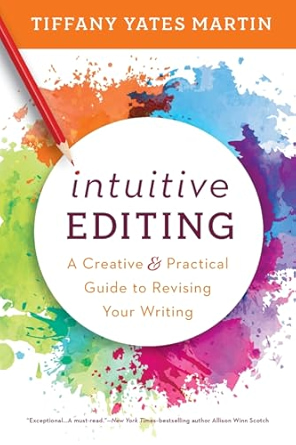
Recently, I had the pleasure of being in the company of Tiffany Yates Martin, a developmental editor of note and buddies with Jane Friedman. I, being a member of the committee for the three-day Write Stuff Writers Conference, helped arrange for her to be a presenter and our keynote speaker. She was quite a delight.

Because of an earlier career as an actor, Tiffany has honed the skill of presenting to sleep-deprived conference attendees, keeping us awake as she made salient points, points worthy of which one should take note. Inspired by her presentations, I purchased her book Intuitive Editing: A Creative & Practical Guide to Revising Your Writing at the conference book fair. (Got it signed, of course.) It is my current favorite book on writing.

Beyond the introduction and before the final word, she divides the work into four sections and thirteen chapters. I think it illustrative to simply list the sections and chapter headings. I like the way she has broken things down.

Part I: Macroedits

            Character

            Stakes

            Plot

Part II: Microedits

            Suspense And Tension

            Point of View

            Showing and Telling

            Structure

            Momentum and Pace

            Voice

Part III: Line edits

            Line Editing

Part IV: Getting Feedback

            How to Train Your Editor Brain

            The Frugal Author’s Guide to Getting Editorial Feedback

            Hiring a Pro

Within the chapters, as she addresses problems, she has the recurring subheadings labeled How to find it and How to fix it. She uses many examples to illustrate problems but is also quick to bullet point for simple, concise clarity. I appreciate the mixture.

I will also point to chapter eleven, where she spends eight pages on critique groups and provides the most exhaustive coverage of the topic and its pros and cons that I have encountered in books about writing.

I did scan the reviews of the book on Amazon. Mostly positive. I found the objection that there is nothing ‘intuitive” about the work to be valid. It is all very practical advice. I found the one-star review that dealt with the reviewer’s objection to the way she referred to Dan Brown’s works to say more about the reviewer than about the author. (You’ll have that.)

My next read might well be her The Intuitive Author: How to Grow & Sustain a Happier Writing Career.

There are other worthwhile books on writing:

On Writing, Stephen King

The Writing Life, Annie Dillard

Bird by Bird, Anne Lamott

The Elements of Style, William Strunk & E.B. White

Story, Robert McKee

Steering the Craft, Ursula K. Le Guin

To name a few, some are still on my books-to-read list.

What are your favorite books on writing?

Fairy Tale of the Month: April 2025 The Wild Man and His Daughter – Part One

15th Century Manuscript

A Daughter

I got to bed a little early and fell asleep immediately. But now it is four in the morning, and I am wide awake. There is something about four in the morning that is different than any other hour except for, perhaps, midnight.

For a reason I cannot remember, a copy of Dawkin’s More Greek Folktales is on my nightstand. I sit up in bed, fluff up my pillows, and use Thalia’s method to choose a story. I close my eyes and stab my finger at the table of contents. The Wild Man and His Daughter will help to put me back to sleep.

A king has three daughters, whom he asks to dream of him and then relate their dreams. The first two daughters tell of glorious images of their father. The third and youngest tells of a dream where the moon bows down to a star and washes her hands.

The king interprets the dream to mean he will one day humble himself to this daughter. Incensed, he banishes her, leaving her deep in a forest to be devoured by animals. Through her wit, she survives and comes to a white tower in which she finds food to eat.

Uncertain as to who lives there, she sets the table for a meal, then hides herself in a lemon tree in the garden. A wild man shows up and calls out to whoever has done him this kindness. The girl, afraid to answer him, stays silent. This goes on for days, the girl keeping his house when he is gone, and not until the wild man swears great oaths not to harm her does she show herself.

The wild man takes her in as his daughter. After some time, when she offers to clean his head, she discovers the keys to the wild man’s forty storerooms in his hair, bundled into a piece of cloth. He allows her to enter all of the rooms except for the last one. It takes three days, but she succumbs to curiosity. The storeroom proves to be empty, but a window opens up into a royal garden. She makes herself comfortable there, under a lemon tree, to sit and work on her embroidery.

A golden bird comes to sit in the lemon tree and tells her the wild man plans to fatten her up and then eat her. After she returns home, the wild man sees her sadness, knows she has entered the last storeroom, and asks her what she saw there. The girl tells him of the golden bird.

He instructs her to tell the golden bird the story that the king of the royal garden is fattening the bird to eat him. She will dine on him on her wedding day to the king, and her father, the wild man, will drink his blood from a china cup.

This conversation between the girl and the bird happens three times, each time scaring feathers off of the bird. The king of the royal garden, wanting to know why the golden bird is losing its feathers, investigates and spies the girl.

Wishing to marry her, he sends his mother to bring her presents. The wild man anticipates this and tells his daughter to make light of the gifts. A golden chain is used to hang a lamp, bracelets are used as collars for puppies, and pearls are thrown before chickens. At last, the king sends his mother with a ring of betrothal, which the wild man tells her to accept.

Not long after the marriage, the wild man tells his daughter he will soon suffer an epileptic fit—a disease of the moon—during which she must cut off his head. His body will turn into a golden throne for her to sit upon, and his head must be planted in the ground, from which will grow an immense tree, its flowers turning overnight into pearls and piling themselves on the ground. She must share this wealth with all, rich and poor.

Her birth father, whose fortunes had fallen away after he banished his youngest daughter, hears of this generous queen and travels to visit her. When she sees him coming, she and her husband open the gate and call for a feast. During the feast, the father humbles himself before this queen and washes her hands. She tells him who she is, and they are reconciled. She sends him home with much wealth.

The tale does not help me sleep. I think of my own daughter and our contentions with each other. My mind is still in that mode as I see the sun rising.

Wild Man and His Daughter – Part Two

Hans Holbein

Forbidden Room

Augustus’s newest blend, named after the last Greek fairy tale I related to him, Dove Maiden, is quite delightful. Unusually mild for Augustus, made up mostly of Cavendish and Izmir Turkish with a secret ingredient he will not divulge. We sit on our comfy chairs in his testing room, filling it with our pipe smoke.

“And what tale offering do you have today?” Augustus asks.

“Tale offering?” I say. “What makes you think I have a tale offering?”

His eyebrows rise in pretend alarm.

“Oh, okay,” I relent, “of course I do. The Wild Man and His Daughter. Another Greek Dawkins tale like the last one I told you.’

“Oh good.” Augustus settles back into his chair as I tell the tale.

When I finish, it is followed by minutes of contemplative silence before he says, “What a charming blending of some standard motifs along with a surprise or two. I am going to compare it with Cap O’ Rushes, although the similarities are superficial.

“Let’s start with the motif of a king asking his three daughters to demonstrate their love for him, and the youngest is banished for her answer. I think of this as the King Lear thing, but Shakespeare borrowed the motif from the fairy tales and did not invent it. He also turned it into a tragedy when the fairy-tale conclusions are not.

“Both our tale and Cap O’ Rushes start with the King Lear thing, and the heroines end up in a kitchen as maids. Both have three events in their ordeal: three balls or three evenings of dancing. Both end with reconciliation with the father. There the comparison ends.

“In Cap O’ Rushes, the heroine takes charge of her life when abandoned by her father. In The Wild Man and His Daughter, the heroine is adrift until adopted. The wild man dictates her life going forward. I think Melissa would agree with me.”

“While holding an ax to grind, I’m sure she would,” I nod.

Augustus smiles and continues after relighting his pipe. “The wild man interests me. The story gives little description?”

“None,” I say.

“The girl,” Augustus continues, “finds a packet of keys hidden in his hair. That does suggest voluminous growth, but I may be conjecturing. The term ‘wild man’ in Greek may imply something other than what we think.

“Now, the forty rooms is a Greek thing. I have come across that before. That the fortieth room holds the key to her future, a room the wild man wanted her to avoid, is, for me, the turning point in the story.

The forbidden room in fairy tales is always life-changing for the heroine or hero, although it is usually entered by a heroine and not a hero. The event leads to a challenge. In the case of Bluebeard, the room is filled with body parts of other women victims. In our case, it is the entrance to a royal garden, where, nonetheless, the girl meets the golden bird and his seeding of doubt. The daughter’s mistrust of her wild-man father proves to be a momentary blip in the tale. She follows his instructions to the letter and in that way wins the heart of the king.”

Augustus pauses to repack and light his pipe. “When the heroine and king are happily married, many stories would end there. Not so in this tale. In our tale, the wild man makes the ultimate sacrifice. Remember, this is a Greek fairy tale. Alexander the Great was Greek. Alexander suffered from epilepsy. That the wild man suffers the same, I think no coincidence. Our unknown storyteller purposely made the connection.

“Cutting off the head of the story’s helper, often a fox or a horse, is a common enough motif. They usually transform into a prince, the brother of the story’s princess, or some such.

“Here, his body transforms into a throne for her to sit upon. His head becomes a source of wealth, which she is obliged to share with all and not profit from personally. That act leads to the reconciliation with her father.”

Augustus nods, drawing a contented puff on his pipe at his conclusions.

I still have questions.

Wild Man and His Daughter – Part Three

Woodcut (unattributed)

Disappearing Fathers

“I am thinking,’ I say, repacking my pipe, “dads get a bad rap in the fairy tales. Particularly regarding daughters.”

“Oh, how’s that?” Augustus puffs contentedly.

“Well, beyond the King Lear thing, let’s take Donkey Skin. The inciting incident comes when the father, the king, wishes to marry his daughter. This is hardly a role model for us elderly gentlemen.”

“Completely scandalous,” Augustus agrees.

“In Snow White,” I state, “her father remarries and allows the new queen to demote, then attempt to kill his daughter. He not only abandons her to the queen’s machinations but abandons the story completely. We never hear of him again. Oh, the disappearing father is quite common in the tales.

“In The Goose Girl, we come to a wise and effective king, but, like the wild man, he is a substitute father figure. The goose girl is not his daughter. Her father died years ago, another disappearing dad. We are right up there with the evil stepmother.”

“Let me think on this aloud.” Augustus’s eyes unfocus as he stares toward the billows of smoke in the room. “There is the Beauty and the Beast/East of the Sun and West of the Moon type of story. After the merchant/father’s near-fatal encounter with a beast, the youngest daughter is given over with her consent, a noble sacrifice that protects the family. The father does not disappear from the story but becomes ineffectual, I will agree.”

Augustus takes a few more puffs. “Ah! The Juniper Tree. The father is present throughout this story. The relationship is really between the father and the son, although there is a stepdaughter involved. Oh! But if I recall correctly, the stepmother tricks him into eating his son. No. No. Not a good role model either. The father is at best a fool.”

Augustus takes a few more puffs. “So, you are saying fathers get disrespect in the tales?”

“I am saying fathers of daughters are fated to come off badly. Fathers of sons is a different matter. The usual storyline is that a father/king has three sons, whom he sends off on some sort of quest. Typically, the two elder brothers gang up on the youngest, but that is another story. The father means them no harm and rewards the young hero at the end. The Three Feathers is an example of my argument.”

Augustus taps out his pipe. “Almost off topic, but can we think of any stories with an evil stepfather?”

“Well, that’s a conversation stopper,” I chuckle. “While that would be the ultimate bad PR for dads to bolster my argument, I can’t think of any at the moment. There has got to be one out there, but certainly not as common as evil stepmothers and stepsisters. We will not consider evil step-uncles, evil step-aunts, evil step-grandparents, evil step-cousins, or evil step-second cousins twice removed. The tales just don’t go there.”

I grin, and Augustus shakes his head, then looks at me sidelong. “Does your obsession with the fairy-tale father and daughter thing have anything to do with you and your daughter?”

There’s a conversation stopper. Augustus knows me too well.
I knock out my pipe, repack it, and light up. Augustus is still looking at me, waiting for an answer.

“When her husband committed suicide, I could not help but feel she was complicit. When she—let’s say devolved—the court gave me guardianship over Thalia.”

“And your wife died about the same time,” Augustus adds.

“Yes. Overwhelmed, I bought another house, demarcating a new beginning for me. In my daughter’s eyes, I had sold her childhood home and stolen her daughter.

“Not until I read The Wild Man and His Daughter last night did I ever consider her point of view. Will she and I ever reconcile?”

Augustus sets down his pipe. “Isn’t it interesting how fantasy and fairy tales can get us to consider our real lives?”

I know Augustus is my tobacconist. I didn’t realize he was my analyst.

Your thoughts?

A Writer’s Journey: April 2025

This month, I will talk about critique sessions and critique groups. I’ll address critique sessions first.

For years, I have been a member of the Greater Lehigh Valley Writers Group, which hosts the Write Stuff Writers Conference. As long as I have been associated with them, the conference has had a “Page Cut” critique session as one of the Friday night offerings of this three-day conference.

An attendee can sign up—there is a small fee—and we limit the number to ten authors per room and allow up to three rooms. On the day of, the author brings four copies of a no-more-than-one-hundred-word synopsis of their work and four copies of the first page of their novel (about 250 words). In both cases, the documents are devoid of the author’s name. In the front of the room is a host/reader and a panel of three experts. These experts—authors, editors, and agents—are the presenters for the Saturday, all-day three-ring circus of sessions, which is the main event of the conference.

During the Page Cut session, the host reads the synopsis and the first page to the panel and audience of each participant in turn, the panel can follow along with their copies and then give their first impressions of the work. (The presenters like this since there are no pre-conference evaluations they must do.)

The fun is—while waiting with bated breath for them to come to your work—you hear the anonymous works of others, have your first impressions, and see how they compare to the experts. (OK, someone in the room is going to know it’s your work, but for the most part, you are anonymous.)

Our Friday night social follows the Page Cut, and there is a cash bar if you really need it.

Concerning critique groups, I am sure there is a range of opinions. My own is that we need one. Particularly if you are self-publishing and not inclined to afford more than a proofreader. Your critique group is the one who will say, “Who’s speaking here?” or “Wait, didn’t you kill that character off in chapter one?”

I have been part of various critique groups, although only one at a time. There can be—and should be—a good amount of time dedicated. Every group is set up differently. In one of my groups, a member submitted a piece for a given month, and the other members critiqued it. The next month, another member submitted a piece for consideration.

In my present group—the word ‘present’ is misleading; we have been together for more than a decade—we meet monthly, each of us submits ten to twenty pages of our work in progress ahead of time. In Word, we use the review function and make copious notes and analyses. In our Zoom meetings, we share these documents and discuss them. There are three of us, and the meetings are about three hours long. I am not sure that critique groups of more than five people can be useful.

I will note here, this group used to be the perfect critique group. Pre-pandemic, we met at each other’s houses, followed the process pretty much as described above, then the host treated the other two to lunch. Being foodies, it was a competition to outdo each other for those few years. The word “Camelot” comes to mind.

Then the pandemic hit, and one of us moved way out of state. Since then, the meetings have been over Zoom. Still highly valuable. We understand each other’s work and what we are trying to achieve, although we are in different genres. Nonetheless, we miss the lunches.

Below is my recipe for Gado Gado sauce, an all-time favorite of our competitive lunches. Put it over your choice of steamed vegetables and shredded cooked chicken if you wish.

Gado Gado Sauce

2 cups warm water

1 ½ cups peanut butter

3 tsp minced garlic

1 tsp red pepper

6 tbsp lemon juice

4 tbsp molasses

6 tbsp soy sauce

If you decide to start your own critique group, consider meeting at a restaurant. I was part of one of those, too.

Fairy Tale of the Month: March 2025 The King of Erin and the Queen of The Lonesome Island – Part One

Jeremiah Curtin

That’s Irish

Thalia and Jini have come to an agreement. Jini will celebrate St. Patrick’s Day if Thalia will celebrate Diwali with Jini. Sounds like a good bargain to me. Jini has already been anglicized into recognizing Christmas. Well, there are gifts involved. Why not another holy day? However, I think Thalia gets the better part of the deal. Diwali goes on for five days.

We’ve had our sumptuous meal of leek soup, corned beef and cabbage (which Jini skipped), and colcannon, ending with shortbread cookies. We, including Mellisa, have settled into the study for Thalia’s reading of an Irish tale.

The King of Erin and the Queen of The Lonesome Island,Thalia announces. She holds a copy of Jeremiah Curtin’s Myth and Folk-lore of Ireland.

The King of Erin, out hunting, spotted and gave chase to a black pig, which ran into the ocean, and yet, the king followed, barely surviving. He found shelter in a castle where all his needs were invisibly attended to. During the next two days, the king tried to leave the castle but traveled all day to find himself at the castle door by evening.

On the third evening, his hostess revealed herself and explained that she was the black pig that lured him to the castle. She and her two sisters remained under an enchantment that will be broken by their son that the King of Erin and she, the Queen of The Lonesome Island, will have between them. In the morning, she will let him return to his kingdom.

The son was born, and the queen raised him, teaching him her magical arts of wisdom and war.

Years later, the queen sent her son to defend her “friend,” the King of Erin—the son not knowing he was his father—against the King of Spain and his army. Single-handedly, the son destroyed the army and the king.

The king’s rightful but deceitful queen convinced him that their champion was their eldest son, drugged the true champion, and threw him into the river. Washed out to sea, he was rescued, and he returned to The Lonesome Island.

The son of the King of Spain, now the new king, soon attacked again to avenge his father’s death, and the Queen of The Lonesome Island sent her son again.

Things fall out similarly as before, but the deceitful queen’s new ruse was the claim that she was dying and only water from the well at Tubber Tintye could cure her. Taking the deceitful queen’s two sons with him, he set out on his next adventure.

Aided by the two sisters of the Queen of The Lonesome Island, also under enchantment, they instructed him on the deadly obstacles facing him, at which the cowardly brothers found excuses not to follow him. With the help of a lean, shaggy little horse, which addressed him as the son of the King of Erin, revealing the son’s true identity, he was carried over a burning river, through poisonous trees, and into a castle where all the monsters, giants, warriors, and other castle inhabitants had fallen into a seven-year sleep. He passed through the twelve chambers of the maids-in-waiting and into that of the Queen of Tabber Tintye, in whose chamber was the well of the healing water.

He lingered there for six days with the sleeping queen. He left with the healing water, leaving behind a letter explaining that he was the son of the King of Erin. After his departure, back through the poisonous trees and over the burning river, and at the horse’s request, he killed and quartered the beast, touching the pieces with a druid’s wand, turning it all back into the four princes that had formed the horse.

Seven years later, the Tubber Tintye Queen woke up to find she had a six-year-old son. She and her army descended on the King of Erin’s kingdom, intent on finding out which of his sons was the father of her child. The test was who could ride her gray steed. The cowardly sons died in the attempt. The true son succeeded. The deceitful queen was consigned to the flames, the King of Erin married the Queen of The Lonesome Island, their son married the Queen of Tubber Tintye, and all remaining enchantments were dissolved.

“Oh, wow, so that’s Irish,” says Jini.

Yup, that’s Irish.

Fairy Tale of the Month: March 2025 The King of Erin and the Queen of The Lonesome Island – Part Two

Talking Animals

“But why,” Jini frowns a bit, “would a king go chasing after a pig and follow it into the sea? Seems rather unking-like.”

“Oh,” Melissa answers, “pigs have a special place in Irish lore. There are quite a few legends involving pigs. For example, The Boar of Ben Gulbain. This involves the death of the hero Diarmuid of the famous Irish warriors called the Fianna. He was the son of Donn and Cochrain, both of the Fianna clan. Donn had a falling out with the rest of the Fianna, and Diarmuid became a foster child of Aengus, one of the Tuatha Dé Danann, who were divinities of a sort.

“Donn’s wife then had another child, but not by one of the Fianna. Donn killed the child, but a magician turned it into a wild boar with the prediction that the half-brothers would kill each other.

“In an attempt to save his foster son, Aengus put a geas—a kind of Irish curse—on Diarmuid that he should never hunt a pig.

“Skipping Diarmuid’s interesting history, I come to the end. Fionn, King of the Fianna was not too fond of Diarmuid, who stole his would-be bride, Gráinne, from him. Thus he failed to protect Diarmuid from the wild boar—Diarmuid’s half-brother—who had killed a number of Fionn’s men. As predicted, the half-brothers kill each other.”

“That’s so Irish!” Thalia giggles.

Jini appears disconcerted. “Isn’t that gratuitous violence?”

“Not if you’re Irish,” I say with a smile.

“In early times,” Melissa continues, “the Irish were a warrior culture. However, the Christians arrived in the fifth century and tamed them. In the ninth century, the Vikings arrived and had them for breakfast.”

“I think you are oversimplifying,” I state. Melissa only grins at me.

“Ok, so what about this talking horse?”

I admire Jini’s unrelenting curiosity.

“Horses, like pigs, have their role in Irish stories.” Melissa temples her fingers and nods her head toward them. “There are only a few animals with the power of speech in the Irish tales. Even pigs, in pig form, don’t talk. Horses talk. Eagles, bulls, and foxes talk. Now that I think about it, that might be all, except when there is a convocation of animals, or only animals are talking to other animals. There are no talking ducks, or chickens, or bears. Enchanted Nordic bears talk, of course. Did you know there are no bears in Ireland? No snakes. No bears.”

Melissa pauses to collect her thoughts. I think the Guinness I poured for her might have loosened her tongue.

“Let me go off-the-wall,” she says. “I have a personal theory. Talking animals have something to do with transportation.”

“What?” I say. “Explain.”

She gives me another grin and takes a sip of her stout. “Think about it. All the talking animals in the Irish tales can be ridden. Even the fox, magically, can carry heroes on its tail. Eagles often fly heroes about. Bulls are usually carrying young women, shades of the abduction of Europa.

“A little off my topic, while there are no talking snakes in Irish tales—no surprise—but neither are there talking snakes in any European tales that I know of, despite there being a talking serpent in the Bible. Talking snakes in Eastern tales are not unusual.”

I notice Johannes napping on his window seat. “What about talking cats? Puss in Boots, and all that?”

“Not Irish. That is more French and German,” she says.

“Oh, right.”

Johannes stirs but does not speak.

Fairy Tale of the Month: March 2025 The King of Erin and the Queen of The Lonesome Island – Part Three

Walter Crane

Three Queens

“We are not getting to the core of this story.” Thalia snaps the book closed. “There are three queens. Three’s a crowd.”

“Not to mention half-brothers.” Jini rests her forehead on her hand in puzzlement.

“Let’s start with the Queen of The Lonesome Island.” Melissa takes another sip of Guinness. “She provided the inciting incident, the luring of the king of Erin to her castle and entrapping him there until he did her bidding. Making love to a beautiful woman, I don’t think was all that hard for him.”

She pauses for a second. “Men are not that good at thinking about consequences, but I will not go there.”

I wonder about her former husband, to whom she has made reference, and I will ignore Thalia’s and Jini’s perplexed stares.

Melissa continues. “Their son, destined to lift the curse on her and her two sisters through his actions, does so. What is not clear in the story is the nature of the curse. Nor is the origin of the curse given to us.”

“Oh, yeah.” Thalia’s eyes widen. “You know, I didn’t even notice that. The curse is lifted, but nothing changes. The Queen of The Lonesome Island is still the queen, and her sisters are still her sisters.”

“What about the enchantment of the little shaggy horse?” asks Jini, in whose lap Johannes has crept to have his ears scratched.

“That’s not a device I have seen before,” I can’t help saying. “Four princes enchanted into one entity? Strange. And they appear to be four random princes, and, again, the origin of their enchantment is not given.

“I have also noticed, in this tale, as in many others, enchanted beings also possess magic themselves. Enchanted fishes are always granting wishes.”

“Granting wishes like fishes.” Thalia tests out a rhyme. Jini giggles.

“Then there is the Queen of Tubber Tintye,” Melissa states. Oh, but she is holding court tonight. “There appears to be an undeclared curse on her as well. I think a seven-year sleep would not be voluntary.

“If they are under enchantment, its origin, again, is not stated. In the end, by her actions, any remaining enchantments are dissolved.

“The fall guys in this tale are the first wife of the King of Erin and their two sons, who were ruled by deceit and cowardliness. In fairy-tale terms, they deserved their punishment.

“However, setting all that aside, this is a women’s tale.”

Thalia and Jini brighten at the thought, and Melissa goes on. “There are three queens, three kings, and three mature princes. I will discount the shaggy horse and infant prince, who played a small role.

“The queens call the shots. The King of Erin does not control his situation. The kings of Spain are destroyed by the hero at his mother’s bidding. The hero goes to Tubber Tintye at the deceitful queen’s request. The Queen of Tubber Tintye sorted things out in the end, to the death of the two brothers and their mother. Most of the men are killed off.”

Thalia and Jini nod in agreement.

“But now, my dears,” Melissa smiles broadly, “I have gifts for you two from the nixie.”

The girls are all ears.

“Not because it is Saint Patrick’s Day, but rather because Ostara is upon us. The nixie wishes you to have these.”

Melissa hands each of them a small packet that appears to me to be made of oak leaves. The leaves crumble as the girls open them. Inside are pendants of highly delicate filigree in the shape of aspen leaves on chains of the same material in a loose braid.

Admiration shines from Thalia’s eyes. “What are they made of? Something between silver and gold.”

Jini’s eyes hold disbelief, but she speaks the truth. “Moonbeams.”

Your thoughts?

PS. Revisit https://chaztales.net/2024/07/28/fairy-tale-of-the-month-july-2024-the-girl-fish-part-one/

Fairy Tale of the Month: Mid-month Writer’s Journey – March 2025

Hi all, this will be a short one. I have a writer’s conference coming up, in which I am involved with running. Write Stuff Writers Conference 2025

If you follow this blog, my fascination with fairy tales is well known to you. Part of my fascination is beyond the message of the tales but also into the origins of the tales. Ballads are one of the origins of some of the fairy tales. (Conversely, fairy tales are the origins of some of the ballads.)

Back in January, I blogged about the English and Scottish Popular Ballads and my project to ‘translate’ them into understandable English. I still think this is a worthy goal, but I have since discovered I am too late. There is a cadre of musicians who have accomplished this task. I knew some of the Child ballads had been resurrected by modern musicians, but I had not realized the extent. My attempts to update the ballads would be to reinvent the wheel. Others have done it better than I.

A word here about the term “ballad.” Back in the days of the 16th and 17th centuries, ballads were story poems. Most appeared as “broadsides,” a single printed sheet of paper for sale, containing the ballad verses. Tunes were later associated with the ballads but did not appear on the broadsides. That ballads are musical is a modern notion.

My discovery that I am too late comes with my tripping upon the site Mainly Norfolk: English Folk and Other Good Music. This is a massive collection of folk discography. It is well organized. I suggest you click on the Child Index link in the column on the left. There is a huge amount of information, often including the lyrics to the ballad as interpreted by the musician and YouTube videos of the song being performed.

This site is informative and entertaining. Check it out for yourself. I give you the example of The Elfin Knight / Scarborough Fair / Whittingham Fair / Rosemary Lane. Please take note of the YouTube video of Paul Simon singing Parsley, Sage, Rosemary, and Thyme with Miss Piggy on The Muppet Show. Yup, that came out of the Child Ballads.