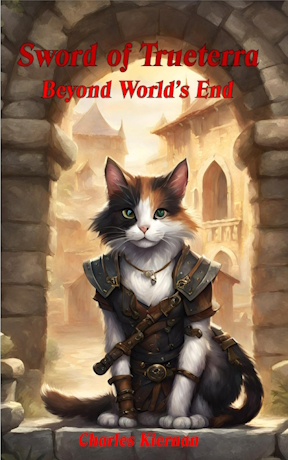
My book launch is in midstream. To recap, I published the ebook version of Sword of Trueterra on Amazon at 99₵, then, in mid-September, I did a five-day giveaway for my arc readers (advanced reader copy) to download it and get it for free. My hope is they will give me an honest review before November 1.
Also, mid-September I took part in four group author promotions through StoryOrigin. I have also utilized StoryOrigin for further book reviews. For those of you who missed the five-day giveaway, here is your second chance. Go to StoryOrigin. You will need to setup an account, but it is free. There is a reader side to the site and an author side. Find the reader side and look for “Free eBooks.” To find me, use the filter and choose the “fantasy” tag and my name in the author box.
What will happen is that I then need to approve you as an arc reader, and StoryOrigin will then make the ebook available to you.
For those of you interested in getting your book reviewed, the application is a little onerous. You need to have three sample copies (EPUB, MOBI, and PDF) for prospective reviewers to look over, then three full versions in those three formats.
I know I have talked about Calibre before. They say of themselves, “Calibre is a powerful and easy to use ebook manager. Users say it’s outstanding and a must-have. It’ll allow you to do nearly everything, and it takes things a step beyond normal ebook software. It’s also completely free and open source and great for both casual users and computer experts.”
Okay, there is a learning curve, but there is a manual and a number of Youtube videos. I used it to turn my DOCX files into the different formats mentioned above. If you are going to self-publish, you will need to understand Calibre.
Another avenue for getting reviews is Reedsy. (Check them out. A wealth of resources. Similar to StoryOrigin in some ways.) I got a review from them with A Vacant Throne. It was a bit of a struggle. They pretty much promise you a review for $50. My problem was that the person who signed up to review the book didn’t. I had to contact support, and it took two additional months, but they were good to their promise.
Again, I had to upload the EPUB and PDF versions of my book and jump through some other hoops. It took me an evening to do it all, but the paid review I got the last time was professional.
That’s all for now. Next month I’ll talk more about my “stacked” promotion.
I am returning from an evening stroll in the Magic Forest. I went to the pond and lingered there awhile watching the reflections in the water before going back to my study. It is pleasant to know that every visit to the forest need not end in some sort of drama.
However, as I enter my study through the French doors, there sits on my table by my comfy chair a crystal pyramid about three inches tall. I sit down to inspect it more closely.
Thalia and Jini are away tonight doing who knows what. Melissa, whom I had invited over for dinner, is off to some meeting instead. Duckworth is out of town on some business. Who would have dropped off an odd bauble and left without a word?
Beyond me and the bauble is a table lamp. The light it casts through the pyramid appears as a shifting, shadowy pattern on my side of the tabletop.
Why does the pattern move?
I pick up the pyramid, placing it in the palm of my hand, and peer into its facets, trying to discover the cause.
I now stand in a somewhat exotic, town setting, its architecture not familiar to me. There is panic in the air; soldiers and civilians appear to be scurrying about, but the scenario is frozen.
Without being told, I know what is happening. They prepare to battle; unless they can come up with six hundred thalers for ransom, their enemy would attack. Despite the promise of being made the mayor of the town to anyone who would pay the ransom, no one has come forward. What I am seeing dissolves before my eyes.
Now I am standing by a lake. The tableau in front of me is of soldiers restraining a raggedly dressed youth, as one soldier places coins in the hat of another man who is looking sadly at the youth.
Again, I know what is happening. The enemy has seized a young fisherman, but at his father’s pleading to let his son go, the captain compensates the father with six hundred thalers.
Another scene change, and I am at the back of a crowd gathered around a raised platform on which stand the town dignitaries and the elder fisherman. The scene informs me that the fisherman contributed the six hundred thalers to satisfy the ransom and is being declared the mayor. Further, it is declared that the fisherman will henceforth be addressed as “Lord Mayor” and no other title on pain of being hung from the gallows.
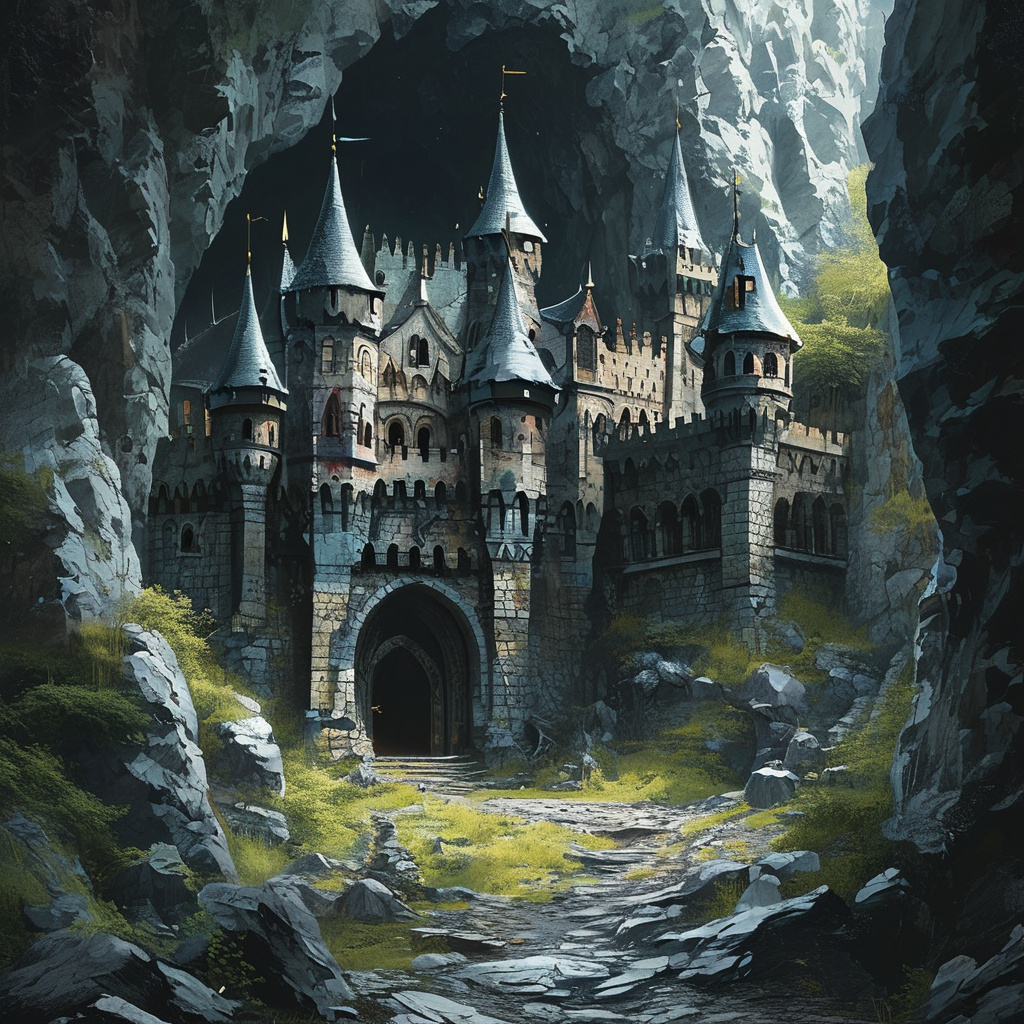
In the next image, I stand behind the young fisherman who is staring at the side of a mountain, which has opened up, revealing an ominous castle. At this point, he has escaped his capturers and has wandered to this spot to witness the miracle before him.
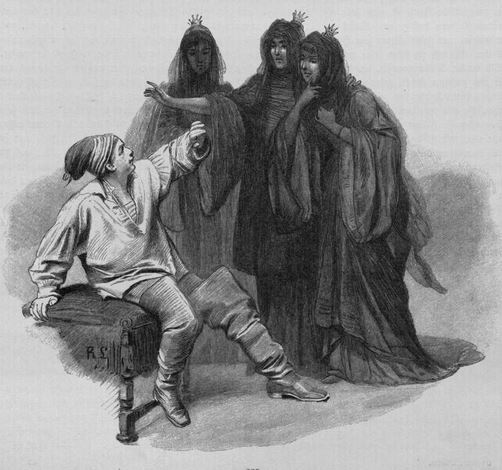
After this scene fades, he and I are inside the castle, in a room where all the furniture is draped in black cloth. Before us stand three princesses, dressed in black and of dark complexion except for a white spot on each of their faces.
I understand they mean him no harm and wish for him to release them from enchantment. He asks how and is informed he must not address them or look at them for a year. If he needs anything, he only needs to ask aloud, and if they are permitted, they will provide. After a time, he wishes to visit his family. He is transported back to his home in East India.
East India?
I now see the young man surround by guards holding spears toward him, along with a group of elderly men pointing their fingers at him.
Upon returning to his hometown, he asks after the fisherman and is told not to use that title for the Lord Mayor, but he persists. The lords of the city are about to take him to the gallows for this offense when he is allowed to visit his childhood home where he dons his old clothing and is recognized by the lords for who he is.
I then see him with his family—dressed in his poor clothing, his father, the Lord Mayor, in rich robes—the father and son embracing one another.
He then relates his story to all. However, his mother warns him against the black princesses and tells him to drip hot wax on them from a consecrated candle.
In the next image, he holds a candle above the sleeping black princesses. I know he is nervous and accidentally lets hot wax drip on the princesses. What I see next is more intense. The images flip rapidly, illustrating the actions of the princesses as they turn half white and rise up exclaiming—and I can’t tell you if I heard the words or read them—“You accursed dog, our blood shall cry for vengeance on you! Now there is no man born in the world, nor will any ever be born who can set us free! We have still three brothers who are bound by seven chains, and they shall tear you to pieces.”
In the last scene, the youth has escaped through a window, breaking his leg as the castle crashes into the ground and the mountain closes. There the images stop, my “understanding” ends, and I sit once again in my study staring at the pyramid.
Fairy Tales of the Month: September 2024 The Three Black Princesses – Part Two
AI Art
On Reflection
My shock increases when I look up and see myself seated across from me in a mirror-image comfy chair.
“What are you doing there?”
“I was about to ask you the same.”
“Well, this is most unusual. I don’t know what to think. I am—permit me to say—beside myself.”
“I knew you were going to say that.”
We regard ourselves for a while until I say, “Well, this is the pyramid’s doing. I’ll suppose it is its way of getting me to think about the story to myself.”
“Agreed,” myself returns. “What do we think about the story?”
Myself nods. “Certainly one of the lesser tales, but it was in the first edition and not booted out like some of the others.”
“True,” I say. “Perhaps the pyramid wants us to reconsider the tale. I believe we dismissed it when we first read it.”
“True again,” says myself. “Let us tear it apart. We start with a town under siege, the deliverance from which is six hundred thalers.”
“A tidy sum,” I agree, “but if they had passed around the hat, I would think a town full of people, under attack, could easily ante up that amount of money, but that is not the case.”
“Instead,” myself picks up my thread, “the mayoral position is offered up as a bribe, but still to no effect until the fisherman arrives on the scene.”
“And he,” I continue, “acquired the money from the same enemy that had taken his son prisoner but felt somehow obliged to compensate the father with the same amount of money needed to lift the siege.”
“You are thinking what I am thinking,” myself says to me.
“Yes, the economics of this story stink.”
“But let us not be too harsh on this lack of logic. We both know that the fairy tales are not based on logical thinking. In fact, they wallow in defying it.”
“True, again,” I say to myself. “The fisherman becomes the Lord Mayor and is to be addressed by no other title. I can’t help but notice the passive tense of the declaration. The story does not tell us who—the active character—made the pronouncement. It is just there. Subsequently, it is implied that the word is enforced by the ‘lords’ of the town.”
“Good point,” myself nods, “which is a setup for later on in the story.”
“Correct, of course.” On impulse, I reach for my pipe and tobacco and see in my peripheral vision myself doing the same. The study is soon filled with the scent of Angel’s Glory, a blend I keep in reserve for special occasions.
“We now turn our attention,” I say, “to the young fisherman, who has escaped his capturers—they, therefore, gaining nothing for their efforts—and for no apparent reason, is admitted into an enchanted castle.”
“Let’s stop there and linger,” myself declares. “Why does the mountain open up for him?”
“Oh,” I say, “because he is us, or—as we experienced in the pyramid—we stand right behind him. We want the mountain to allow us into the enchanted castle. The fairy tales are always about us, a source of wish fulfillment.”
“I knew that,” says myself, “but I will never tire of hearing it.”
Fairy Tale of the Month: September 2024 The Three Black Princesses – Part Three
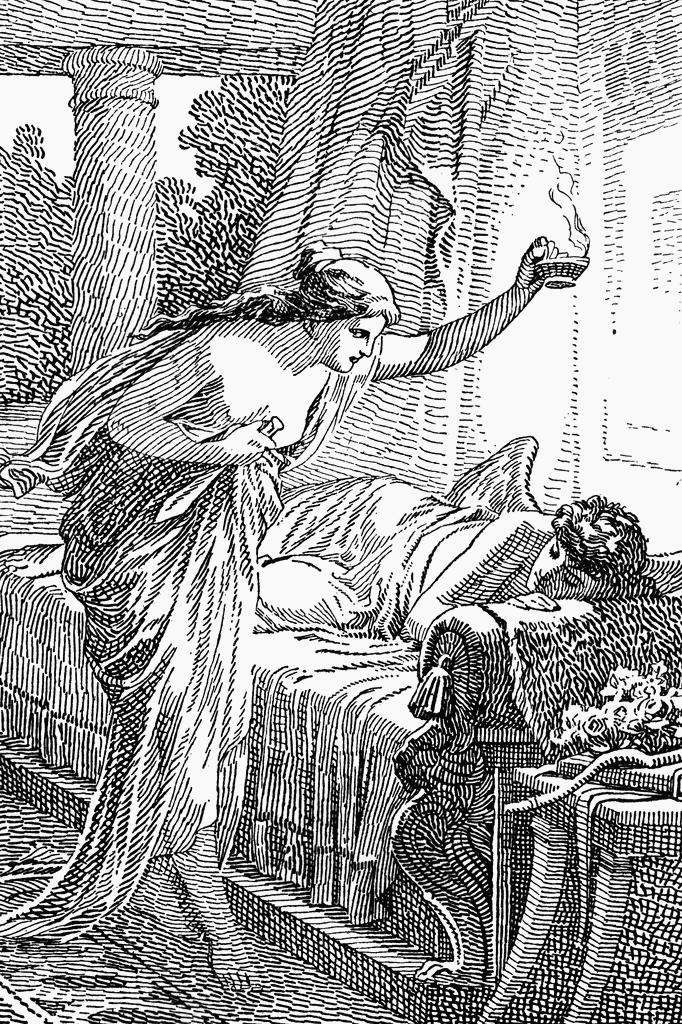
Psyche at the Couch of Cupid — Gayley, 1893
By Myself
“Next,” I say, “is actually the interesting part of the story: the three black princesses. I love all the furniture draped in black and the princesses themselves dressed in black. That suggests to us that there is some state of mourning going on, but we see no corpse.”
I puff on my pipe before speaking again. “The white spot on their faces, what can that stigmata signify?”
Myself ponders. “Black is the color of evil, but I don’t think white represents only good in our story’s images. I believe white is what widows wear in India among the Hindus and not black as in the West, and does this story have its actual origins in India, as the story itself suggests? What of the wax of the consecrated candle dripping on them and turning them half white?”
“We are getting ahead of our story,” I say. “At this point, he agrees to help them break a spell by not speaking to them or looking at them for a year. That is a pretty namby-pamby challenge. No herculean, impossible task, no suffering on his part. And yet, he can’t achieve it.”
“Again, we get ahead of our story,” myself reprimands.
I smile to myself. “Ok, back on track. The youth wishes to visit his family. Here we enter into the Beauty-and-the-Beast/Psyche-and-Cupid motif with a bit of gender reversal.”
“You know,” myself relights his pipe, “the clothing thing is inserted at this point, which reminds me of a Nassardim story.”
“Yes,” I say in delight, and we tell each other the tale in tandem.
“Nassardim, invited to a feast, shows up poorly dressed.”
“He is not allowed entrance and returns home to put on better clothing.”
“Now, with respect, he is accepted into the company.”
“To his host’s distress, Nassardim stuffs food up his sleeves, saying, ‘Eat, eat.’”
“’Nassardim,’ says the host, ‘what are you doing?’”
“’Well,’ says Nassardim, ‘when I appeared poorly dressed, I was sent away. When I reappeared well dressed, I was escorted in. Therefore, this feast is not for me but for my clothing.’”
We laugh at our own joke.
“Seriously though,” I say, “this story’s treatment of the motif in question is unusual.”
“There is,” myself contemplates, “the clumsy handling of the candle wax. First, a consecrated candle occurs in no other story that we know of. This is one of those Christian insertions for which the Grimms were open to, given their bourgeois audience.”
“What bothers us,” I say, “is that his mother instructs him to drop the candle wax on the princesses but with no indication as to why or for what purpose. When he does drip the wax, it is described in the story as an accident. Not to mention he is looking at the princesses in violation of his promise to save them.”
“Clumsy, as we agreed,” concludes myself.
“Let me press our point about how unusual this is,” I say. “Psyche drips the wax on the sleeping Cupid, then has to pursue her flown lover through the rest of the story. In our version of the motif, the dripping of the wax causes the sudden, closing apocalypse.”
“Yes,” says myself, “while he suffers a broken leg, what happened to the princesses’ blood calling out for revenge and their three chained brothers tearing him apart?”
“Not much,” I frown. “If I recall, we searched for a story about three chained brothers at the time we first read this but came up with nothing.”
“Now,” myself says, tapping out our pipe, “that we are at the end of the story, where the wax has turned the princesses half white; does that bring up the notion of yin and yang, especially with the previous white spot on their faces?”
“We both know that is a stretch,” I say. “The symbol of yin and yang does not appear in the Hindu representations. It is more of a Taoist thing, but not unknown to Buddhists, but there are not that many Buddhists in India despite the religion’s origins. However, the notion tempts us.”
“A given,” myself agrees. “Therefore, overall, what do we think of this tale?”
“Despite the pyramid’s efforts,” I say, picking the crystal up again and looking into its facets, “and regardless of some enticing images, I’ll guess the story’s significance will continue to ellude us.”
I set the pyramid back down on the table. I see that I am alone in my study.
My book launch begins. There are a number of moving parts.
As I mentioned last month, I am using the promotional site Story Origin to give away my free, ever-evolving book, Stories and Poems of Trueterra. I am cross-promoting with four groups of authors. Below are links to these groups. Please check them out. These books are free. Be aware the authors will add your email to their list. As I said before, you can always unsubscribe.
From the first list, I suggest Tales from Derian by Wendelyn Vega. It is very similar to my own in concept and a fun read.
From the fourth list is Clash of Goddesses by R.A. Goli. It is a bit of a reimaging of Norse mythology concerning Frigga and Baldur. It is 26 pages long and, I believe, a partial of a longer work. A lot of these free offerings are there to tempt you to follow that author.
When you click on a selection, you will get a box in which you need to click “yes” to acknowledge that you are sharing your email address. Then press the blue bar below to get the download options.
For the rest of my launch, I have mapped out things in a somewhat non-traditional way. That tradition is based on the old days of physical books only. What most authors do is get copies of their book to people to review it. That might only be a DOCX. Then on launch day, when the author pushes the publish button in KDP, they round up their reviewers to go into Amazon and submit their reviews ASAP. That is really quite an ask.
My pace is different. I published my book, Sword of Trueterra, last month at the introductory price of $0.99 for the ebook and the paperback at $8.95. I don’t consider that my launch because I didn’t tell anyone. I thought the book was as safely out of sight as if I had buried it in the sands of Egypt. Not so. The Sword of Trueterra paperback is selling as well as The Vacant Throne paperback since they are now a series and appear together.
However, as of now, starting September 15th until September 20th, I am offering the Sword of Trueterra ebook for free on Amazon, a promotion that they allow, but only for five days every ninety days.
In other words, you can get the book for free. I am doing this in hopes you will give it a review (an honest review, please) on Amazon. You can put your review up anytime you wish, since the book is published. I want to have a good number of reviews before I “launch” during the week following November 1st. That is the date I will “stack” the promotion sites (and I will have the ASIN number for them).
I will also use Story Origin for getting reviews. Say, if you want more free books, go to Story Origin and agree to be a book reviewer.
January 1st is the date I will raise the prices from $0.99 and $2.99—end of book launch.
We don’t have as many evening reads as we did when Thalia was little. In fact, the pattern has settled into readings on Sunday nights. A good way to start a week. Thalia, some time ago, took over the duties of being the reader. I enjoy being read to, and Thalia has such a soothing, yet articulate voice.
We have all gathered as usual, Thalia and I in our comfy chairs, Johannes curled up on the window seat, the fairy on Thalia’s shoulder, and the brownies lurking in a dark corner.
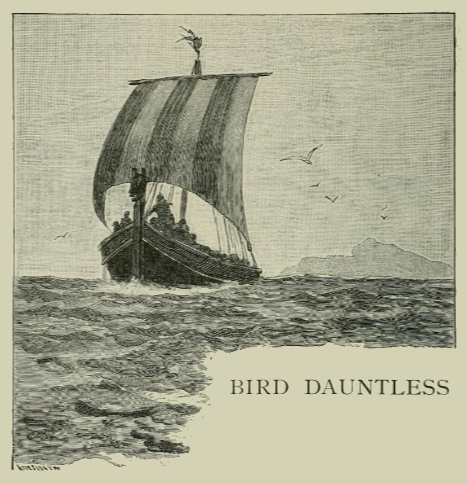
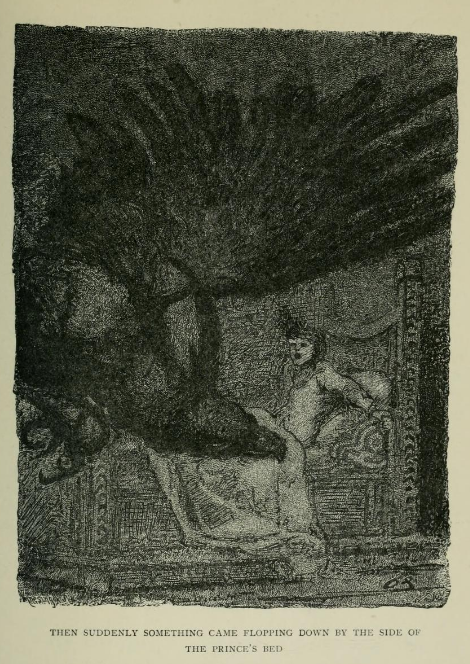
Thalia holds a new acquisition in her hand from Melissa’s bookshop. “Fairy Tales From the Far North, by P. C. Asbjornsen,” she announces. “From which I will read Bird Dauntless.”
There is a king with twelve daughters, of whom he thinks the world, but one day they disappear. Word of this strange event comes to a realm whose king has twelve sons. The brothers determine to find and marry the twelve princesses. Their father gives them a ship with Knight Redbeard to command and steer.
They search for seven years until they encounter a storm that lasts for three days. At the end of it, all are so exhausted that they fall asleep, except for the youngest prince. He sees a dog on an island and lowers a boat to rescue it. The dog leads him to a castle, and turns into a beautiful maid, with her father, a fearsome troll, sitting beside her.
From the troll, the prince learns that the twelve princesses were stolen away by the troll’s master/king to scratch his twelve heads. The troll gives the prince a sword with which to slay his master/king, allowing the troll friend to be the new king. The troll says there is still another seven-year journey before them in order to get to their destination. The troll also warns that Knight Redbeard hates the prince and will kill him if given the chance.
After seven years, the pattern of the three days of storm repeats, and the youngest prince slips away from the ship as the others sleep, enters the castle of the twelve-headed troll, and finds him asleep as his friend, the troll, had predicted. He waves the princesses to stand back and quickly slays the king troll.
Having already started their return voyage, the princesses realize they have forgotten their crowns. The youngest prince offers to return for them while the rest remain at sea. The Knight Redbeard takes the opportunity to abandon the prince with threats of death for anyone who defies him. The prince is left stranded on the old troll king’s island.
To the prince’s aid comes the Bird Dauntless, an apparent resident of the old troll king’s palace. It flies him back to the new troll king’s palace—the prince’s friend—with magical speed.
Seven years later, after a three-day storm, the sleeping crew comes to the new troll king’s island. The youngest prince boards the ship, reclaims the sword of the new troll king for him, and sees that the youngest princess sleeps with a naked sword by her side and that the Knight Redbeard sleeps at her feet.
Another seven years pass as the crew travels back to the kingdom of the twelve princesses’ father. Toward the end of the seven years, the new troll king gives the prince an iron boat that will take him back and return by itself. When the prince comes in sight of his brothers’ ship, he raises an iron club to evoke a storm that allows him to pass by them unnoticed.
Pretending to be a storm-tossed sailor, the prince creates the rumor (however true) that the princesses are returning. When they do return, there is much joy except for the youngest princess, who is now obliged to marry the Knight Redbeard.
The prince, now pretending to be a beggar, offers up the crowns. Seeing this, the youngest princess reveals the deceit of the Knight Redbeard. The king has Knight Redbeard executed before he can do any more harm.
“And all, as you may suspect,” says Thalia, “live happily ever after.”
Fairy Tale of the Month: June 2024 Bird Dauntless – Part Two
Twenty-eight Years
“Twenty-eight years!” Melissa marvels. “Seven to the troll’s island, seven more to the king troll’s island, and fourteen more returning. What a patient people they must have been.”
I smile at her quip. “This is the stuff of fairy tales.”
We are sitting, again, on Melissa’s reading-space couch. She has generously provided a full teapot and cups.
“Obviously, you know the story,” I say.
“I read the book before I sold it to Thalia. That is one of the perks of being a bookseller. I read them before I sell them to my profit.”
“Very good,” I say. “But what are your thoughts on this tale?”
“Well, first is the twenty-eight-year saga.” Melissa holds her teacup to her mouth but does not drink, frozen in thought. “There is a cultural context to this tale that came out of the Middle Ages. The peasantry was tied to the land. They existed pretty much from hand to mouth. It was a mark of privilege to have the ability to travel. Besides religious pilgrimages, there were the Crusades. That men of royalty would go off for extended periods of time seemed to have been expected. Twenty-eight years is still excessive, but for the listeners of the time, not unimaginable.”
She finishes taking a sip of tea and continues.
“Then there is the strong suggestion that none of the characters age.”
“No, wait!” I exclaim. “The story does not say that.”
“You are right; it does not, but it is implied. Note that the heroes and heroines get married and live happily ever after. ‘Ever after,’ not ‘for the rest of their lives.’
“Death in the fairy tales is reserved for three categories of characters: witches, trolls, giants, and all other evildoers; kings that are old when the story starts so that the hero can inherit the kingdom; and mothers so that their progeny can have an evil stepmother. There is the caveat that if the king gives half his kingdom to the hero, he can avoid mention of his demise. Even taking an axe and cutting off the head of a fox may produce the enchanted brother of the heroine. Death is a bit elusive in the tales.”
“I am going to suggest you are exaggerating.” I sip my tea.
“Let’s take our tale,” Melissa persists, pouring herself another cup. “Our heroes and heroines return on the cramped quarters of a ship for fourteen years, at the end of which there is no mention of children being born during that time.”
Oh, she may have a point here.
Melissa takes another sip of tea. “They don’t get grumpy, there is no mention of graying hair, there are no medical issues. Why? Because they are suspended in time.”
“Now there is a notion I have not entertained before.” I set down my teacup. “Time often moves differently in the Celtic fairy world than it does in our world. Why shouldn’t it not move strangely in other tales as well? I will buy into your analysis.”
Melissa smiles. She has her little victory.
Fairy Tale of the month: June 2024 Bird Dauntless – Part Three
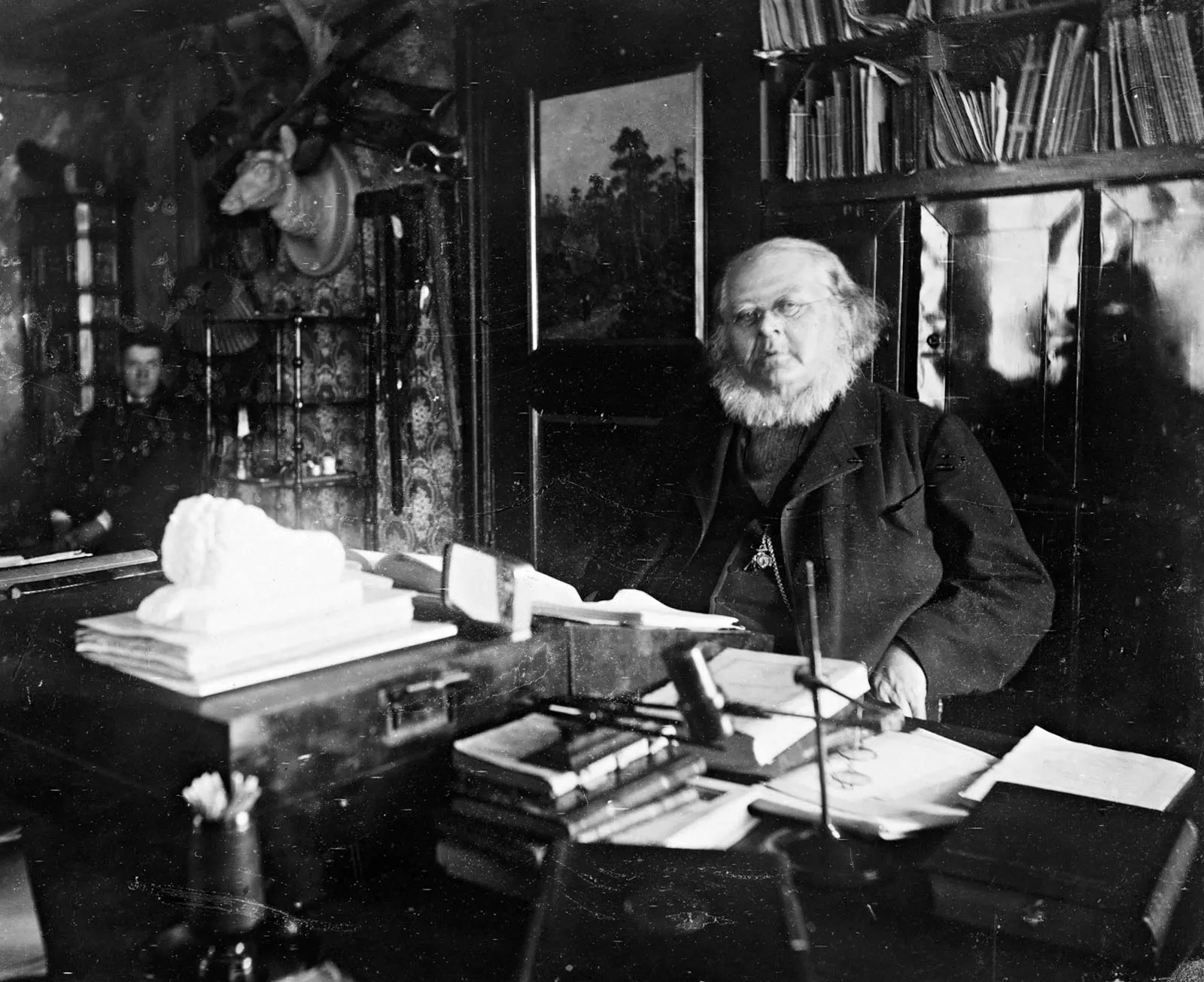
Peter Christen Asbjornsen
So Many
“There is also quite a cast of characters.” Melissa absently rotates her teacup with her fingers. “This tale starts with twelve princesses, twelve princes, and their two fathers.”
“That’s twenty-six,” I say.
“Then there is the Knight Redbeard, two trolls, one troll daughter, and the Bird Dauntless.”
“Making an uneven thirty-one,” I calculate. “Unless we count the king troll’s twelve individual heads.”
“No, don’t.” Melissa smiles and takes another sip of tea. “Eleven of the princesses and eleven of the princes are a sort of corps de ballet, dancing around in the background, not coming front and center. Only the youngest prince and princess do we actually see.”
“Hmmm, a form of crowd control?” I say.
Melissa ignores my quip. “Out of the thirty-one characters, only two have names: the Knight Redbeard and the Bird Dauntless.”
I raise a finger. “Knight Redbeard I recognize. In the Danish folk tales with which I am familiar, he is the Red Knight, the stock villain. He is in the story to cause trouble, sometimes only for the sake of causing trouble.”
“I recognized him too. He is the one to be punished by death at the end of the tale and is brought back again in another tale to be killed once again. I must wonder if this was not a running joke among the tellers to recycle the bad guy.
“What I found most curious was the Bird Dauntless, starting with that curious name. Asbjornsen thought it important enough to name the story after it. The bird is a necessary component of the tale. The young prince would otherwise remain abandoned. Nonetheless, the bird only has a brief appearance and then disappears from the tale.”
“I have,” I say, “run across large birds rescuing heroes before. What jumps to my mind, for example, is The Underworld Adventure. In that story, the hero is abandoned by his two brothers when they are looking for missing ladies in an underworld. It is a huge bird that flies back to the upperworld, similar in feel to our tale. There, too, the bird serves its purpose and then is gone.”
Melissa considers this while drumming her fingers. “I suppose it is not unusual for characters to disappear from these tales. Besides the Bird Dauntless coming and going, the princes’ father gives them a ship, and then the story is done with him. We don’t even hear him being invited to the wedding. I also think the troll’s daughter got left behind—a beautiful maiden and shape-shifter—the story could have done more with her for my liking.”
“For myself,” I say, “I found the use of the three-day storm an interesting device. Every time the ship comes to one of the troll islands, their arrival is preceded by a storm, after which the crew falls asleep except for the youngest prince, who forwards the story.
“On the return trip, he raises an iron club, given to him by his troll friend, to create a storm so that he could slip by them unnoticed. I don’t recall ever seeing a troll/storm relationship before.”
“Let me return to the character of the bird,” says Melissa. “What of the name ‘Bird Dauntless?’”
“I did Google search that,” I say. “I came up with nothing.”
I mentioned my “reader magnet” in a previous blog. It is called Stories and Poems of Trueterra, which refers to my novel A Vacant Throne. There are stories and poems alluded to in this novel but usually does not present them in their full context. Stories and Poems has these in full, along with additional material written in the spirit of the originals and that I continue to write. When I add new stories or poems, I send off the new version to my email subscribers to remind them that I still exist and hopefully keep them engaged until I have another book to promote.
This is a standard practice in the self-publishing world. Typically, authors send out a newsletter to keep in contact with their subscribers. I prefer to write additional stories.
Another standard practice among self-publishers, particularly on Amazon (Kindle Direct Publishing), is to have a new release available for free for a few days to get things rolling. You can only do this for a few days on Amazon, then the price must return to normal. You cannot publish a free book on Amazon. My reader magnet is published on Draft2Digital and available through Smashwords.
Part two of this scheme of offering the new title for free is to “stack” the offers of promotional sites to help give away your book. Here I will refer to David Gaughran’s excellent blog on promotional sites for explanation.
I spent less than two hundred dollars to have multiple promotional sites to help me give away e-copies of A Vacant Throne. To my delight, during this campaign, there were 1300 + downloads of my book. To my distress, I appeared to have garnered one bad review for my effort and nothing more. I vowed never to do that again.
However, I recently had a “duh” moment. What if I use the promotional sites to give away my free book? On the promotion site, I will present a pitch for Stories and Poems of Trueterra with a line somewhere informing the reader that they will be directed to my opt-in page on Mailerlite. I think that is only fair. I only want people who have some interest in what I am writing. I might get hundreds of subscribers.
Is this a long shot? Yup. But if 9% of them respond in the future, this could be well worth it. I’ll let you know how it turns out in a future blog post.
Also, I will soon be sending out a new version of Stories and Poems to all of you on my email list. My present concern is how the poems’ formatting appears on the various e-readers. Please let me know in the comment box if there are no breaks between stanzas, strange indenting, etc. If you are not receiving Stories and Poems of Trueterra, here is your chance! And don’t worry, you have my promise that our email address is safe with me.
Next month, I might be blogging on the formatting of poems for epubs, depending on what feedback I get. There are problems.
I am alone this evening—sort of. Thalia and Jini are in the kitchen, along with the fairy, making themselves a late-night snack. I am making myself scarce per Thalia’s instructions. Well, there is nothing I could add to the young girls’ sleepover prattle.
Along with a bit of whiskey, I entertain myself with the trick of running my finger across the spines of books on my shelves, picking one out on impulse, closing my eyes, and opening to a page.
The book I choose is Folk and Fairy Tales from Denmark: Stories Collected by Evald Tang Kristensen, Vol. 1, edited by Stephen Badman. In bold letters is the title, The Prince and the Tiger Child. I settle into my comfy chair and take a sip of whiskey.
There is a husband and wife who have no children and blame each other. The wife goes to the wise woman, who gives her the odd advice to go home, pretend to be ill, and send her husband to her for the cure.
This is done, and the husband is given a small, covered pot, with the instructions not to look inside. He, of course, does and sees three small, cooked fish that he knows as smelts. A bit peckish, he eats one of the smelts. Nine months later, his wife gives birth to a child, and so does he.
When his wife goes into labor, he hides in the woods and gives birth to a daughter, whom he abandons, mortified at what has happened to him. She is discovered by a wyvern that takes the child into its mouth, but before it can consume the babe it is attacked by a tigress. The tigress, having recently lost her cubs to hunters, takes the child as her own and nurses it.
Years later, the “tiger girl” is discovered by a young king out hunting when his horse paws at the entrance to the girl’s hiding place. The young king marries the girl, much to his mother’s distress. The old queen insists the girl is little more than a wild animal.
When the young king is obliged to go off to war just before his child is born, his mother takes advantage. She steals the child, gives it to her maidservant to be drowned, smears the girl’s mouth with blood, and declares the mother has eaten her own child.
Upon returning from war, the young king refuses to believe what he hears. Two more times his wife bears a child; each time the baby is spirited away, given over to be drowned, and the old queen insists the girl has eaten her children.
However, the maidservant, whose duty it was to drown the infants, did not have the heart to do so. Rather, she put each child in a watertight box and floated the poor being down the river toward its fate. Each time, a different miller and his wife find the floating box and adopt the child as their own.
Meanwhile, the old queen keeps up her campaign, declaring the girl should be burnt. The young king cannot bring himself to that justice. Instead, he sends his queen from the court to tour the kingdom, never to return. She leaves, well provided for, in a carriage drawn by six horses.
As soon as they pass through the gate of the capital city, the young queen finds her voice. Immediately, she instructs her driver to go to the mill where her eldest son now lives. She is well received, and after dinner, as is customary, they play a riddle game. However, the queen demands high stakes if they cannot guess her riddle. She wants another carriage with six horses, a coachman, and their child—her child—as a servant.
The riddle is, “My father is a fish, my mother is a man, a wyvern bore me in its mouth, and I was brought up by a tigress; a horse gave me a husband. I bore my husband three healthy children, all of them died, but all three are still alive.” The miller and his wife, of course, are clueless.
The queen repeats this quest two more times until she has all of her children. When she eventually returns to her husband’s capital city, she enters the castle courtyard with four sets of carriages, one for herself and three for her sons. She is, also, unrecognized by the king or the old queen.
After dinner, the riddle game commences. This time, the young king knows enough about the clues to guess that this is his wife, and all is revealed. The evil old queen is consigned to the punishment she wished upon her daughter-in-law.
“Oh, nice,” I say aloud. “I can confound poor, logical Duckworth with this one when we take our walk tomorrow.”
I empty my whiskey glass.
Fairy Tale of the month: May 2024 The Prince and the Tiger Girl – Part Two
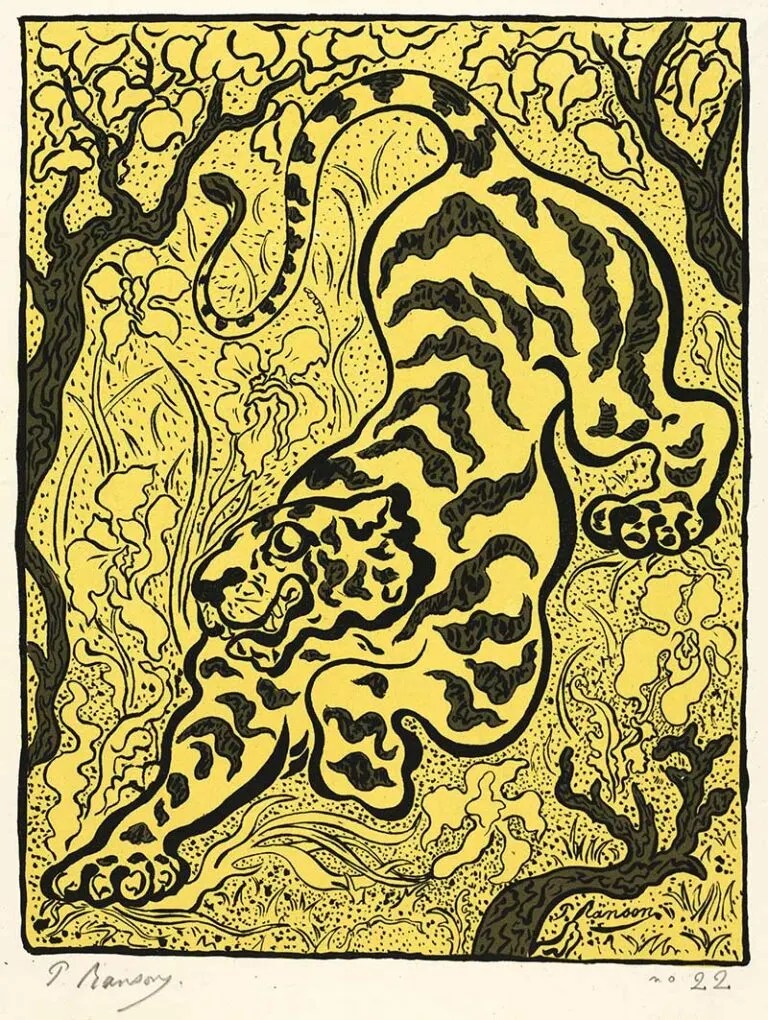
Tiger in the Jungle 1893 Paul Elie Ranson
Hill Garden
Duckworth and I wander about Hill Garden and its winding, multilevel pergola at Hampstead Heath, often described as a “secret garden.” Built by Lord Leverhulme as a place to entertain guests in good weather, it had fallen into near ruins but then restored by the City of London Corporation. It makes for a marvelous ramble up and down stairs and through the gardens on a spring day. Especially with the wisteria hanging from the pergola rafters.
I have just finished relating The Prince and the Tiger Girl to Duckworth, and I try not to smile at his bemused expression.
“Let me get this straight,” he gestures with a finger in the air. “A tiger in Denmark?”
“It was there to attack the wyvern,” I say. “Or in other words, they both were exotic beasts to this story’s listeners, on a par with dragons and unicorns.”
“Okay,” says Duckworth. “I’ll let you get away with that one and move on to a more serious story offense.”
“And what might that be?”
“Things like a prince out hunting finding a beautiful woman hiding in some wood; having an evil queen abducting children and rubbing blood on the heroine’s mouth—as improbable as these things are—I understand that these are familiar tropes in the fairy-tale canon.
“However, having the heroine pass through the gate of the city and suddenly be able to talk and know where her children are—knowledge she can’t possibly possess—goes too far beyond logic.”
“Duckworth! I’m ashamed of you,” I declare, suppressing my mirth and pretending to be annoyed. “How often have I told you that one cannot apply logic to fairy tales?”
“Well,” he grumbles, “if not logic, what reason can you apply to explain her sudden insights?”
We come to a bench under one of the pergola and breathe in the scent of the wisteria.
Presently I say, “That she was passing through a gateway is significant. She was leaving her old world into another. Her purpose in the new world was to find her way back to her old world with all the injustices foisted upon her corrected. That is to say, to reclaim her children.”
“Good,” says Duckworth, “as far as it goes, but what about her unaccountable knowledge? Where does she get that from?”
I put my hands to my chest dramatically. “Why, from us, the listener/reader. In the theatre, I think it is called the fourth wall. This is the breaking of the fourth wall, if only for a moment, and the heroine now knows what we know.”
“Oh, poppycock!”
“No, listen. How do we know, you and I, sitting here, on this bench, smelling the wisteria, are not, in fact, the imagination of some writer scribbling us down? What thoughts could that writer put into our brains?”
“Double poppycock!”
I see I will not convince him and take my argument no further. With no signal between us, we rise and continue our amble.
“Here is another thing that bothers me,” Duckworth picks up the conversation. “Not just in this tale but in others as well, the characters inexplicably do not recognize each other, even if, as in this case, they are husband and wife. I recognize long-ago friends from public school, for heaven’s sakes.”
“Ah, here I can give you a possible, logical—which you so adore—explanation. She wore a veil.”
Duckworth cocks his head to indicate I should continue.
“In medieval times and beyond, women of worth wore veils in public to indicate their modesty and high station. Our young queen would certainly have worn a veil and had reason to hide her identity until she had proven herself.”
Duckworth knits his brow. “I thought that was an Islamic thing.”
“No, no. Muslims are newcomers to the religious world. They took the veil from Jewish and Christian traditions of the time. Young girls, serving maids, and prostitutes did not wear the veil. Prostitutes, in particular, could be severely punished for the effrontery of wearing it.”
“Well,” says Duckworth, “you won two out of three arguments, but really, we being figments of someone’s imagination takes the cake.”
Fairy Tale of the Month: May 2024 The Prince and the Tiger Girl – Part Three
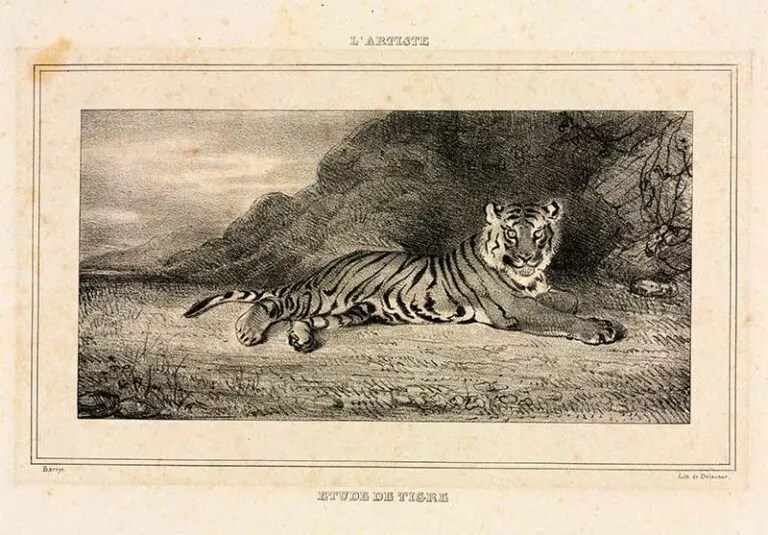
1832 Antoine-Louis Barye
A Metaphor
“It is clearly metaphorical,” Melissa says with her usual certainty, taking a sip of tea.
“Metaphorical of . . .” I ask.
“Of women’s journey.”
We sit in the reading area of Melissa’s bookstore, each with a cup in our hands and the teapot in its cozy on the table in front of us, along with a copy of Folk and Fairy Tales of Denmark from which I have just finished reading aloud. Two customers wander through the store. From where we sit, Melissa can keep an eye on the register.
“Really?” I say. “I wasn’t seeing that and am not sure that I do, at least not in terms of metaphor. Her birth, for example, I thought of as something of a joke that worked into her riddle later on. How is that metaphorical?”
“At the time this story was collected—and in some cases still today—a male child was more valued than a female child. The male child was the one to carry on the family name. The male child would receive a higher education or be apprenticed out to learn a trade. For a man to ‘have’ a daughter could be a disappointment.”
“And her abandonment?” I ask. “Little girls aren’t usually left in the woods.”
“Well,” Melissa says, becoming a little unfocused. “In a way, they can be. Again, a girl’s brother may be given the greater share of a family’s resources and attention, and she rather left behind. The tigers and wyverns? These are the good and bad influences that come in and out of a girl’s unstructured career pretty much at random, as opposed to the careful grooming of a brother’s path to success.”
I sense this story is hitting close to home—not my intention—and I alter the trajectory.
“Then enters the prince to change everything?” I suggest.
“He is simply another male figure,” she continues. “However, there is a change. Instead of abandoning the girl, he takes control of her through marriage.”
I know Melissa is divorced. I am going to pour myself a cup of tea and pretend I don’t notice the parallel.
Melissa takes another sip of her tea, then says, “In the context of this story, the prince tries to take control, with all benevolent intentions, but is unable or skillful enough to do so. Another actor, with their own agenda, thwarts his efforts. His own mother.
“I will sympathize. Had it been an advisor, stranger, or friend, he should have been—and rightly so—skeptical of their opinions. But his own mother? That is a special bond hard to break. Yet, he resists.
“In the end, after a campaign of lies and deceit and the claim that the young queen should be burnt, he sends her away from court. The ‘he’ abandons her all over again.”
Ouch.
I will try to divert. “What of the passing through the gateway? What of her suddenly knowing the unknown?” I take Duckworth’s position at this point.
“Yes, that is the transformation. We have often talked about transformations in fairy tales. Endlessly, actually, and here is another.
“When she passes through the gateway, she is liberated from her past. She comes into her own. When that happened to me, I understood things I had not been told. I simply knew as she did.
“Our heroine goes forth and reclaims her life. She takes back, through riddles, her children, all males. I wish there had been a daughter, but that’s just me.
“Myself? I made other choices. I had no children. I abandon the men in my life as they have abandoned me. You, my friend, are a bit of an exception.”
One of her customers comes to the counter, and Melissa rises to attend, ending our conversation.
If I am going to be giving advice to fellow struggling authors, then I imagine I am obliged to talk about email lists. On this topic, I am in the Hubert Humprey camp; an old-time Minnesotan politician—that I remember him dates me—of whom it was said he could talk about any subject, any time, any where, whether he knew anything about it or not. Witness that I have thirty-three fans on my email list, that should disqualify me from opening my mouth on this topic, but here goes.
In the self-publishing world, if you have a large email list (10,000 for example), to which you can market, then you are ahead of the game. How do you get such a list? It is with a “reader magnet.” You offer something for free in exchange for their email address. Then the trick is, you, the author, need to keep them engaged with more content, such as a newsletter, so that they don’t forget who you are when it is time for you to say, “Hey all, I’ve got a new book!”
I have a reader magnet. It’s called Stories and Poems of Trueterra(click if you dare), an on-going ebook of short stories and poems related to my fantasy world. Periodically, I add another story or poem, then send it off to my email list, all thirty-three of them, as a way of saying, “Hey, I’m still here.”
My failure is that the new material is very periodical, maybe four times a year, not weekly or daily like most email lists that I am on. Yet, I can’t see myself filling up other people’s email folders with prattle, attempting to remind them of my existence.
I am sure you have the same experience as I when we surrender our email address to a virtual stranger, then see our screens populated with items of marginal interest. We can unsubscribe or ignore. I tend to open, glance, and if nothing catches my interest, move on. I do try to keep a finger on the pulse of the market.
Rather than focusing on an email list, I prefer blogging to get attention. Readers come to my blog when they want to read it, not because I am foisting it upon them. I am much more comfortable with that approach. Between this mid-month blog and my end-of-month fairy-tale blog, in April I got six hundred and thirty visitors and eight hundred and three views. Is this a good approach to marketing my book? Probably not, but I have settled into it.
Speaking about being on others’ email lists, there are two that I have found useful. One is Bryan Cohen’s free 5-Day Amazon Ad Profit Challenge. This is a course he runs a couple of times a year, the next one in July. Yes, he is trying to sell you a larger course, and you will have to put up with his unending, positivity-generating, enthusiasm, but he will give you actionable information. In fact, he will handhold you through creating the three basic types of Amazon ads, step by tiny step. If you are interested in Amazon ads, there is no better free course that I am aware of.
On broader topics in self-publishing, there is David Gaughran’s extensive and free Starting From Zero course. He generously shares an immense amount of information in a readable and viewable manner. I highly recommend, and I think I will revisit it again soon. He also has a useful newsletter that comes out most Fridays.
PS. My email list resides on MailerLite, which I talked about before in December’s mid-month blog. I am using MailerLite at David Gaughran’s suggestion.
I find the winter doldrums a good time to straighten things up around the house, especially my study. My table, piled high with stacks of books, became my first target to establish orderliness.
I have them mostly back in their proper places on the bookshelves, but here in front of me, previously hidden by dusty tomes, are three clear, acrylic paperweights with a blooming flower captured at each of their centers. The three sat in the box they came in. A gift from—I don’t recall.
How long have they been here?
I pick the box up and head for the third floor, to what I think of as the nick-nack room. It brims with items I own but have no use for.
The bare, wooden stairwell up to the third floor echoes with the hollow sound of my footsteps. I should probably carpet this someday. I open the door to the nick-nack room and am greeted by darkness and a cold draft. A window must have been left cracked open.
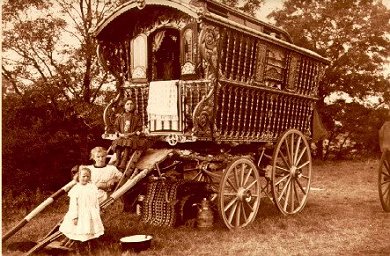
I reach for the light switch and find my hand touching the bark of a tree trunk. Around me are other trees barely visible in the moonlight. Not far ahead is a campfire, its light showing the arc of a wagon wheel and the broad side of a caravan, as well as the figures of three, black shawled, seated women. I venture forward.
“Ladies,” I say in greeting.
“Ah! Here he is at last,” says one of the three ancient crones I see before me. “Sit, sir. You have taken your time. Look at us! What makes you think we would last much longer?”
“Oh, sister,” says another of them. “Don’t be hard on him. He is here in time for us.”
“And so he is,” says the third. “I will start the stories.”
In a fair forest lived a girl along with her four brothers, father, and mother. She had fallen in love with a handsome, rich huntsman, but he would take no notice of her, never answering her calls to him.
She entreated the devil to aid her. He gave her a mirror and told her to show it to the huntsman. She did, but the huntsman knew this to be the work of the devil and ran away. Too late, the girl found out that whoever looked into the mirror thereafter belonged to the devil and that both she and the huntsman were now his.
Still, the devil promised she would get her huntsman if she would give him her four brothers, father, and mother. The girl, for her love of the huntsman, did so.
The four brothers, the devil turned into four strings, each of a different thickness. The father, the devil made into a strangely shaped wooden box with one long arm. The mother became a stick with her hair becoming horsehair.
Stringing the father with the four brothers and drawing the mother across the strings, the devil invented the violin. The music he played caused the girl to laugh and cry. The devil told the girl to play the violin to attract her huntsman. This she did, and the huntsman was drawn to her.
They only had nine days together before the devil returned and demanded they worship him. They refused, and the devil took them away, leaving the violin on the forest floor. One of the Roma found it and played it for all who would listen, causing them to laugh or cry at his will, depending on how he played.
“Do my eyes play tricks on me?” I say. “Now that this story has ended, the three of you look a good bit younger than when I sat down with you.”
They laugh, smile, and nod to each other.
Fairy Tale of the Month: January 2024 Romany Tales – Part Two
Caravan
Next Tale
The second of the Roma women feeds the campfire. Sparks fly up like little stars ascending to heaven. She adjusts her shawl around her shoulders and begins her tale.
The emperor of Bukovina gave a ball, during which a mist descended and carried away the empress. The emperor’s three sons set off to search for their mother.
They came to a place in the road that went off in three directions. Each brother took one of the paths. The youngest, a seer as well as a prince, suggested they each take a bugle to blow upon and call the others should they find their mother.
Entering a forest, the youngest eats an apple from a tree, and two horns grow on his head. While crossing a stream, the flesh fell from his body. At another apple tree, he declared he would follow God’s will and eat another apple. The horns fell from his head, and when he forded another stream, his flesh was restored.
On a mountain, he found a spot bare of trees with a boulder setting at its center. He found he had the power to move the rock easily, which covered a huge, deep hole. With his bugle, he called his brothers. They made a rope from the bark of trees, and it was the youngest who was lowered in a basket into the hole; the elder brothers not willing to try.
In the world below, he came to a house in which dwelt a princess, carried off and kept there by a dragon. The prince inquired of his mother, and the princess sent him to her sister’s house, and she on to the youngest sister’s house. It was she who knew where to find the empress.
He rescued his mother as well as the three princesses and had his brothers pull them up one by one in the basket. Before he sent the youngest princess up, they pledged marriage.
Not trusting his brothers, he put a stone in the basket, and, as he suspected, halfway up, the brothers let go of the rope. Wandering into the dragon’s palace, he found a rusted ring. When he polished it, a little man appeared to grant his wishes. The youth wished to be in the upper world.
After returning, he washed his face with certain water, which altered his appearance. He went to his father’s tailor to become his apprentice, knowing the wedding clothes would soon be ordered.
The youngest princess refused to marry either of the two brothers, so they arranged to marry the other two sisters. The youngest prince/apprentice, with the help of the magic ring, made marvelous wedding clothes and was invited to the palace. The brothers decided to marry off the youngest princess, who had refused them, to this apprentice. She, at first, again refused to marry, but the apprentice revealed his identity to her, and she accepted.
The apprentice/prince had his little man build a three-story castle that turned on a screw to follow the sun. The roof of the castle was made of glass in which swam fish so that guests would look up and see fish sporting about.
During the wedding feast, the younger brother washed his face with other certain water, and all now recognized him. He challenged his brothers to come out with him, so that all three could cast their swords high into the air. If they were innocent, their swords would fall in front of them. If not, the swords would strike them on their heads. In this manner, the two elder brothers killed themselves.
“I am sure of it now,” I say. “You all are indeed younger. Your skin, no longer wrinkled.”
Even their shawls have changed. Instead of somber black, they are laced with red and blue threads.
“Of course,” says the second of them, “that is why you are here.”
Fairy Tale of the Month: January 2024 Romany Tales – Part Three
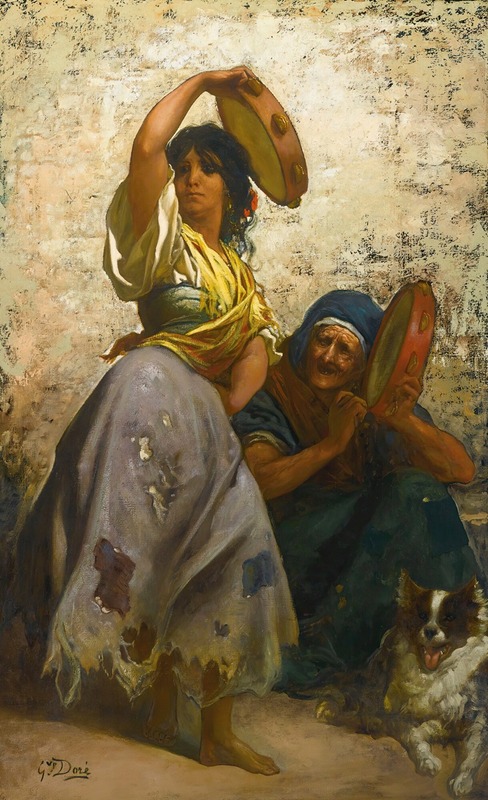
Gustave Doré
Last Story
The third woman puts a log on the fire, sending up another wave of sparks. I am sure her story is next in the round-robin of Romany tales.
She sits quietly, looking into the flame before speaking.
The Red King declared he would reward anyone who could tell him who it was that every evening stole the food he had locked away for himself. His three sons tried in turn, but only the youngest managed to stay awake. He witnessed his baby sister turn into a hideous witch, steal the food, and, with a somersault, turn back into a baby.
Instead of telling his father about what he saw, he asked for money and a horse so that he may go out into the world and find a wife. He buried the money in a stone chest and marked the spot with a stone cross.
He traveled for eight years until he came to the Queen of the Birds. He told her he looked for the place where there was no death or old age before he would marry. She told him that with her, there would be no death or old age until she had whittled away her forest. That did not satisfy the prince.
He traveled on for another eight years until he came to the Maiden of the Copper Castle. She told him there would be no death or old age with her until the mountain and forest were leveled.
Again, the prince traveled on until his horse warned him they had come to the Plain of Regret, and they must flee.
They came next to the home of the wind, who appeared to be a lad. Here there was no death or old age, and the prince declared he would never leave.
After a hundred years, he was warned by the wind to never go near the Mountain of Regret or the Valley of Grief. The prince did not listen, went there, was overcome with both, and desired to go home.
The wind told him that nothing remained of the Red King’s realm and that, in fact, a million years had passed. Again, the prince did not listen. While returning, he came across the Maiden of the Copper Castle. Nothing was left but the dying maiden. He buried her and went on. The very same thing happened with the Queen of the Birds.
When he arrived at the place of his father’s kingdom, all he could find was his father’s well. There was his witch/sister, who attacked him, but she, too, perished when he made the sign of the cross.
He met an old man who would not believe his story. To convince the old man, the prince found the spot where he buried the stone chest. Only the very tip of the stone cross remained above ground.
The prince dug up the stone chest and opened it. Inside, sitting on the coins, were death and old age, who leapt out and seized the prince. The old man gave him a decent burial, placed the stone cross at his head, and left with the money and the prince’s horse.
“Well, well,” I mutter.
The three young girls, brightly dressed in scarves, bangles hanging from their wrists—the shawls gone—smile back at me. The sun is rising, and I see my box of paperweights lies in my lap. I hand each of the girls a present, over which they ooh and aah.
“Ah, but kind sir,” one says, “we must now take from you your memory of this evening that we can remember ourselves as you see us now; then we will not forget and become old again.”
Lightly, they touch their fingertips to my head. I thrill at this odd sensation, then find myself at the nick-nack door.
Why am I standing here? What did I come for? Ah! This short-term memory stuff! It is so annoying getting old.
My writer’s journey today is about Reedsy. This is a service of great use to readers and writers. There is a ton of advice and instruction for writers, plus a few fun things like the Pen Name Generator.
I am focusing on the Reedsy Discovery app. Here is a list of books, submitted by authors, that have been reviewed by Reedsy-approved reviewers as well as readers. Readers can find recently published books filtered by their desired genré.
For us writers, here is part of our book launch. For a fifty-dollar fee, we can submit a book, pick a launch date, and select a reviewer, who may or may not decide to look at our book, although the book is still out there for other reviewers to pick up. In my case, my selected reviewer agreed to review the book but then did not. I emailed Reedsy and did get a response. Eventually, a reviewer did pick up my book and gave a good, thoughtful review. Having our book reviewed is not guaranteed, and our book will not appear on Discovery until it is reviewed. Basically, this is how Reedsy vets what is on the list.
However, because of this, my “launch date” was moved forward twice. That could be a logistical problem if we have another launch date on KDP. We would prefer that all of our launch activities happen at one time so that the Amazon algorithms take notice.
Another nice thing about getting a review, besides being part of Discovery’s listing, we can use part of that review in Amazon as an editorial review by submitting it through our Author Central page.
I got nine upvotes (thanks guys), which is not too bad. I take it that an upvote is a sort of “like.” I have not as yet made the grade to be listed in their weekly newsletter or at the top of their site. However, I have noticed some of the titles with that privilege don’t have all that many upvotes. Knocking around on the site, the highest upvotes I saw was 62. Most of the featured authors’ upvote count are in the teens.
Despite the ups and downs, I plan to use Reedsy as part of my book launch this year, my book launch being my new year’s resolution. The working title is Sword of Ailuros, but as in all things about genré publishing, I will have to consider if that is the best title.
More next month, until then check out Reedsy and its many resources.

 Fairy Tale of the Month