Fairy Tale of the Month: December 2024 How Cormac Mac Art Went to Faery – Part One

John D. Batten

At Melissa’s

I have never been in Melissa’s rooms above her store before. They are what I should have expected if I thought about it. A little spartan, no clutter (unlike my place) but full of Victorian touches. There is not a piece of furniture I would call modern. I am amused to see no bookshelves.

In her small dining room, she promises to lay out a Christmas Eve supper for me, Thalia, and Jini. Oddly, it is lasagna. “My family tradition,” she explains.

While the lasagna is baking in the oven, filling her apartment with an encouraging aroma, we settle in her parlor with drinks—appropriate to our ages—and cookies.

“Tonight, it is I who has a story to read to you,” Melissa says. “It is Celtic and has to do with the giving of gifts.” I see her pick up a copy of More Celtic Fairy Tales, and she continues. “The story is called How Cormac Mac Art Went to Faery.”

Cormac Mac Art, son of Art, son of Conn of the Hundred Battles, King of Ireland, who resided in Tara, purchased a fairy branch with nine apples hanging from its limbs from a youth for whatever the asking price. The price turned out to be his wife, son, and daughter. All protests Cormac quelled by shaking the fairy branch, which uttered music so dear that it tempered everyone’s fears, casting an aura of peace upon all.

After a year, Cormac decided to see if he could not reclaim his wife and children, and he followed the path the youth had taken. In his travels, he came upon three curious sights. The first was a house being thatched with feathers by warriors. After they had feathered on one side, they rode off to find more feathers. When they returned, the feathers they had thatched were gone.

The second sight was a young man consigning a tree to fire. But before he could find another tree, the first would be consumed completely. Again, the labor appeared endless.

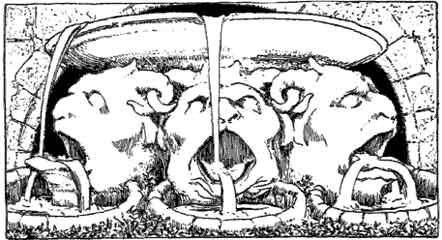
The third was of three wells. From the first flowed three streams, from the second two streams, and from the third one stream.

Traveling over the plain he had entered, he came upon a dwelling where a couple dressed in multicolored robes greeted him and offered him shelter for the night.

When it came to the evening meal, Cormac was given a boar and a log and told to cook a meal for himself. He told his host that he did not see how that could be done. The host explained that Cormac must quarter the boar, quarter the log, then place the meat over the log, and then tell a true story. The log would burst into flames and cook the meat.  

Cormac then asked his host to demonstrate. The host told the story of the boar they were about to eat. He had seven boars with which he could feed the world. When one of the boars was slaughtered, they need only throw the bones back into its stall, and in the morning the boar would be whole again. As the host finished the story, his quarter of the boar was cooked.

Cormac asked the mistress for her story. She said she had seven white cows that gave enough milk to feed the world if they were present. Soon the second serving of meat was cooked. Cormac told the story of the fairy branch and the disappearance of his wife and children.

Although the meat was cooked, Cormac hesitated to feast with so few friends in the room. The host brought Cormac’s wife and children into the room and took on his true form, that of the god Manannan Mac Lir.

We hear the beeping from the kitchen. The lasagna is ready.

Fairy Tale of the Month: December 2024 How Cormac Mac Art Went to Faery
John D. Batten

True Story

I am into my second serving of lasagna when Melissa, more easily sated than I and the girls, picks up her story again.

“Cormac,” said Manannan, “I was the youth that lured you into buying the fairy branch at the expense of your family, knowing you would follow me to faery and be here tonight. Now you and I can feast.”

“Feast I will,” said Cormac, “when I have heard the meaning of the three things I saw today.”

“That I will tell you,” Manannan said.

The god told Cormac that the warriors thatching the house with feathers were the like of those that go forth into the world seeking riches and fortune, but when they return home, they find it bare and must venture out again.

The young man dragging up the trees to make a fire is the likeness of those who labor for others and never get to warm themselves by the fire they made.

The wells represent the three types of men. There are those who give as freely as they get. Then there are others who get little but still give freely. And lastly, despite what they get, give little.

Now Cormac agreed to feast. Manannan spread before his company a tablecloth, declaring it a special thing. All they need do was to think of a food or drink, and it would manifest before them for their pleasure.

Then Manannan set down a goblet, saying that the goblet would shatter when a false story was told and mend when it heard a true one. These objects, along with the fairy branch, he gave to Cormac Mac Art.

At the courtesy of the tablecloth, they all feasted. When the feast ended, they took to their beds. In the morning Cormac, his wife, and children found themselves waking up in
Tara, still in possession of the tablecloth, goblet, and fairy branch.

We all drop our forks and applaud.

“Did they have lasagna?” I say.

“Only if they knew to ask for it,” Melissa smiles.

“Wait,” says Jini, “I’m doing the math. What happened to the fourth quarter of the boar?”

“I’ve thought of that.” Melissa blinks. “It could be the Celts didn’t bother to count, but I think the fourth quarter belongs to the listeners of this tale. But we would have to tell a true tale.”

 Thalia and Jini exchange furtive glances. I am sure they have their own little secrets. Secrets old men should not hear.

“I can tell a true story,” I say.

They look at me expectantly.

“I ate too much.” I pat my belly.

“That is not a story,” Melissa laughs. “Although it is true. But I am thinking I have some truth to explore. Yet, it, too, is not a story.

“This tale dwells on true stories. The meat will not be cooked without a true story. The goblet will break at the sound of a false story and mend only by a true one. What is the truth of fairy tales?

‘We, here in this room, live in the presence of magic because of you.” Melissa looks directly at me. “Fairy tales flitter about our everyday lives. They move between the mundane and our dreams, and we cannot tell which is which.

“Again, I ask, what is the truth of fairy tales?”

Fairy Tale of the Month: December 2024 How Cormac Mac Art Went to Faery
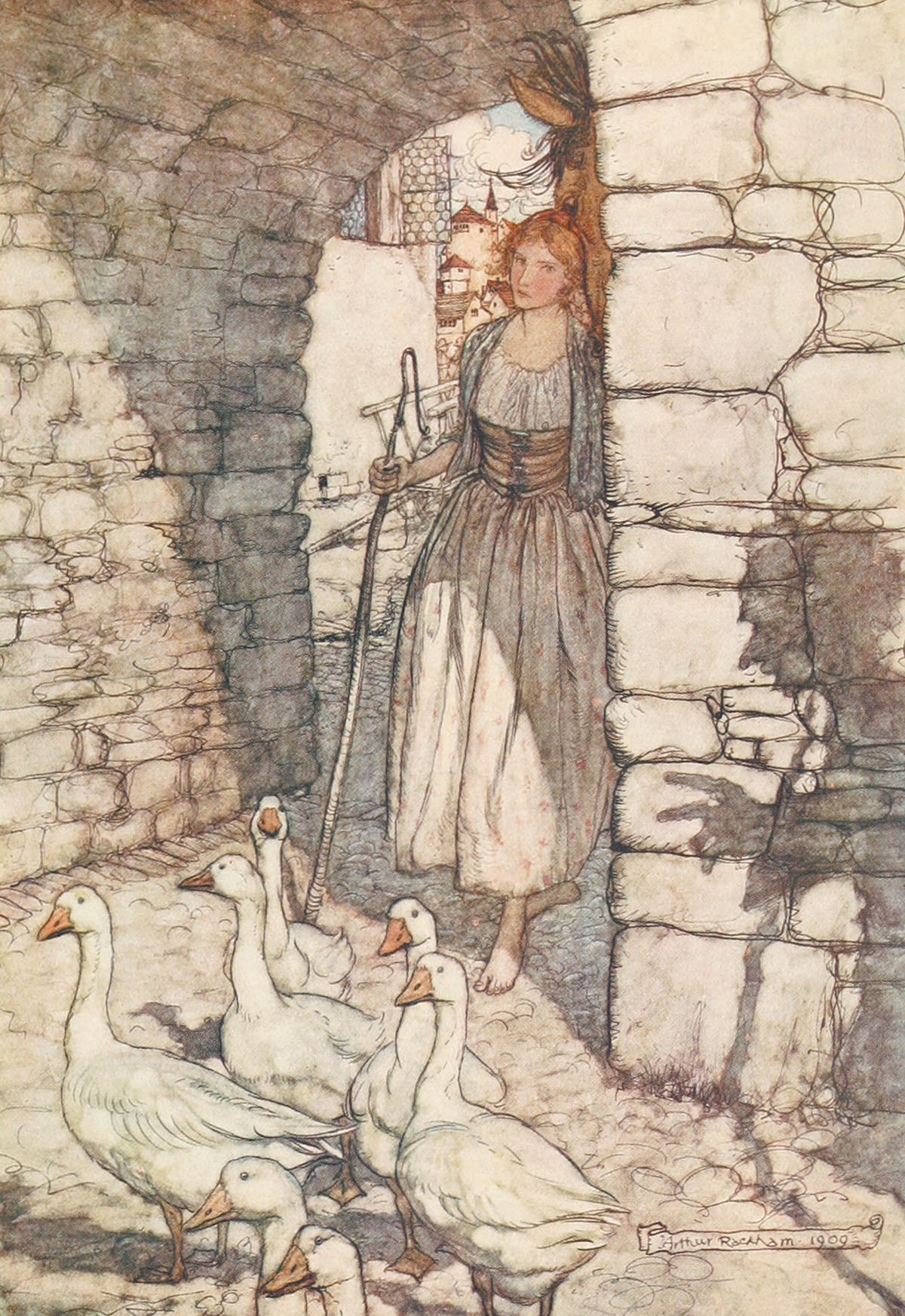
Arthur Rackham

Truer Tale

“Oh good,” I say with a touch of sarcasm. “First you lead me into an Italian food-induced coma, with a bit of wine, and then ask me to think clearly.”

Melissa wags a finger at me. “I didn’t force you to overindulge.” The girls giggle.

“Well,” I continue, “your question brings to my mind a storyteller’s adage I once heard. ‘Every story I tell is true, whether it happened or not.’”

I see calculations going on behind Thalia’s eyes. “Hmmm,” she says. “It seems to me stories make more sense than real life, no matter how fanciful they are.”

“I agree.” Melissa gestures with a hand. “Stories have a beginning, a middle, and an end. In real life, the beginning is our birth, the ending is our death, and the middle is hopefully long, but in any case, confusing. A listener or reader may get bored and lost by the incoherent middle of that long tale.”

“Does that mean,” Jini asks, a little wide-eyed, “stories break down our lives into smaller pieces so that we can understand it?”

“That is probably a good way of describing it,” Melissa answers with a bit of hesitation in her voice. I pick up on her hesitation.

“I think we are now talking about story in its broadest sense, that is, from nursery rhymes to the great works of literature. They are all story, from the Itsy-Bitsy Spider to The Iliad. But Melissa’s question regards the truth of fairy tales. I will suggest its stock in trade is with the passing on of morals and with wish fulfillment if we allow ourselves to call these truths.”

Melissa taps her fingertips together. “Give us an example.”

I take a deep breath and consider.

The Goose Girl,” I say.

“I know it,” says Melissa. Thalia nods. Jini looks perplexed.

“To keep it in context,” I explain, looking at Jini, “the goose girl is really a princess whose role—let’s call it identity theft—has been taken over by a maid-in-waiting. The real princess is demoted to being a goose girl. The maid-in-waiting has forced the real princess to swear in the name of God not to reveal the exchange of status.

“Because this is a fairy tale, there is a royal marriage involved. The false princess is to marry a king’s son. However, the goose girl uses magic, which royalty in fairy tales are entitled to, in her everyday dealings. A peasant boy observes her doings so, which eventually leads to the king learning of her true nature and that she was meant to marry his son.”

“The moral?” asks Melissa.

“That the true princess should keep her vow to God, even though given under duress with the threat of death, and trust that the truth will out.”

“And the wish fulfillment?”

“That even a goose girl can rise to be a queen when her true nature is recognized.”

“Rise to be a queen!” exclaims Thalia. “That’s us.” She points between herself and Jini, who buries her face in her hands.

“Your point is taken and demonstrated,” says Melissa with a hint of mirth.

Your thoughts?
Fairy Tale of the Month: Mid-month Writer’s Journey – October 2024

My book launch is in midstream. To recap, I published the ebook version of Sword of Trueterra on Amazon at 99₵, then, in mid-September, I did a five-day giveaway for my arc readers (advanced reader copy) to download it and get it for free. My hope is they will give me an honest review before November 1.

Also, mid-September I took part in four group author promotions through StoryOrigin. I have also utilized StoryOrigin for further book reviews. For those of you who missed the five-day giveaway, here is your second chance. Go to StoryOrigin. You will need to setup an account, but it is free. There is a reader side to the site and an author side. Find the reader side and look for “Free eBooks.” To find me, use the filter and choose the “fantasy” tag and my name in the author box.

What will happen is that I then need to approve you as an arc reader, and StoryOrigin will then make the ebook available to you.

For those of you interested in getting your book reviewed, the application is a little onerous. You need to have three sample copies (EPUB, MOBI, and PDF) for prospective reviewers to look over, then three full versions in those three formats.

I know I have talked about Calibre before. They say of themselves, “Calibre is a powerful and easy to use ebook manager. Users say it’s outstanding and a must-have. It’ll allow you to do nearly everything, and it takes things a step beyond normal ebook software. It’s also completely free and open source and great for both casual users and computer experts.”

Okay, there is a learning curve, but there is a manual and a number of Youtube videos. I used it to turn my DOCX files into the different formats mentioned above. If you are going to self-publish, you will need to understand Calibre.

Another avenue for getting reviews is Reedsy. (Check them out. A wealth of resources. Similar to StoryOrigin in some ways.) I got a review from them with A Vacant Throne. It was a bit of a struggle. They pretty much promise you a review for $50. My problem was that the person who signed up to review the book didn’t. I had to contact support, and it took two additional months, but they were good to their promise.

Again, I had to upload the EPUB and PDF versions of my book and jump through some other hoops. It took me an evening to do it all, but the paid review I got the last time was professional.

That’s all for now. Next month I’ll talk more about my “stacked” promotion.

Fairy Tale of the Month: September 2024 The Three Black Princesses – Part One

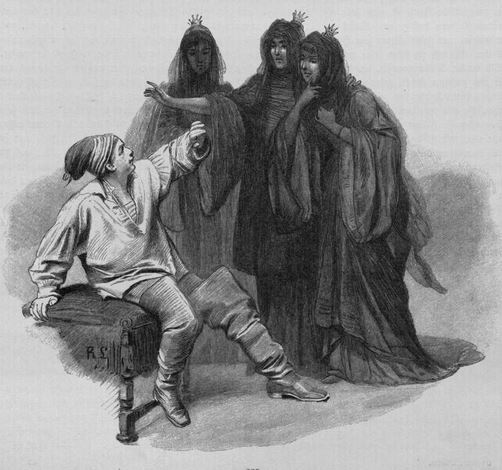
Source not found (Russian?)

Crystal Pyramid

I am returning from an evening stroll in the Magic Forest. I went to the pond and lingered there awhile watching the reflections in the water before going back to my study. It is pleasant to know that every visit to the forest need not end in some sort of drama.

However, as I enter my study through the French doors, there sits on my table by my comfy chair a crystal pyramid about three inches tall. I sit down to inspect it more closely.

Thalia and Jini are away tonight doing who knows what. Melissa, whom I had invited over for dinner, is off to some meeting instead. Duckworth is out of town on some business. Who would have dropped off an odd bauble and left without a word?

Beyond me and the bauble is a table lamp. The light it casts through the pyramid appears as a shifting, shadowy pattern on my side of the tabletop.

Why does the pattern move?

I pick up the pyramid, placing it in the palm of my hand, and peer into its facets, trying to discover the cause.

I now stand in a somewhat exotic, town setting, its architecture not familiar to me. There is panic in the air; soldiers and civilians appear to be scurrying about, but the scenario is frozen.

Without being told, I know what is happening. They prepare to battle; unless they can come up with six hundred thalers for ransom, their enemy would attack. Despite the promise of being made the mayor of the town to anyone who would pay the ransom, no one has come forward. What I am seeing dissolves before my eyes.

Now I am standing by a lake. The tableau in front of me is of soldiers restraining a raggedly dressed youth, as one soldier places coins in the hat of another man who is looking sadly at the youth.

Again, I know what is happening. The enemy has seized a young fisherman, but at his father’s pleading to let his son go, the captain compensates the father with six hundred thalers.

Another scene change, and I am at the back of a crowd gathered around a raised platform on which stand the town dignitaries and the elder fisherman. The scene informs me that the fisherman contributed the six hundred thalers to satisfy the ransom and is being declared the mayor. Further, it is declared that the fisherman will henceforth be addressed as “Lord Mayor” and no other title on pain of being hung from the gallows.

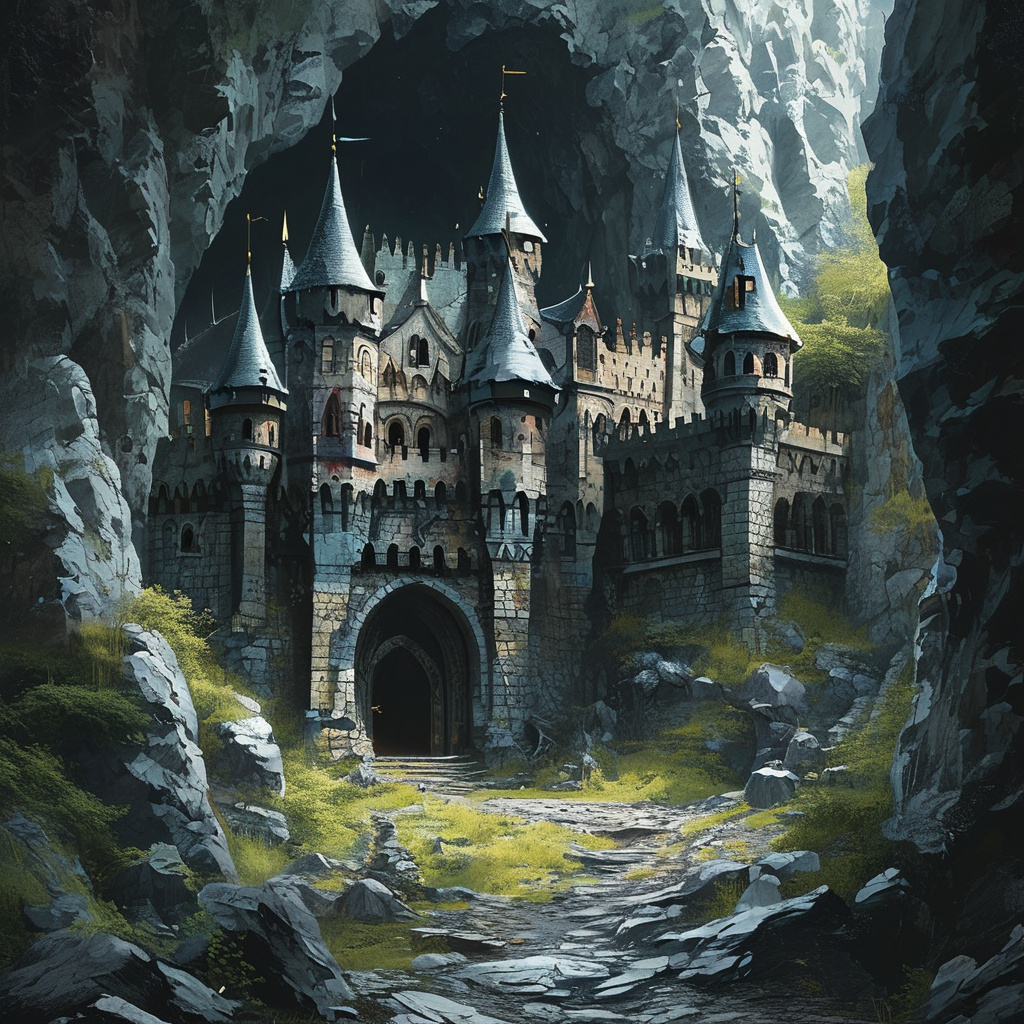
In the next image, I stand behind the young fisherman who is staring at the side of a mountain, which has opened up, revealing an ominous castle. At this point, he has escaped his capturers and has wandered to this spot to witness the miracle before him.

After this scene fades, he and I are inside the castle, in a room where all the furniture is draped in black cloth. Before us stand three princesses, dressed in black and of dark complexion except for a white spot on each of their faces.

I understand they mean him no harm and wish for him to release them from enchantment. He asks how and is informed he must not address them or look at them for a year. If he needs anything, he only needs to ask aloud, and if they are permitted, they will provide. After a time, he wishes to visit his family. He is transported back to his home in East India.

East India?

I now see the young man surround by guards holding spears toward him, along with a group of elderly men pointing their fingers at him.

Upon returning to his hometown, he asks after the fisherman and is told not to use that title for the Lord Mayor, but he persists. The lords of the city are about to take him to the gallows for this offense when he is allowed to visit his childhood home where he dons his old clothing and is recognized by the lords for who he is.

I then see him with his family—dressed in his poor clothing, his father, the Lord Mayor, in rich robes—the father and son embracing one another.

He then relates his story to all. However, his mother warns him against the black princesses and tells him to drip hot wax on them from a consecrated candle.

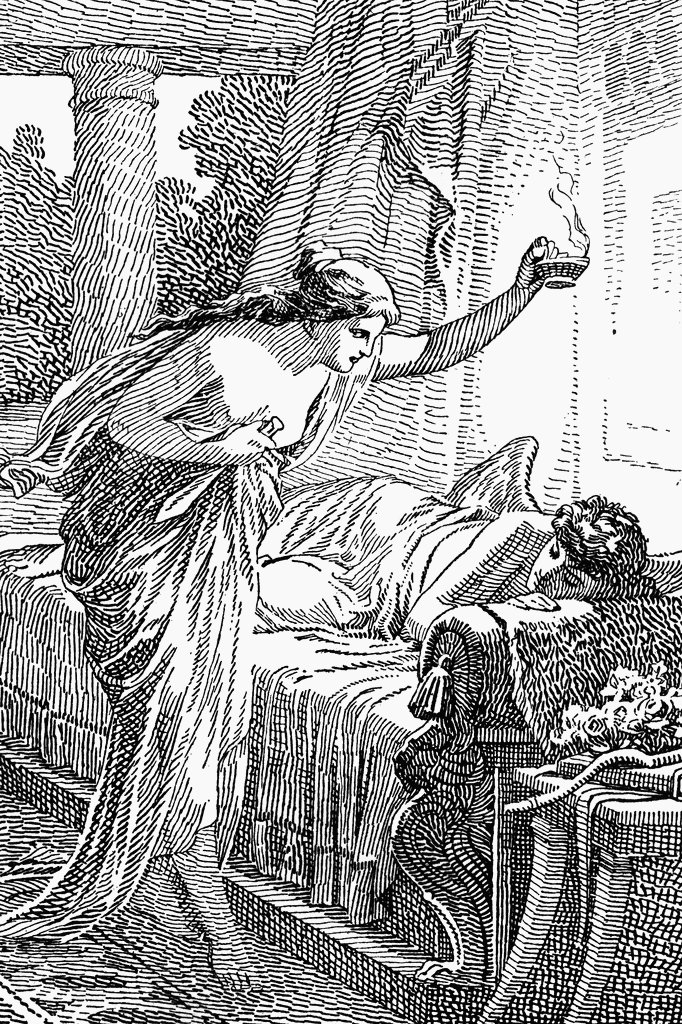
In the next image, he holds a candle above the sleeping black princesses. I know he is nervous and accidentally lets hot wax drip on the princesses. What I see next is more intense. The images flip rapidly, illustrating the actions of the princesses as they turn half white and rise up exclaiming—and I can’t tell you if I heard the words or read them—“You accursed dog, our blood shall cry for vengeance on you! Now there is no man born in the world, nor will any ever be born who can set us free! We have still three brothers who are bound by seven chains, and they shall tear you to pieces.”

In the last scene, the youth has escaped through a window, breaking his leg as the castle crashes into the ground and the mountain closes. There the images stop, my “understanding” ends, and I sit once again in my study staring at the pyramid.

Fairy Tales of the Month: September 2024 The Three Black Princesses – Part Two

AI Art

On Reflection

My shock increases when I look up and see myself seated across from me in a mirror-image comfy chair.

“What are you doing there?”

“I was about to ask you the same.”

“Well, this is most unusual. I don’t know what to think. I am—permit me to say—beside myself.”

“I knew you were going to say that.”

We regard ourselves for a while until I say, “Well, this is the pyramid’s doing. I’ll suppose it is its way of getting me to think about the story to myself.”

“Agreed,” myself returns. “What do we think about the story?”

“First,” I say, “we know it is the Grimms’ The Three Black Princesses.”

Myself nods. “Certainly one of the lesser tales, but it was in the first edition and not booted out like some of the others.”

“True,” I say. “Perhaps the pyramid wants us to reconsider the tale. I believe we dismissed it when we first read it.”

“True again,” says myself. “Let us tear it apart. We start with a town under siege, the deliverance from which is six hundred thalers.”

“A tidy sum,” I agree, “but if they had passed around the hat, I would think a town full of people, under attack, could easily ante up that amount of money, but that is not the case.”

“Instead,” myself picks up my thread, “the mayoral position is offered up as a bribe, but still to no effect until the fisherman arrives on the scene.”

“And he,” I continue, “acquired the money from the same enemy that had taken his son prisoner but felt somehow obliged to compensate the father with the same amount of money needed to lift the siege.”

“You are thinking what I am thinking,” myself says to me.

“Yes, the economics of this story stink.”

“But let us not be too harsh on this lack of logic. We both know that the fairy tales are not based on logical thinking. In fact, they wallow in defying it.”

“True, again,” I say to myself. “The fisherman becomes the Lord Mayor and is to be addressed by no other title. I can’t help but notice the passive tense of the declaration. The story does not tell us who—the active character—made the pronouncement. It is just there. Subsequently, it is implied that the word is enforced by the ‘lords’ of the town.”

“Good point,” myself nods, “which is a setup for later on in the story.”

“Correct, of course.” On impulse, I reach for my pipe and tobacco and see in my peripheral vision myself doing the same. The study is soon filled with the scent of Angel’s Glory, a blend I keep in reserve for special occasions.

“We now turn our attention,” I say, “to the young fisherman, who has escaped his capturers—they, therefore, gaining nothing for their efforts—and for no apparent reason, is admitted into an enchanted castle.”

“Let’s stop there and linger,” myself declares. “Why does the mountain open up for him?”

“Oh,” I say, “because he is us, or—as we experienced in the pyramid—we stand right behind him. We want the mountain to allow us into the enchanted castle. The fairy tales are always about us, a source of wish fulfillment.”

“I knew that,” says myself, “but I will never tire of hearing it.”

Fairy Tale of the Month: September 2024 The Three Black Princesses – Part Three

Psyche at the Couch of Cupid — Gayley, 1893

By Myself

“Next,” I say, “is actually the interesting part of the story: the three black princesses. I love all the furniture draped in black and the princesses themselves dressed in black. That suggests to us that there is some state of mourning going on, but we see no corpse.”

I puff on my pipe before speaking again. “The white spot on their faces, what can that stigmata signify?”

Myself ponders. “Black is the color of evil, but I don’t think white represents only good in our story’s images. I believe white is what widows wear in India among the Hindus and not black as in the West, and does this story have its actual origins in India, as the story itself suggests? What of the wax of the consecrated candle dripping on them and turning them half white?”

“We are getting ahead of our story,” I say. “At this point, he agrees to help them break a spell by not speaking to them or looking at them for a year. That is a pretty namby-pamby challenge. No herculean, impossible task, no suffering on his part. And yet, he can’t achieve it.”

“Again, we get ahead of our story,” myself reprimands.

I smile to myself. “Ok, back on track. The youth wishes to visit his family. Here we enter into the Beauty-and-the-Beast/Psyche-and-Cupid motif with a bit of gender reversal.”

“You know,” myself relights his pipe, “the clothing thing is inserted at this point, which reminds me of a Nassardim story.”

“Yes,” I say in delight, and we tell each other the tale in tandem.

“Nassardim, invited to a feast, shows up poorly dressed.”

“He is not allowed entrance and returns home to put on better clothing.”

“Now, with respect, he is accepted into the company.”

“To his host’s distress, Nassardim stuffs food up his sleeves, saying, ‘Eat, eat.’”

“’Nassardim,’ says the host, ‘what are you doing?’”

“’Well,’ says Nassardim, ‘when I appeared poorly dressed, I was sent away. When I reappeared well dressed, I was escorted in. Therefore, this feast is not for me but for my clothing.’”

We laugh at our own joke.

“Seriously though,” I say, “this story’s treatment of the motif in question is unusual.”

“There is,” myself contemplates, “the clumsy handling of the candle wax. First, a consecrated candle occurs in no other story that we know of. This is one of those Christian insertions for which the Grimms were open to, given their bourgeois audience.”

“What bothers us,” I say, “is that his mother instructs him to drop the candle wax on the princesses but with no indication as to why or for what purpose. When he does drip the wax, it is described in the story as an accident. Not to mention he is looking at the princesses in violation of his promise to save them.”

“Clumsy, as we agreed,” concludes myself.

“Let me press our point about how unusual this is,” I say. “Psyche drips the wax on the sleeping Cupid, then has to pursue her flown lover through the rest of the story. In our version of the motif, the dripping of the wax causes the sudden, closing apocalypse.”

“Yes,” says myself, “while he suffers a broken leg, what happened to the princesses’ blood calling out for revenge and their three chained brothers tearing him apart?”

“Not much,” I frown. “If I recall, we searched for a story about three chained brothers at the time we first read this but came up with nothing.”

“Now,” myself says, tapping out our pipe, “that we are at the end of the story, where the wax has turned the princesses half white; does that bring up the notion of yin and yang, especially with the previous white spot on their faces?”

“We both know that is a stretch,” I say. “The symbol of yin and yang does not appear in the Hindu representations.  It is more of a Taoist thing, but not unknown to Buddhists, but there are not that many Buddhists in India despite the religion’s origins. However, the notion tempts us.”

“A given,” myself agrees. “Therefore, overall, what do we think of this tale?”

“Despite the pyramid’s efforts,” I say, picking the crystal up again and looking into its facets, “and regardless of some enticing images, I’ll guess the story’s significance will continue to ellude us.”

I set the pyramid back down on the table. I see that I am alone in my study.

Your thoughts?

Fairy Tale of the Month: Mid-month Writer’s Journey -September

My book launch begins. There are a number of moving parts.

As I mentioned last month, I am using the promotional site Story Origin to give away my free, ever-evolving book, Stories and Poems of Trueterra. I am cross-promoting with four groups of authors. Below are links to these groups. Please check them out. These books are free. Be aware the authors will add your email to their list. As I said before, you can always unsubscribe.

https://storyoriginapp.com/to/MYUpSeq

https://storyoriginapp.com/to/Ame07RW

https://storyoriginapp.com/to/kBjz5xX

https://storyoriginapp.com/to/PIxeCHv

From the first list, I suggest Tales from Derian by Wendelyn Vega. It is very similar to my own in concept and a fun read.

From the fourth list is Clash of Goddesses by R.A. Goli. It is a bit of a reimaging of Norse mythology concerning Frigga and Baldur. It is 26 pages long and, I believe, a partial of a longer work. A lot of these free offerings are there to tempt you to follow that author.

When you click on a selection, you will get a box in which you need to click “yes” to acknowledge that you are sharing your email address. Then press the blue bar below to get the download options.

For the rest of my launch, I have mapped out things in a somewhat non-traditional way. That tradition is based on the old days of physical books only. What most authors do is get copies of their book to people to review it. That might only be a DOCX. Then on launch day, when the author pushes the publish button in KDP, they round up their reviewers to go into Amazon and submit their reviews ASAP. That is really quite an ask.

My pace is different. I published my book, Sword of Trueterra, last month at the introductory price of $0.99 for the ebook and the paperback at $8.95. I don’t consider that my launch because I didn’t tell anyone. I thought the book was as safely out of sight as if I had buried it in the sands of Egypt. Not so. The Sword of Trueterra paperback is selling  as well as The Vacant Throne paperback since they are now a series and appear together.

However, as of now, starting September 15th until September 20th, I am offering the Sword of Trueterra ebook for free on Amazon, a promotion that they allow, but only for five days every ninety days.

In other words, you can get the book for free. I am doing this in hopes you will give it a review (an honest review, please) on Amazon. You can put your review up anytime you wish, since the book is published. I want to have a good number of reviews before I “launch” during the week following November 1st. That is the date I will “stack” the promotion sites (and I will have the ASIN number for them).

I will also use Story Origin for getting reviews. Say, if you want more free books, go to Story Origin and agree to be a book reviewer.

January 1st is the date I will raise the prices from $0.99 and $2.99—end of book launch.

Fairy Tale of the Month: July 2024 The Girl-Fish – Part One

H J Ford

Green Tea

“Look what Jini brought,” Thalia says as she and Jini march into the kitchen, setting on the table a pink-and-green aluminum can, while they grab three glasses and fill them with ice from the fridge. In bold letters on the can is the label “Nixie.” Further, I read that it is pomegranate green tea sparkling water.

“Courtesy of my cousin in America. This is his favorite drink,” Jini explains. “Well, non-alcoholic.”

Thalia giggles.

“Fitting,” I say, “naming a drink after a water spirit.”

We all take a sip. Pleasant. Sweet, but not too sweet.

“This is a little serendipitous, you know,” says Thalia. “Last night I read The Girl-Fish.”

“Oh?” Jini and I chorus. That’s all the encouragement Thalia needs to relate the tale.

There was a willful girl—pretty—but willful. Though dearly loved by her parents, she would do nothing to try to please them. Until, one day, her mother was so weary that even the girl could not ignore it, asked what she might do to help, and was sent down to the river to mend her father’s fishing net. She no sooner finished the repairs when she heard a fish splashing in the water. She cast the net and caught it.

However, the fish warned her, if she ate it, she would turn into a fish herself. The girl’s willfulness returned, and thinking that the fish held no power over her, she had her mother cook the fish for her. As predicted, she turned into a fish and managed to flop into the river.

Carried downstream to the sea, she met other once-human fish who took her to their queen. The fish-queen’s story was that she had once been an earthly queen, but soon after her son was born, a giant seized her crown as well as herself and her ladies-in-waiting, replacing them with his daughter and her minions, and placed a glamour upon the interlopers so that the king would never notice.

In despair, the real queen and her ladies threw themselves into the sea and transformed into fish. That was many years ago. Since then, the false queen died, returning the crown to her father, the giant. If the crown could be regained, they all could return to  their human form. The queen gave the girl-fish the ability to transform herself into any creature she called for to aid in getting the crown from the giant’s castle on a high mountain.

The first transformation was into a deer so that she could travel quickly. However, a prince was out hunting and cornered her. She pled with him, in her human voice, to spare her. Dumbfounded, he let her escape, and, belatedly, decided she must have been an enchanted maid and that he would marry no one else.

By turns, transforming into an ant, a monkey, and a parrot, she gained access to the giant’s castle and demanded the return of the crown. The giant bargained with her and requested a collar made up of precious blue stones from the Arch of St. Martin. This she achieved in the form of an eagle with a strong beak. Not contented, the giant asked for a crown made of stars in exchange for the fish-queen’s crown.

In the form of a frog, she collected the light of the stars reflected in a pond and wove the reflected light into a crown. The giant accepted this crown, fearing the girl’s powers might be greater than his own. With the queen’s crown returned, all the fish-people took on their human form.

They returned to the queen’s earthly home but found much had changed. The queen’s husband had also died, and their son was now king. The new king was delighted to find his real mother still lived, but she sensed in him a great sadness. He revealed to her that he was hopelessly in love with an enchanted maid in the form of a deer. With the queen’s help, the new king and the girl-fish were soon married.

“Wow, what a story,” Jini grins.

Thalia fingers the label of the sparkling-water can. “I’m thinking of asking our nixie about this tale.”

Jini’s eyes widen. “You have a nixie?”

“In the Magic Forest,” Thalia nods.

“Does she drown young men?”

“I hope not.” Thalia looks concerned.

“Maybe,” I say.

Fairy Tale of the Month: July 2024 The Girl-Fish – Part Two

AI art

More Popcorn

I have armed the girls with a paper bag of popcorn. I can’t recall when I realized the nixie loves popcorn, but it has been a staple in my interactions with her ever since. I sit high on the bank and toss popped kernels to her down below. I am safe from being dragged down into the water by her, and the popcorn is an incentive for her to entertain my presence.

However, today, as we enter the Magic Forest and come near the nixie’s pond, a siren song is carried on the air.

“Oh, how pretty!” Thalia exclaims.

“Pretty” is not the word for it.

I feel it pulling at my soul.

When we come into view of the pond, there is Melissa sitting at the water’s edge, not three feet from the nixie, whose serenading has just ended, releasing me from its spell.

“Oh, how lovely,” says Melissa, then, looking up, sees the girls and smilingly motions them to come and sit beside her. The girls prance down the bank, settling themselves on either side of her.

What have I done?

When the nixie glances curiously at Jini, the girl hands over the bag of popcorn, which the nixie takes with delight.

No! That’s not how it’s done.”

I collapse to the ground, high up on the bank, out of reach.

“I have a story.” Thalia’s tone is formal, infused with respect for the nixie. “About which I’d like to hear what you have to say.”

The nixie nods, lying back into the water until only her face, haloed by floating green hair, and her hands, holding the popcorn bag, are above the surface. As Thalia tells the tale, the nixie lazily drops the treats into her mouth. I have never before noticed how sharp her teeth appear.

“I do remember her,” the nixie says when Thalia ends the tale. “Why she didn’t want to remain queen of the fishes, I don’t understand. What is this attraction to the land? Some of the mermaids have it. I don’t see what lures them.”

“Well,” says Thalia, “the fish-queen and girl-fish were born on land. I guess that’s a bond hard to break. One’s first home, I mean.”

The nixie nods her consent as Jini picks up the thread of the discussion. “But what of the girl-fish’s willfulness? Ultimately, she is rewarded. Why should willfulness be rewarded?”

The nixie rises from the water, half her length, trying to contain her laughter. It, nonetheless, comes out as a frightening cackle. “Willful? She? Oh, you mortals do not grasp willfulness. We immortals are willful by our existence. Seldom do you who die retain your willfulness much beyond infancy. No, for me, this is a story of a girl losing hers.

“She starts out having her way. Then, for a moment, she has pity for her mother. After that, all is lost.”

“But didn’t her willful nature lead her to ignore the fish’s warning?” Jini points out.

“You might wish to see it that way,” the nixie responds. “But I can’t see becoming a fish as tragic as the story implies. The tragedy comes in the girl-fish falling into subservience to the queen, and all traces of her precious willfulness disappear.”

“Well,” Melissa suggests, “she does get to marry a prince.”

“All the more subservient,” the nixie pouts, settling back into the water and her popcorn.

Fairy Tale of the Month: July 2024 The Girl-Fish – Part Three

AI art

Popcorn Bag

“I see this as a story of transitions.” Melissa taps a finger on her chin. “The heroine is first changed into a fish, against her will. Then she is given the ability to transform into whatever she calls for to reach her goals.”

“Oh, the frog,” says Jini. “That was my favorite. In that form, she collects starlight to make a crown. So cool.”

“That was my favorite as well,” says the nixie. “Collecting reflected starlight; I am going to have to try that. Probably on winter solstice when the night is longest.”

“I like the deer,” Thalia chimes in. “Deer are so elegant looking. I can just see her leaping away from the prince, his mouth hanging open.”

“My admiration,” Melissa smiles, “goes to her choice of becoming an ant to scale the giant’s castle wall.”

Both Jini and Thalia nod their agreement, and Melissa continues. “But the ultimate transformation, or more correctly transition, is the heroine’s change from the person she was at the start of the story to the person she becomes by the end.” Melissa turns to the nixie and adds, “For better or for worse.”

The girls giggle. The nixie rolls her eyes.

“What about the giant?” Jini asks. “I thought his ideas for the tasks were odd. He wanted jewelry. What giant wears precious stones and a starry crown?”

“And only two tasks,” adds Thalia, “not three.”

“Never liked that giant,” the nixie sniffs. “Not bright, but most giants usually aren’t.”

“Could be,” Melissa contemplates, “he was trying to think of difficult or impossible tasks. The first task wasn’t all that hard, but by the time she returned, he had come up with, what he thought to be, an impossible one.”

“But why not a third task?” Thalia presses.

“Because,” Melissa conjectures, “when he realized she could do the impossible, he became afraid of her power and surrendered the queen’s crown as he had promised.”

“Well,” says the nixie, “he is a coward, and, although he has had his moments, usually he can’t come up with more than two thoughts.”

There is another round of giggles from the girls.

The evening is coming on, and I don’t think it wise to be in the Magic Forest by nightfall.

“We should be going soon,” I call down the suggestion to them.

“OK,” the girls say together, then turn their attention back to the nixie. The nixie glances up and gives me an evil smile.

I know the nixie has the reputation for drowning young men, and while I am not youthful, she is immortal, which makes me look comparatively young. I creep a few more feet up the bank.

Now I can no longer hear what they are talking about. It goes on far too long for me, but eventually they stir; Melissa, Thalia, and Jini rising to their feet. The girls give the nixie an enthusiastic hand-waving, then turn to climb up the bank toward me.

What a relief. I am trying not to be obvious that I think this is an escape as I usher them down the path toward home, when I realize Melissa is not with us.

Turning around, I see her kneeling beside the pond’s edge. The long, slender fingers of her pale hand touch the tips of the nixie’s green, webbed fingers. The nixie speaks to her, then slips beneath the water’s surface. Melissa retrieves the floating, empty popcorn bag. I know her body language. She is deep in thought.

Your thoughts?

Fairy Tale of the Month: July 2024 Mid-Month Writer’s Journey

Two Items

There are two rather technical subjects I want to cover this month. First is formatting poetry in epubs, and second is my latest failure.

Poetry in epubs is tricky. I will refer you to Derek Haines’s article on the subject. My experience shadowed his advice. I was not trying to create poetry with KDP, which Derek covers, but with Draft2Digital, which he also talks about.

The central problem is that, appropriately, epubs expect the text of a paragraph to “flow.” Depending on what font size and style a reader is using, it will vary the length of a line on the device (laptop, table, or phone). The words in the paragraph need to flow to adjust to the physical space available to it.

Poetry is a fixed format, not a paragraph. It has lines and stanzas. In a Word document, if you turn on the hidden formatting symbols (in Home, hit the ¶ symbol), you will see that each line of the poem you have written ends with the end of paragraph symbol (¶). Draft2Digital disregards half of Word’s formatting and does what it wants. Each line of your poem is a paragraph? D2D puts spacing between each paragraph. It will stretch your poem out down the page and ignore the stanza breaks. Try it. It looks awful.

However, you don’t have to upload a Word document to D2D; you can upload your own epub created with Calibre, a free ebook converter. (Learning curve warming!) Calibre respects the Word formatting and is not all that hard to figure out. There is an extensive manual, which you can get to by hitting the Help icon. The point being you end up with an epub that looks like your Word document.

To some extent, the flow problem still exists. If the poem line is longer than the device and font size allow, it will still flow to a second line. If you have indented your poem, then the second line goes to the margin as a paragraph line would. You may want to consider not indenting the poem to alleviate the line’s appearance of staggering.

On to the next item. Last month, I mentioned the idea of using my free reader magnet, Stories and Poems of Trueterra, on promotional sites to get email addresses from interested readers. I immediately ran into a catch-22. All of the promotional sites assume you are promoting a book by lowering the list price temporarily. They also assume you have an ASIN number assigned by Amazon. Most require an ASIN number for you to list the book with them. Is Amazon now the only game in town?

KDP does not usually publish perma-free books, which is how I got involved with D2D, which will publish them. However, that means my book does not have an ASIN number. So that little project went belly-up.

By-the-by, Stories and Poems of Trueterra does not have an ISBN number either. Ebooks are not required to have one; print books are if they are to be sold. In my case, since the content of each edition of the work has changed—I have added a poem or story—I would need a new ISBN number every time, an expense I do not wish to incur.

Next month, I will talk about my latest endeavor, creating a fantasy map for Sword of Trueterra.

Fairy Tale of the Month: June 2024 Mid-Month Writer’s Journey

Freebies. Let’s talk about freebies.

I mentioned my “reader magnet” in a previous blog. It is called Stories and Poems of Trueterra, which refers to my novel A Vacant Throne. There are stories and poems alluded to in this novel but usually does not present them in their full context. Stories and Poems has these in full, along with additional material written in the spirit of the originals and that I continue to write. When I add new stories or poems, I send off the new version to my email subscribers to remind them that I still exist and hopefully keep them engaged until I have another book to promote.

This is a standard practice in the self-publishing world. Typically, authors send out a newsletter to keep in contact with their subscribers. I prefer to write additional stories.

Another standard practice among self-publishers, particularly on Amazon (Kindle Direct Publishing), is to have a new release available for free for a few days to get things rolling. You can only do this for a few days on Amazon, then the price must return to normal. You cannot publish a free book on Amazon. My reader magnet is published on Draft2Digital and available through Smashwords.

Part two of this scheme of offering the new title for free is to “stack” the offers of promotional sites to help give away your book. Here I will refer to David Gaughran’s excellent blog on promotional sites for explanation.

I spent less than two hundred dollars to have multiple promotional sites to help me give away e-copies of A Vacant Throne. To my delight, during this campaign, there were 1300 + downloads of my book. To my distress, I appeared to have garnered one bad review for my effort and nothing more. I vowed never to do that again.

However, I recently had a “duh” moment. What if I use the promotional sites to give away my free book? On the promotion site, I will present a pitch for Stories and Poems of Trueterra with a line somewhere informing the reader that they will be directed to my opt-in page on Mailerlite. I think that is only fair. I only want people who have some interest in what I am writing. I might get hundreds of subscribers.

Is this a long shot? Yup. But if 9% of them respond in the future, this could be well worth it. I’ll let you know how it turns out in a future blog post.

Also, I will soon be sending out a new version of Stories and Poems to all of you on my email list. My present concern is how the poems’ formatting appears on the various e-readers. Please let me know in the comment box if there are no breaks between stanzas, strange indenting, etc. If you are not receiving Stories and Poems of Trueterra, here is your chance! And don’t worry, you have my promise that our email address is safe with me.

Next month, I might be blogging on the formatting of poems for epubs, depending on what feedback I get. There are problems.

Fairy Tale of the Month: Mid-month Writer’s Journey

If I am going to be giving advice to fellow struggling authors, then I imagine I am obliged to talk about email lists. On this topic, I am in the Hubert Humprey camp; an old-time Minnesotan politician—that I remember him dates me—of whom it was said he could talk about any subject, any time, any where, whether he knew anything about it or not. Witness that I have thirty-three fans on my email list, that should disqualify me from opening my mouth on this topic, but here goes.

In the self-publishing world, if you have a large email list (10,000 for example), to which you can market, then you are ahead of the game. How do you get such a list? It is with a “reader magnet.” You offer something for free in exchange for their email address. Then the trick is, you, the author, need to keep them engaged with more content, such as a newsletter, so that they don’t forget who you are when it is time for you to say, “Hey all, I’ve got a new book!”

I have a reader magnet. It’s called Stories and Poems of Trueterra (click if you dare), an on-going ebook of short stories and poems related to my fantasy world. Periodically, I add another story or poem, then send it off to my email list, all thirty-three of them, as a way of saying, “Hey, I’m still here.”

My failure is that the new material is very periodical, maybe four times a year, not weekly or daily like most email lists that I am on. Yet, I can’t see myself filling up other people’s email folders with prattle, attempting to remind them of my existence.

I am sure you have the same experience as I when we surrender our email address to a virtual stranger, then see our screens populated with items of marginal interest. We can unsubscribe or ignore. I tend to open, glance, and if nothing catches my interest, move on. I do try to keep a finger on the pulse of the market.

Rather than focusing on an email list, I prefer blogging to get attention. Readers come to my blog when they want to read it, not because I am foisting it upon them. I am much more comfortable with that approach. Between this mid-month blog and my end-of-month fairy-tale blog, in April I got six hundred and thirty visitors and eight hundred and three views. Is this a good approach to marketing my book? Probably not, but I have settled into it.

Speaking about being on others’ email lists, there are two that I have found useful. One is Bryan Cohen’s free 5-Day Amazon Ad Profit Challenge. This is a course he runs a couple of times a year, the next one in July. Yes, he is trying to sell you a larger course, and you will have to put up with his unending, positivity-generating, enthusiasm, but he will give you actionable information. In fact, he will handhold you through creating the three basic types of Amazon ads, step by tiny step. If you are interested in Amazon ads, there is no better free course that I am aware of.

On broader topics in self-publishing, there is David Gaughran’s extensive and free Starting From Zero course. He generously shares an immense amount of information in a readable and viewable manner. I highly recommend, and I think I will revisit it again soon. He also has a useful newsletter that comes out most Fridays.  

PS. My email list resides on MailerLite, which I talked about before in December’s mid-month blog. I am using MailerLite at David Gaughran’s suggestion.

Fairy Tale of the Month: September 2021 Golden Tower at the End of the World – Part One

St Dunstan’s in the East 1891

A Garden

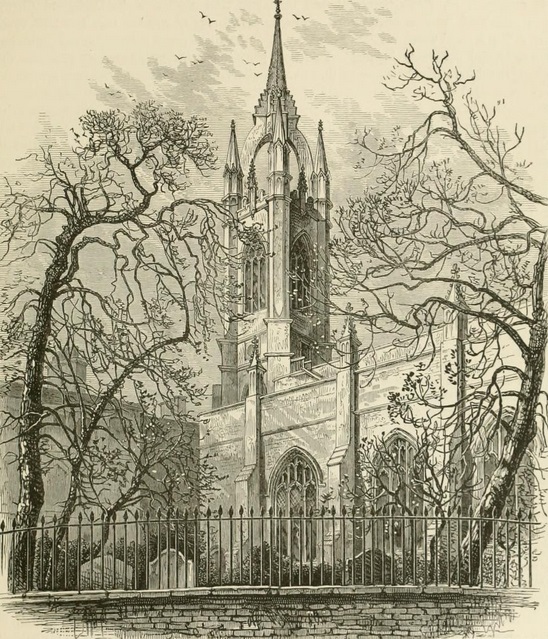
St Dunstan in the East is a pleasant garden. Well, it is not exactly a garden, but rather the remains of a church destroyed during the war. The tower and most of the walls still stand, although there are no roofs or floors. Nature has taken much of its own back. Situated not far from the Tower of London, it is close to a tourist area, but little-known except to the locals who enjoy bringing their lunch and finding a bench. With a picnic basket in hand, we have done the same; we being me, Melissa and Thalia.

The garden is Thalia’s discovery. She found it on her pocket oracle when she put in “gardens in London,” after I told her about Melissa’s dilemma. Because the garden’s center is a building, she felt the likelihood of finding Melissa’s door there as good as any place.

We have found a bench to accommodate the three of us and a picnic basket, to indulge in our repast before searching the grounds. Thalia clears her throat and pulls a book out of her backpack.

“For the afternoon reading, I have chosen a story in honor of that church tower over there that still stands for so many years after the Blitz.”

I didn’t know there was “an afternoon reading” in order. Thalia may be starting a new thing.

“The story,” she continues in a pretentious tone, at which Melissa smiles, “is The Golden Tower at the End of the World.”

I see she is holding my copy of Folk and Fairy Tales from Demark, Volume One, by Stephen Badman.

There was a farmer who owned productive fields with the exception of one, which every Midsummer’s Eve had its grain trampled. The farmer’s two eldest sons, in turn, tried to watch over the field at Midsummer’s Eve, but were frightened away by strange noises.

When the youngest brother, Hans, tried—though thought to be a simpleton—he first shared his meal with an old woman, who gave him a pinch of tobacco to help keep him awake for the night’s ordeal.

He did not flee when a violent storm broke, rather he stayed to see three large birds descend on the field and shed their feathered robes revealing three lovely women, who danced across the field destroying the grain. They then moved a huge stone, behind which Hans hid, and entered a house filled with riches.

Hans stole the robe of the youngest woman. To get it back, she agreed to marry Hans, to which she was not averse, giving him specific instructions about the wedding that included not inviting the king’s son.  

Unfortunately, the king’s son crashed the wedding and insisted she marry him and not a peasant boy. She fled, but not before telling Hans he must now reclaim her by coming to her home at the Golden Tower at the End of the World. She gave him a gold ring as a token and three magical tablecloths.

The first tablecloth he used to create a sumptuous meal for another old woman who, in return, gave him three-league boots—for fast travel—and a magical sword, along with the advice to put on the three-league boots and visit an ogre, Lord of All Crawling Creatures, who might know where the Golden Tower could be found.

The ogre, after conferring with all the crawling creatures without success, sent Hans on to his two-headed brother, Lord of All Walking Creatures, with a letter of recommendation. The visit to the two-headed brother was no more successful, but the visit to the three-headed brother, Lord of All Flying Creatures, bore results. Late to the gathering of the flying creatures came a dragon who apologized, saying he had been busy guarding the Golden Tower at the End of the World.

The dragon, already having taken a long journey to get to the gathering, reluctantly agreed to carry Hans back over a vast ocean. It proved to be too much, and Hans used the other two tablecloths to create dry land and a castle in which to spend the night.

Hans finally made it to the Golden Tower, found shelter, and fell asleep. Upon wakening, he saw a serving girl bearing wine. He asked for a sip. The girl refused because the wine was meant for the three princesses. She then relented and gave him a sip. He slipped the youngest princess’s gold ring into the wine.

When the youngest princess discovered the ring, she called for him. They were reunited, but the trial was not over. Every Midsummer’s Eve a malicious dragon visited the tower, which is why the princesses were forced to flee in avian disguise and spend the night trampling the farmer’s field. Hans stayed for Midsummer’s Eve and slew the dragon with his magical sword.

He and the princess were married and Hans returned with his bride to his father’s farm, bought out the two brothers to their embarrassment, then purchased an even larger estate where he and the princess lived in happiness.

Thalia snaps the book shut. I come out of my trance. There are some odd points about this story.

Fairy Tale of the Month: September 2021 The Golden Tower at the End of the World – Part Two

From Adorno final de un Capitulo 1652

Two Dragons

I personally despair of finding Melissa’s doorway in these ruins. There are numerous Gothic archways, but so long after being burnt out, there is nothing that looks like a door.

“So,” says Thalia, “What’s a letter of recommendation?”

“Also called a letter of introduction,” Melissa answers. “It’s an old system of networking among the wealthy; especially useful for a young man. If a youth could get a family friend or prominent relative to write a letter of introduction—not addressed to anyone in particular—that recommended the youth, it was that young gentleman’s ticket into whole circles of acquaintances. The more credible the letter’s author, the better the networking potential.

“The youth could present himself to a household familiar with the letter’s author, be entertained by them, stay there a lengthy period of time, and enter into that community’s inner circle.”

“Weird,” Thalia concludes.

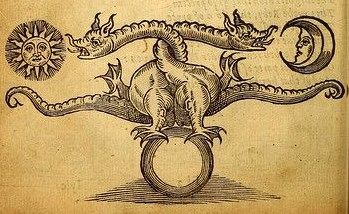
“What about those two dragons,” I say. “What are your thoughts, Thalia?”

“Ahhh, there are never enough dragons in fairy tales for me. I’m happy to have two of them.”

“I think,” Melissa says, inspecting another archway for her elusive door, “your grandfather is concerned that the two dragons are in no way connected to each other yet occupy the same story.”

She knows my mind so well.

“The first dragon,” Melissa raises a finger, “protects the Golden Tower. Against whom? When the malicious dragon appears, the good dragon is nowhere in sight and nowhere in sight annually, it appears, when the bad dragon visits.”

“Hmmm,” I reflect. “Hans’s breaking of the cycle of destruction, by killing the bad dragon, is central to this story. Perhaps the good dragon and bad dragon are connected in the same way as yin and yang are opposites and together at the same time.”

Melissa temples her fingers, a sign of deep thought. “Hans’s defeat of the bad dragon, he having been helped by the good dragon, does bring the story around full circle. Hans started by trying to solve the puzzle of the trampled grain and by the end of the story he exacts a solution. The dragons, as well as the princesses, were players in the problem’s resolution as consequences unfold.”

“You are right,” I muse. “This is a very circular story. Hans even returns home to claim the farm from his less worthy brothers rather than living in bliss at the Golden Tower. He ends up pretty much where he started out.”

“I never heard a fairy tale with three tablecloths,” Thalia states, not to be left out of the conversation.

“You’re right,” I say. “The tablecloth that is spread to give a feast—which comes out of Celtic mythology, by the way—is usually just one of the magical gifts. However, this tale amply represents the fairy-tale three: three brothers, three princesses, three ogres, three-league boots as well as three tablecloths.”

“There are only two old women,” Melissa says, showing that she is listening to us while her eyes scan the old church walls, “although I wonder if they are somehow the same old woman. The first gave him a small gift of tobacco because he shared his meal with her. The second gave him the three-league boots and the magical sword for sharing a bounteous feast from the tablecloth. The two, I say, reflect on each other. “

Fairy Tale of the Month: September 2021 The Golden Tower at the End of the World – Part Three

Midsummer Eve, Edward Robert Hughes 1908

Midsummer’s Eve

We have made our way back to our bench, held in reserve by the picnic basket, after our thorough search of the grounds.

“I thought the story’s mention of Midsummer’s Eve of interest.” I munch on an unfinished roll of crackers.

“Isn’t that a Shakespeare play?” Thalia’s brow wrinkles.

“That’s Midsummer Night’s Dream,” Melissa corrects. “And he drew from an old tradition of celebrating midsummer, which the date is not, coming on the twenty-fourth of June, a few days after summer solstice.”

“So, how does that happen?” Thalia’s brow wrinkles even more.

“There are two things about the date. First, the ancients—let us call them—felt that the first of May was the start of summer, paying little attention to the sun’s position and more to the change in the weather. That does put the end of June in the middle of their summer.

“Second, this celebration is attached to Saint John the Baptist’s Day, or rather the Christians have attached it to the Midsummer’s Day celebration. According to the Bible, Saint John was born six months before Jesus, putting Midsummer’s Day six months before Christmas, or Christ’s Mass. Perforce, Midsummer’s Eve is the twenty-third of June.”

 Melissa roots around in the picnic basket and comes up with a bottle of Calypso Lemonade. Thalia looks for one for herself.

“We Brits,” Melissa continues, “love our bonfires and will find any excuse to light one up, Midsummer no exception. Circle dancing is in order. There is also a thing about roses. A rose picked on Midsummer’s Eve or Midsummer’s Day will stay fresh until Christmas, although I haven’t tried it.

“Or,” Melissa’s eyes twinkle, “a young girl can pluck the rose petals at midnight, scatter them on the ground saying:

Rose leaves, rose leaves,

Rose leaves I strew.

He that will love me,

Come after me now.

“The next day, which is of course Midsummer’s Day, their true love will visit them.”

“No thanks.” Thalia takes a swig of her Calypso and takes out her cellphone. “Hmmm,” she says in a minute, “seems mid-June was also a good time to brew mead. The full moon in June they called the ‘Mead Moon’ or the ‘Honey Moon.’”

She scans down.

“Jumping through the bonfire would bring good luck. I guess you’re lucky if you make it.”

She scans some more.

“If you hold a pebble in your hand, walk around the bonfire, whisper a wish, and cast the stone into the fire, the wish will be granted. I’ll buy into that one.”

More scanning.

“Oh, I like this one. Midsummer’s Eve is only second to Halloween for fairy activity. If you rub fern spores onto your eye lids at midnight, you will see the wee folk. But be careful you don’t get pixie-led, and carry some rue plant on your person for protection.

“Midsummer’s Eve is also Herb Evening, the best night for gathering magical herbs. There is a special plant—the article doesn’t tell me the name, drat—that only blooms on this night. If you pick it, you will understand the language of trees. Cool.

“If you put flowers under your pillow, you will dream of the one you will marry. Oh, ugh, that again.”

“Ah!” exclaims Melissa, who I see has gotten out her phone. “Here is what we were looking for. In the thirteenth century a monk in Gloucestershire recorded that the bonfires of Saint John’s Eve were meant to drive away the dragons that were about that night to poison springs and wells. I think that might be the source of our bad dragon, at least.”

Will the fount of wisdom of the pocket oracles never cease?

Your thoughts?

Fairy Tale of the Month: August 2021 The Princes in Disguise – Part One

Woodcut 1493

A Cup

I sip my chamomile tea, sitting here, late night, in my study. I promised Melissa I would do this at the same time she does; a sort of sympathetic magic. I really want a tumbler of Powers Irish Whiskey, but a promise is a promise.

There is no fire on the hearth; it is far too warm tonight for that, but staring into the fireplace gives me comfort.

“How nice of you to join me.” Melissa’s face hovers above me.

“Where am I?” I sit up from a bed.

“In my dream.”

I look around at a palatial bedroom, replete with a canopy bed, which I occupy, tapestries hanging on the walls, and lead-glass windows.

“I take it you dream in style.”

“And why not? I deserve the best in illusions.”

“Can you dream me up a dram of Powers whiskey?”

She points to the far end of the room, where sits a familiar bottle and a tumbler on a low table.

I rise to go help myself when the table, bottle, tumbler, and the tapestry hanging above it, which had been as solid as the other three walls a moment ago, parts like a stage curtain.

Drat.

Through it, an old woman, hobbling with a cane, approaches us, making for an ornamental, carved wooden chair by my bedside. She eases herself down into it with a sigh, then regards Melissa and me with a critical eye before beginning a story.

 “Once upon a time …”

There was a king who had no heir until a gypsy woman tells him that he will have a son, but the lad, when he is ten, is destined to be carried off by an ogre. All this comes to pass. The king and queen, broken-hearted, die.

When the lad turns eighteen, he succeeds in drugging the ogre with a certain herb, takes the key, which the ogre always carried with him, and opens the door of the ogre’s tower.

Free at last, he crosses a bridge at the end of which lies a lion and a lamb. In front of the lion is a pile of grass. In front of the lamb a pile of flesh. The lad moves the grass in front of the lamb and the flesh in front of the lion. Each creature gives him a hair saying, “If ever you have need of anything, singe one of these hairs, and you will have your wish.”

The lad exchanges his royal dress for that of a poor man’s; he covers his golden hair with an animal skin, causing children to call him Scabby Head; and takes on the position of a gardener at a palace.

During an annual festival, when all of the royal household are attending, the youngest princess stays behind and, from her window, sees the gardener, but he appears to her as a prince with golden hair, on a white horse, cutting at the flowers with his sword.

The next year, during the festival, the same thing happens, and she asks him who he is. He tells her his story and how he singed the hairs of the animal helpers so that she will see him in his true form.

Shortly after, the king instructs his daughters to throw a golden apple at the person they wish to marry. The eldest two choose princes and the youngest the scabby-headed gardener. The king is angered, and the youngest princess then lives with her husband in his cottage.

Years later, the king loses his sight, which can only be restored by the Water of Life. The three sons-in-law go in search. The gardener singes a hair and gets the Water of Life and tricks his brothers-in-law into thinking they have it.

After the scabby-headed gardener restores the king’s sight, he singes one of the hairs, transforms into his princely self, and tells his story. The prince and the youngest princess return to the palace and eventually rule.

“Thank you for the story,” says Melissa, “but I am on a quest for a way into a magic forest.”

“I know, my dear. From this story, I give you the door of the ogre’s tower as your door into the forest.”

Melissa smiles at the same time that I jolt awake, back in my comfy chair in my study. In place of my teacup is a tumbler and bottle of Powers.

Fairy Tale of the Month: August 2021 The Prince in Disguise – Part Two

A Problem

I am surprised at Melissa’s dour face when I enter her bookshop the next morning.

“Melissa, why are you not delighted? You have your doorway into the Magic Forest.”

“I have the key to the door.” She holds it up to show me, an ornate silver one. “It was by my bedside in the morning.”

“I got a bottle of Powers in the same way,” I gloat.

“I have the key,” she reiterates. “But the dream ended abruptly. Where is the door?”

“Oh,” I say. We stare at each other, then break out in laughter at our dilemma.

“I’ll know it when I see it. There is an image of the door burnt into my brain but no clues as to where it is.”

“Listen,” I say, “there are probably hints in the story she told us as to where we can find your door.”

“A good thought. Let me brew up some tea, and we will contemplate.”

In a few minutes, we are settled on good, soft chairs sipping some Lady Grey.

“The door,” Melissa frowns, “may be disguised in some way, much as the prince is disguised.”

“What about that?” I say. “So many fairy-tale heroes and heroines feel the need to go into disguise for no apparent reason. Our hero takes on the appearance of a wretch but why?”

Melissa raises her right hand, fingers outstretched. “One,” she curls in her thumb with her other hand, “he is a prince.

“Two,” her left hand curls in her pointing finger, “he has been abducted by an ogre.

“Three,” she pulls in her middle finger, “his parents are dead and he has lost his status.

“Four,” her hand draws in her ring finger, “he frees himself and is on his life’s adventure. 

“I have my pinky finger left. What is the next point?”

“Your little finger represents the better part of the storyline. We are only up to him getting away from the ogre,” I muse.

Melissa temples her fingers and rests her chin on them. “I am thinking of Cinderella.”

“Why?” She is losing me.

“They have both fallen from their rightful situation in life to a low station.”

True.

“She is forced there by her stepmother and stepsisters, he by his own choice.”

I am warming to her notion. She continues.

“In both cases, they are seen by others in their humble state and not in their true nature.”

Melissa stares at the ceiling before speaking again.

“Having assumed and/or fallen into that lowly position, they cannot say, ‘Oh, by the way, I am really a prince (or princess). They no longer have that ability.”

She stops, squints, then speaks again.

“To appear in their true form, they need a fairy godmother or singed hairs and then for only a brief time.”

“The clock strikes twelve,” I say and pick up her thread. “But to finally emerge from their disguise, the false assumption of others, there has to be an event.”

Melissa’s eyes brighten. “With Cinderella, it is the prince fitting her with the glass slipper.”

“For our hero,” I conclude, “it is getting the Water of Life.”

Melissa raises her little finger. “Here is the point. They, for whatever magical or psychological reasons, cannot promote themselves. They need to be discovered.”

“Bravo,” I say. “Does that get us closer to finding your door?”

“No.” Melissa is crestfallen. “Let’s start over.”

Fairy Tale of the Month: August 2021 The Prince in Disguise – Part Three

Water of Life (Grimm) Louis Rhead

An Answer

“By the way,” Melissa says, “I found a version of the story she told us in Modern Greek Folktales, by Dawkins, titled The Prince in Disguise.”

“And, by the way,” I say, “who was she who told us the story?”

Melissa smiles at me unhelpfully.

“Well then,” I continue, “might there be a clue in the singeing of the hairs?”

“That is an element original to this story, I think.” Melissa sips her tea, which I suspect has grown cold.

“In the Greek folktales,” I state, “I have come across instances of the hero dividing some sort of spoils among three creatures. In one case a lion, an eagle, and an ant. For his wise judgment, the animals grant him magical abilities.

“In this story, it is a lion and a lamb—which has Christian overtones—settled at the end of a bridge. The lad corrects the situation he sees, not making a judgment as I’ve read before. It is different.”

“And your take on the singeing of hairs?” Melissa quizzes.

“As you say, may be unique to this tale. I’ve not seen it before. And how many times can he singe these hairs? Do the hairs restore themselves? Is there a difference between singeing the lion’s hair and lamb’s hair? The story does not tell us any of this.”

“Nor,” Melissa wags a finger, “does this get me closer to my door.”

“Well then,” I say, in an attempt to humor her, “let’s move on to the golden apples the sisters throw at their husbands-to-be.”

“I see no hints there either.” Melissa shakes her head. “Though, let me say, the golden apples seem to be a particularly Greek thing.”

“Hmmm.” I probe my memory. “There are the three golden apples given to Melanion by Aphrodite to distract Atalanta during their race. Also, there  is the golden apple of the goddess of discord, Eris, which involves Aphrodite again, and leads to the Trojan War. Hera had an entire golden apple tree guarded by the dragon Ladon, from which Heracles steals some apples.”

Melissa raises any eyebrow. “You know your Greek mythology. The golden apples stray into Eastern European stories, but in Northern Europe there are golden balls and even some golden heads. I don’t recall any golden apples. There must be some. However, I don’t recall any, which is strange because in Norse mythology it is Idun’s golden apples that keep the gods and goddess youthful and healthy—an apple a day keeps the doctor away—and yet that image has not seeped into the northern fairy tales.”

“And,” I intrude, “apples are not doorways.”

“True,” Melissa sighs.

“The next notable item in our tale is the Water of Life, which to the Irish is an alternate name for their whiskey.”

Melissa smiles at me. “Be that as it may, the Water of Life is not just an Irish or Greek thing. There is even a Grimm story by the same name as well as a Spanish tale that I know of.”

“Are there any hints to your doorway embedded in them?”

“I think not.”

“Then I have only one suggestion,” I say, empting my cold cup of tea. “Our hero disguised himself as a gardener. Might your doorway be in a garden?”

Melissa’s eyes widen. “It might. In the fairy tales, a woodcutter is a woodcutter, but gardeners are usually someone special in disguise. I said, at the start of our inquiry, the doorway might be disguised. When do we start our tour of gardens?”

Your thoughts?