Fairy Tale of the Month: November 2023 Thomas the Rhymer – Part One

A. G. Walker

To Elfland

Why do we not get bored with our habits? Why do we do the same thing over and over again and continue to do the same thing over and over again and not go shrieking off into the sunset at our inanity?

The answer—comfortable familiarity; like the ringing of the bell over the door of Augustus’s tobacco shop. I have my pipe in one coat pocket and a book in the other.

Augustus sees me and reaches for the canister of Elfish Gold. “Back already?” he says. “But I am glad you are here; you can help me with a quandary.”

“I am at your service.”

“As you know, I compulsively concoct new blends. Eventually, I need to ‘cull the herd.’ I have two similar mixes, and one of them needs to go. I hear authors talk about ‘killing their darlings.’ I am in that fix, I cannot decide, and need someone else to judge.”

After I make my purchase, we retire to his smoking room, as we always do, and pack our pipes with the first blend, Leprechaun Gold.

“What is your offering for today’s fairy-tale discussion?” he asks.

I produce my book from the coat pocket. “Melissa sold this to me last week.”

“Think you keep her and me in business,” Augustus quips.

“That may be true. It’s entitled, Lovers, Mates, and Strange Bedfellows, by James Foster. I’m not finished with it, but one of the stories has caught me, Thomas Rymer.

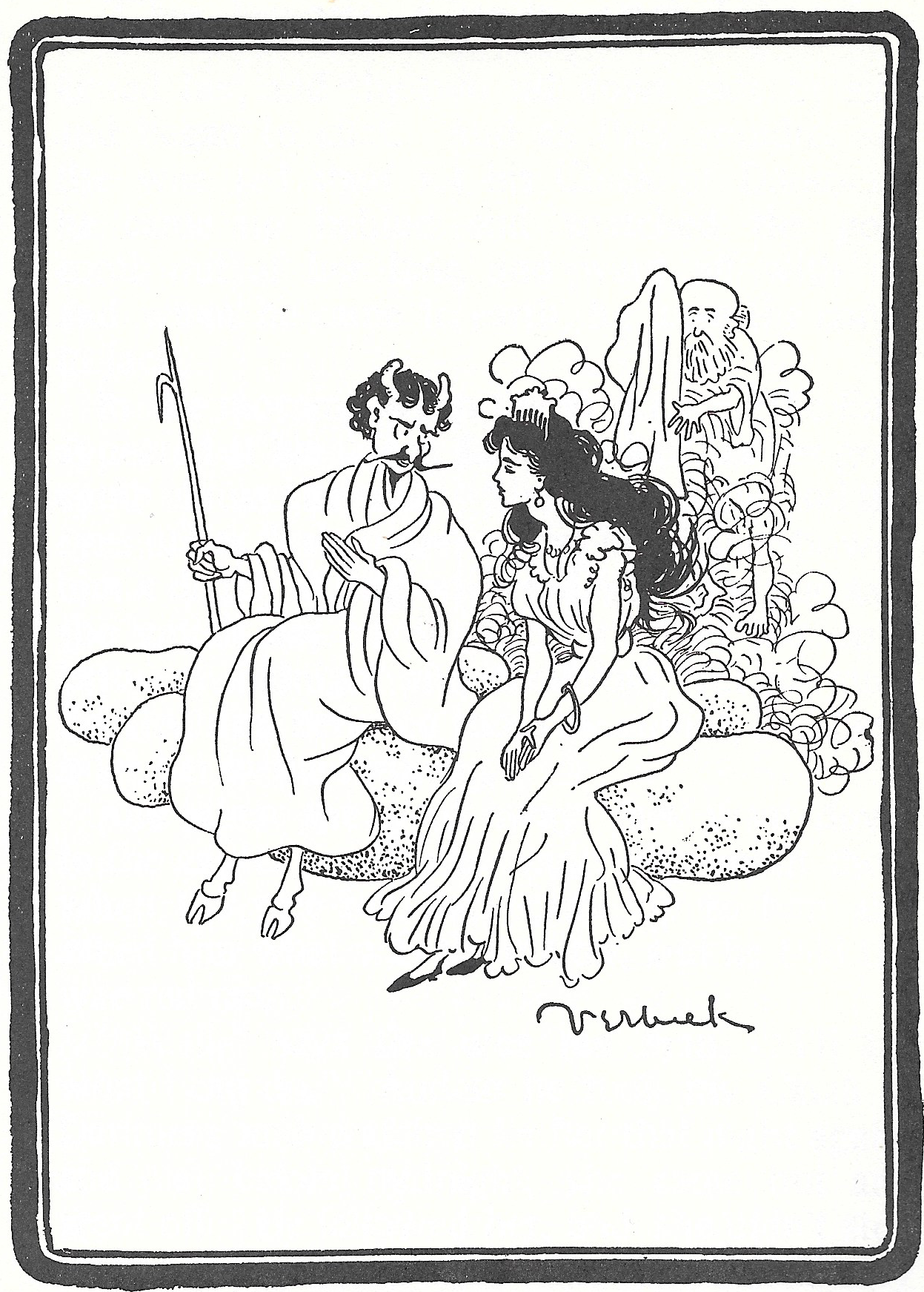
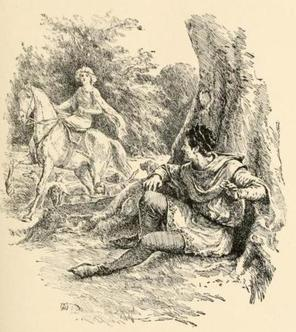
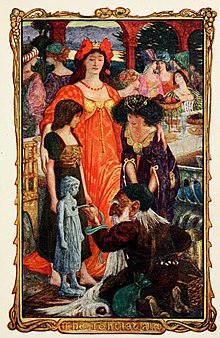
Thomas of Erceldoune reclined on the Huntly Bank near the Eildon Hills, when he spied an extraordinary woman riding toward him. He first thought she must be the Virgin Mary, given her beauty, but then he noticed her less-than-Christian attributes. She dressed as a huntress, bells upon her magnificent horse’s bridle, and three greyhounds on leashes.

They talk and come to terms. Upon a kiss, he fell under her spell, and she now appeared as a hideous hag. Because of the spell, he could not refuse her. For three days, they traveled through the underworld, emerging at last in an enchanted wood. Having not eaten anything for three days, Thomas reached for an apple—low-hanging fruit. His conductress forbade it. These were the same apples that caused the fall of man.

In the enchanted wood, were four paths. His paramour, now returned to her former beauty, explained their meaning. One path led to heaven. The second—well worn—led to hell, and the third to purgatory. They would take the fourth path to Elfland.

She warned him never to speak while in Elfland, lest he say too much. Since they are lovers, and she is the Queen of Elfland, her husband must never know about their liaison.

He shut his mouth, and all went well for seven days. He participated in much merriment. Then the queen told Thomas to prepare to return to his world. Those seven days in Elfland were seven years in his world. But worse, the next day the ‘fiend of hell’ would come for his tribute, and someone as handsome as Thomas would attract his eye.

Placing Thomas again upon the Huntly Bank, she gave him “tender leave.” She also bestowed upon him the gift—or burden—of prophecy and the inability to lie. He pleaded with her to withdraw the gift, fearing it would destroy him, making him unsuitable for the church, market, king’s court, and ladies’ bower.

Instead, it made his reputation.

After my reading, I tap the ashes from my pipe and sample the other blend, Pleiades’ Pleasure.

Fairy Tale of the Month: November 2023 Thomas the Rhymer – Part Two

Possibly by Bernard Sleigh

Settling In

“You’ve hit upon a rather favorite topic of mine. May I see your book for a second?”

I hand it to him, the book opened to the story.

“Odd,” he says, “Thomas Rymer was a seventh century poet, critic, and historian. The Thomas in this story is Thomas The Rhymer, also a poet and a prophet of the thirteenth century, also known as True Thomas.”

“Ah,” I say, “a real person.”

“Yes. In fairy tales, if the hero has a name, then he is probably a real person, even if the adventure he never had is attached to him. If the hero does not have a name—the usual case—then the storyteller was using an archetype for the main character: the prince, the youngest son, etc. This rule does not apply to heroines, sorry to say.”

“Interesting,” I say. “So who was Thomas the Rhymer?”

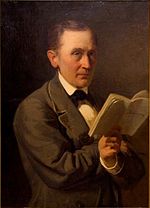
“Sir Thomas was a Scottish lord, and I will guess charismatic if the folk remember him so well. He may have been the author of Sir Tristem, a version of the Tristam legend. Many a prophetic verse has been attributed to Sir Thomas, usually predicting events soon to be Scottish history but encoded in imagery hard to penetrate. Not unlike Nostradamus.

“It was Sir Walter Scott who became Sir Thomas’s publicist. In his Minstrelsy, he covered Sir Thomas’s visit to Elfland and his later return to the fairy world. How much of this is Scott’s invention is hard to say. He claims his source to be a Mrs. Brown, who heard and learned ballads about Thomas the Rhymer from an aunt.

“In any case, the story that Scott provides goes that, sometime after his first visit to Elfland, Sir Thomas is entertaining friends when someone arrives with the message that a hart and a hind are roaming about, apparently searching. Thomas immediately leaves his friends to follow the hart and hind. Since then, he has not been seen, but the expectation is that he will, one day, return.”

“Wonderful,” I say. “Not unlike Arthur going to Avalon. It also sounds like Oisín’s visit to Tir na nÓg, without the tragic consequences.”

“It,” says Agustus, “sounds more like Ogier La Danois and Morgan la Fay, complete with the hero mistaking the woman for the Virgin Mary.”

I am annoyed. “Are storytellers thieves? Do they take the adventures of one hero and graft them onto the hero they admire? Have they no conscience?”

“Oh,” says Augustus, “don’t be too hard on our illiterate storytellers—most of them were illiterate—the word ‘plagiarism’ was not in their vocabulary. All they wanted was a rollicking good story to tell to their peers.”

“I’m sure you are right,” I concede. “If I don’t hold the tales to high literary standards—and that would not be appropriate—then I should not expect them to play by literary rules. The fairy tales are a free-for-all, aren’t they? It is part of their charm.”

“Well, what do you think of Pleiades’ Pleasure compared to Leprechaun Gold?” Augustus raises an eyebrow.

“I’m not sure. Let me go another round.”

Fairy Tale of the Month: November 2023 Thomas the Rhymer – Part Three

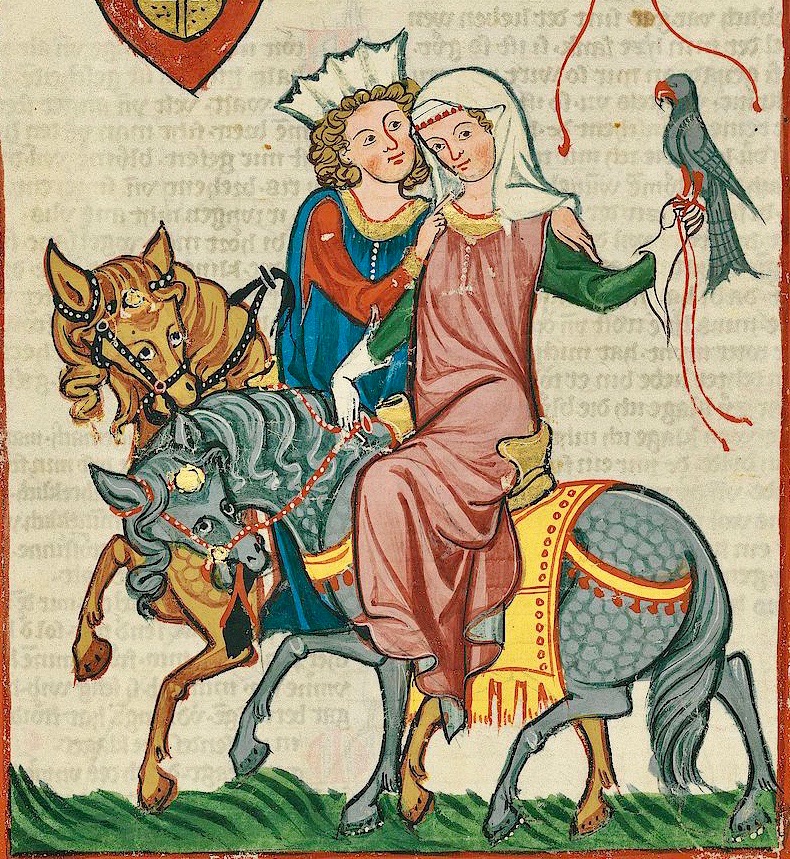
Manesse Codex Circa 1300

Bad Marriage

I repack my pipe with a little bit of Leprechaun Gold, then light it, trying to savor its effect on my olfactory sense.

“Let me pose another question,” Augustus goes on. “What in your opinion is the fairy/mortal relationship all about? I don’t know of a fairy/mortal marriage tale that ends with the words, ‘And they lived happily ever after.’”

“Oh, good point,” I say, blowing a smoke ring as I contemplate. “I will guess it has to do with us mortals’ wish to hold on to the ephemeral.”

“How so?” Augustus frowns.

“The fairy queen took Thomas to a crossroads. One path led to heaven, another to hell,  the third to purgatory, and the fourth to Elfland. That does put Elfland on a par with heaven, as well as the other worlds. The story suggests the path you take depends upon your guide. Mind you, Augustus, I am talking and thinking at the same time.”

“Go on,” he encourages.

“One of the differences between heaven-purgatory-hell and Elfland is that one can return from the latter, which Thomas did, only to disappear again when summoned.”

“And we now wait for Thomas as we wait for King Arthur?” Augustus suggests.

“We also wait for Jesus to return, but we sinners would be less happy about that than the return of Thomas or Arthur, but you are straying from my point, if I have one.”

I blow another smoke ring, then repack my pipe with the other tobacco. “How we think of a marriage between a mortal and an immortal is best represented in Oisín’s visit to Tir na nÓg. He spends three years with Niamh of the Golden Hair, but then desires to visit his family. He is warned not to dismount from his horse, not to touch the earth, or he will never return.

“When back home, he finds three centuries have passed, not three years. When the girth of his saddle breaks, he falls to the ground, turning into an ancient being.”

I blow another smoke ring as the implication of what I am saying occurs to me. “Time in Elfland moves faster than in our world. They are immortals; time has no value to them. Nothing for them should be ephemeral. Not until they touch our world can they experience it.

“For us mortals, time is precious. We hang on to it, not wanting it to slip away too quickly. You know I was married once. That has slipped away from me with her passing. Thalia’s childhood has slipped away as well. Time is the villain of us mortals. Time makes our world ephemeral.

“When Oisín enters Tir na nÓg, he escapes time and, for a while, is timeless. But being mortal by origin, he is drawn back to the physical world to meet his demise. I think it best if Thomas, Arthur, and Jesus stay where they are.”

“I must agree with your assessment of our world as ephemeral,” Agustus reflects. “I always think of tobacco as ephemeral, here today and the next day turned to ash. And what do you conclude between the two blends?”

“Oh,” I say, “I been talking so much I didn’t truly take notice, but I’ll go with Leprechaun Gold. The leprechauns are close to the fairies, so I choose that blend in honor of Thomas the Rhymer.”

Your thoughts?

Fairy Tales of the Month: Mid-month Writer’s Journey

Hi All,

Last month, I mentioned Reedsy’s Discovery and how they were “launching” my book on October 21. That didn’t happen. Because the reviewer I requested did not follow through, and since no one else has volunteered to review it, they have pushed me off to November 20 for the launch. I remain unreviewed, which means I don’t have a rating. I rather despair of that happening at this point.

Don’t get me wrong, Reedsy is a great site, full of useful information and instruction. I still plan to use it when I launch my next book. A Vacant Throne was not properly launched. Actually, not launched at all, simply published on Amazon. A proper launch takes months to plan, involving advance readers (ARC’s), email lists, etc. That will be my next learning curve.

For a quick overview of how to do a book launch, check this article from Fiverr, another site not to be overlooked.

Another thought, before I go, about the synopsis. When we submit to agents for representation, most will want a synopsis of the story. Creating a synopsis after you have written the book, whittling it down to a page or two, is drudgery.  There is a solution. Write the synopsis concurrently with writing your book. There is a huge bonus in doing this. You now have a running summary of your book, which you can look at, objectively, and say, “Gees, nothing happened in these last four chapters. What am I doing?” It can serve as a guidepost to your writing creativity.

OK, the synopsis you will create will be much longer than the synopsis you will eventually submit, but now you have something to work with. I am doing this with my current work, The Three Spheres (working title). I am at 4500 words, and the synopsis is 200 words. So it goes.

Thanks so much for reading my ramblings.

Charles K.

Fairy Tale of the Month: October 2023 King of the Cats- Part One

John D Batten

Halloween Party

Halloween. Samhain. It marks the end of a yearly cycle. It’s not as well recognized as New Year’s Eve as the end of the year. For me, it is when we enter the colder days that bring about temporary death until the invigorating spring. Halloween is the transition.

Teenagers are persons in transition.

“No candy,” pronounces Thalia.

Jini backs her up. “Candy is for children.”

“Ah,” I say as we discuss our Halloween party menu, “then let’s go traditional with Mash of Nine Sort and bangers.

“Sounds cool,” says Thalia.

“What’s Mash of Nine Sort?” Jini asks.

“Basically, potatoes and other root vegetables,” I answer.

“Safe,” she says.

“How about caramel apples for dessert?”

They hesitate. These are candied apples, but they quickly cave.

American apple cider is a given in our household for such a party, not the British cider, which is, of course, alcoholic.

As we prepare the Mash of Nine Sort, I throw in my late wife’s wedding ring, to their confused looks.

‘You didn’t let him put a ring in it, did  you?” Melissa asks them when the party starts. Their wide-eyed, nonresponse answers her question. “Well then, whoever gets the ring in their serving is the next to get married.”

The girls gasp.

I chortle.

Melissa gives me a harsh glance.

We decide to start off our evening with Thalia’s reading. We all gather in the study. By “all” I mean Melissa, Jini, Thalia, the fairy, Johannes, the brownies (in the shadows as usual), and myself.

“Tonight’s story is dedicated  to Johannes. It’s called King of the Cats.”

Johannes’s eyes shine as he curls up on Jini’s lap.

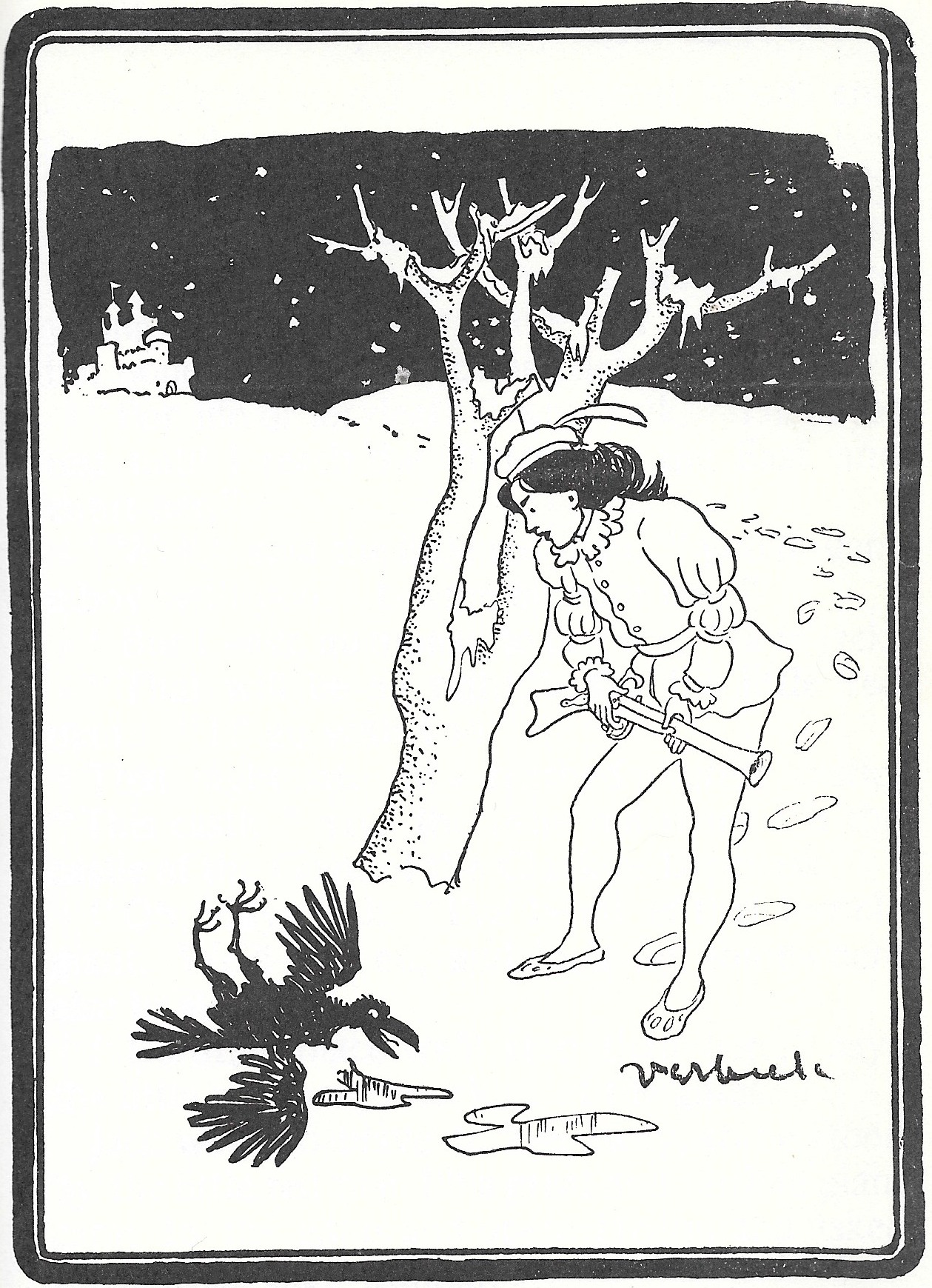
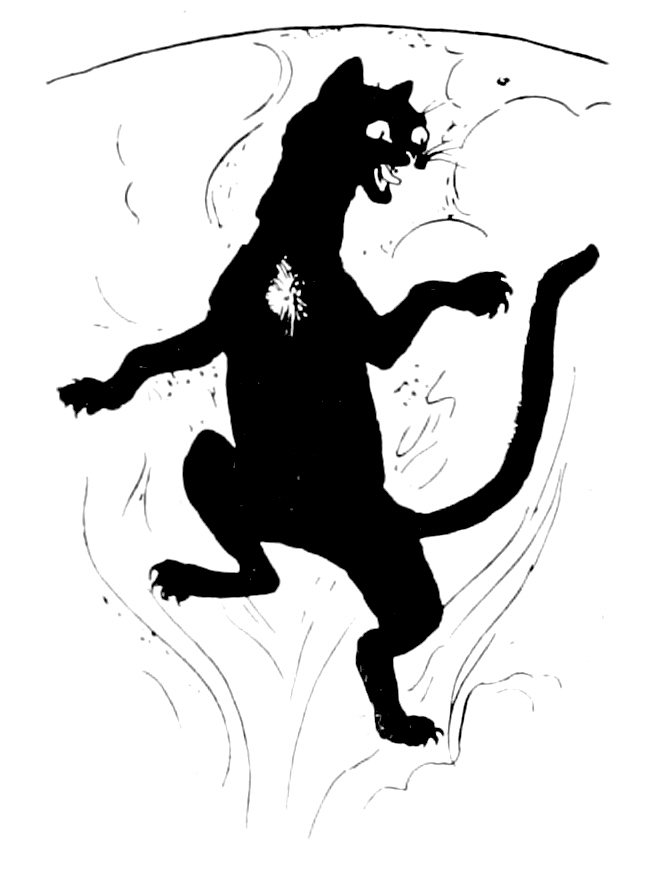
One winter’s night, the sexton’s wife is sitting by the fireside with their old, black tom cat lying in her lap, waiting for her husband to come home. He does, at last, return, but in a fit of excitement, shouting, “Who’s Tommy Tildrum?”

The wife demands an explanation, and her husband embarks on a wild tale.

He was digging a grave when he heard meows. Looking out over the top of the grave, he saw nine black cats, eight of them carrying a coffin covered with a black pall on top of which rested a small, gold crown. The procession was led by the ninth cat. On every third step, they all chorused a meow.

As the sexton tells his story, every time he refers to the meows of the cats, their cat, Old Tom, meows as well. The sexton twice notices that Old Tom seems to understand what he is saying, but the wife returns his attention to telling the tale.

The sexton relates that the funeral party of cats came parallel to the grave he was digging. The nineth cat came over to the grave’s edge and looked down upon him, saying, “Tell Tom Tildrum that Tim Tildrum is dead.”

Upon hearing this, Old Tom speaks up. “What? Old Tim is dead! Then I’m king of the cats.” And disappears up the chimney.

Fairy Tale of the Month: October 2023 King of the Cats – Part Two

G. P. Jacomb-Hood

Of Cats

“A mostly true tale,” Johannes offers. “I knew the Tildrum litter well, and I approve of the story. It doesn’t have us of the Cat Sith stealing souls and such things from the dead.”

“You black cats,” I comment, “do have a bad reputation on the whole. I have always heard it is unlucky to have a black cat cross your path, for example.”

Johannes hisses gently in resigned agreement. “And to think we were once worshipped in Egypt. It could have led to someone’s death to harm a cat back in those days. Gone are the times of Bastet.”

“Bastet?” Jini asks as Johannes leans into her hand while she scratches behind his ear.

“Daughter of the sun god Ra and Isis. She served as a protector against contagious diseases and evil spirits. Isn’t it ironic that by the Middle Ages our reputation became the opposite.”

“How did that happen?” Thalia queries.

“Christians, is the short answer.” Johannes’s tail thrashes. “They eradicated anything pagan that they could not put a Christian gloss upon. Not only were we cats worshipped by the Egyptians, but we drew the Norse goddess Freya’s chariot. We had far too much contact with other deities for the monotheists to be comfortable with us.

“We were accused of stealing babies’ breath, snatching souls before they could go to heaven; our bites were poisonous. When the Black Death came, many thought we were the cause. Thousands of cats were killed to slow down the plague, when it was we who hunted the rats who were the culprits.”

Melissa raises her hand. “Why did cats and witches become associated?”

“I believe you ask that question because you already know the answer.”

Melissa smiles at him.

“But for the benefit of others,” Johannes continues, “disadvantaged women and cats—themselves disadvantaged by their history—were thrown together by the ignorant, popular mind. Scapegoats are always needed, and here was a pairing not to be ignored.

“To be fair, Christianity is not the only religion or philosophy to denigrate women and cats. However, not since the fall of the pagans has anything feminine or feline been treated fairly.

“Whenever have you heard of a ‘sorcerer hunt’? It’s always a ‘witch hunt.’ Sorcerers have tomes, which they consult. Witches have familiars with whom they confer. The popular mind has cast different scenarios for men and women in the black arts.”

“Aren’t you being a little harsh?” Jini objects.

“I don’t think so. You are young. I have been about, perhaps, a little too long. Forgive me if I appear jaded, like an overworked horse.”

“Aren’t the Cat Sith inherently evil?” I prod.

“No!” Johannes’s fur bristles as Jini tries to pat it down. “Ah, you are baiting me. You got me on that score. Are my buttons so obvious that you must push them?”

It is my turn to smile.

Johannes growls a bit, despite Jini’s calming hand. “Evil is a relative state. Visit politics to see examples. Whose side are you then on?”

Good point.

Fairy Tale of the Month: October 2023 King of the Cats – Part Three

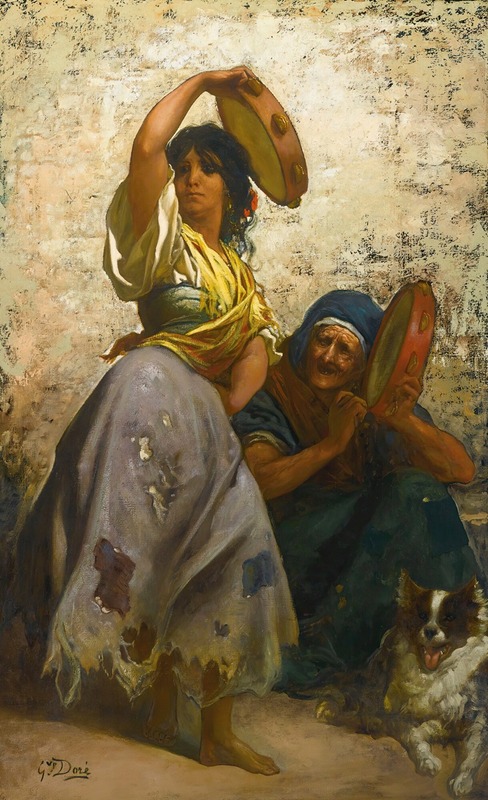
Gustave  Doré

Cats Considered

Melissa and I are in the kitchen, warming up the Mash of Nine Sort, cooking the bangers, and pouring ourselves some wine, leaving the girls to chat by the fireside with their American apple cider and Johannes contently curled in Jini’s lap.

“I feel like I am talking behind Johannes’ back.” Melissa sips her wine. “But what is the role of cats in fairy tales?”

“An interesting question to contemplate while we prepare our little feast,” I say, checking the oven temperature. “Let’s think on this.”

“The first to jump to mind is The Companionship of the Cat and the Mouse, which is almost the lead story in the Grimm collection. The tale does not end well for the mouse, and the cat is cast as villainous. The whole piece is a cautionary tale.

“Another of the cautionary tales is The Fox and the Cat.”

“I don’t recall that one. Remind me.”

“A fox and a cat were talking. The arrogant fox asked the cat what skills it could boast of compared to his many. The cat said she could climb trees, a talent that the fox belittled until hunting hounds suddenly descended upon them. The cat scampered up a tree, and the fox was killed.”

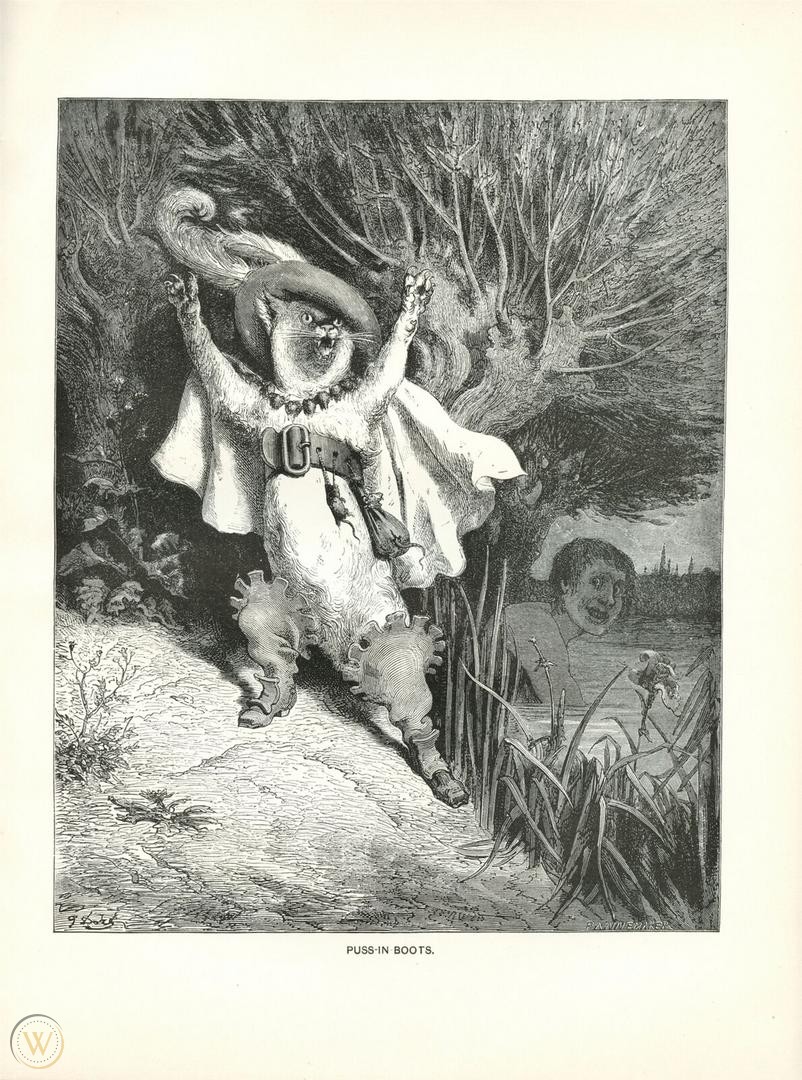
“I see. In this cautionary tale, the cat is in the right.” I move the bangers about before saying, “However, I think first mention should be given to Puss in Boots.”

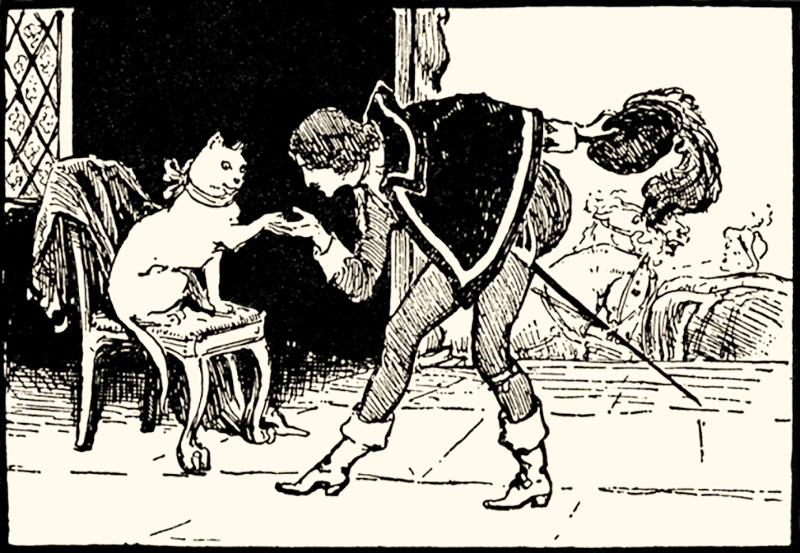
“Oh yes, of course,” Melissa agrees. “Here the cat is the protagonist and a witty hero, outsmarting humans and ogres. Certain Johannes would approve.”

“I recently read Wood of Tontla,” I say. “In it is a cat having something to do with magic, but it has a small role and never says anything.”

“That makes me think of The Cat on the Dovrefell. The cat is just a cat, but its presence works into the pun at the end of the story.”

“A device, in other words, not a character like Puss in Boots,” I reflect. “And then there is The Bremen Town Musicians, one of whom is a cat.  The cat, and her companions, fall between being devices in the story and protagonists, maybe?”

“Let’s just label them as characters,” Melissa decides.

“I’ll buy that.” Melissa takes another sip of her wine. “Oh, Madame d’Aulnoy’s The White Cat! While the prince is the protagonist, the white cat is certainly the heroine.”

“But,” I protest, “the cat is really a princess under a spell and not a real cat. Does that count?”

“Well, she had enough claws on her front paws to count to ten. She counts in my book.”

I will not argue. “Ah, Gabriel Rider.” I raise my finger in the air. “In that story are the very Cat Sith representing evil that Johannes complained about. These cats are not devices or protagonists, but rather antagonists.”

Melissa considers. “That is the first story we have cited in which the cats are the minions of the devil. None of the stories we have mentioned had a witch and a black cat in them. The witch and black cat pairing is not a traditional fairy-tale convention.”

When the oven bell chimes, we finish our wine and carry the hot dishes into the study, along with the caramel apples the girls and I produced earlier in the day. We set the study table up as a dining table and have at it.

I take no more than two mouthfuls of the Mash of Nine Sort when my molars clamp down on a round, metal object. It makes a clink. The three others look up at me and smirk.

I should have known better.

Your thoughts?

Fairy Tale of the Month: Mid-month Writer’s Journey

Hi All,

I am re-instituting my mid-monthly blog post. This is different from my end-of-the-month post on fairy tales.

A little history. My original concept of the fairy tale blog was to post three times a month, parts one, two, and three. If you know anything about fairy tales, the number three is rather sacred. From the very first month back in December 2010, I procrastinated until the last day of the month, putting out all three parts at once and have done so ever since. (sigh)

Now I have decided to challenge myself and put out a mid-monthly blog. I did this before when I was part of StoryOrigin, a site for authors to promote each other. I do not feel it worked out for me, but I will say nothing against the concept. The failing may have been mine.

What I now want to do is document my writer’s journey, in hopes I have something to say that will benefit others.

However, before I go on about my writer’s journey, we are in the month of October. October means Halloween. During the pandemic, I produced a video to sell to libraries for Halloween programing. Now I have put it up on Youtube for free. Happy Halloween. Please enjoy. If you want a higher quality version than Youtube offers, send me fifteen bucks and the MP4 yours.

On to the writer’s journey.

My latest endeavor is with Reedsy’s Discovery. They are “Launching” my book A Vacant Throne on October 21st. Actually, it has been out for some time. If you can get to Reedsy Discovery on or after October 21st and “upvote” my title, I will appreciate it. I am struggling with how all this works, but Reedsy is a wonderful source for writers and readers. I use it all the time as a source of information for the newsletter I produce for the Greater Lehigh Valley Writers Group. I will have more to say about GLVWG in following posts.

Thanks so much for reading my ramblings.

Charles K.

Fairy Tale of the Month: September 2023 The Wood of Tontla – Part One

H. J. Ford

From Estonia

Why is it that every time I hear the bell over Augustus’s door to his tobacco shop I feel comforted by its announcement of my presence, my existence? The heavy aroma of the tobacco soothes my senses rather than overwhelming them as, really, they should. More sensitive souls would turn and leave, but I am drawn in.

“Let me guess,” says Augustus. “You are out of Elfish Gold.”

 “That is my favorite, but I also need an ounce of Angel’s Glory.”

“Quite so, but let me make two requests of you today. First, to sample my latest blend, Elven Quest, and second, to listen to a story.”

“I am always happy to try out your blends, but, Augustus, you have never told me a story before; I have always brought the story.”

Augustus smiles. “That I know. However, I have come across a tale that I like and think I should despise.”

“Well, let’s have to.”

We retreat to Augustus’s testing room, complete with comfy chairs, and light up.

“It’s Estonian,” he says, “called The Wood of Tontla.”

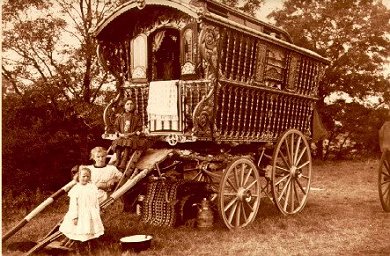
There once stood a forest in the middle of which many people claim to have seen an abandoned house, and in its environs were questionable gypsy-like beings. Tales told of a dwarf with a long beard and a huge black cat. When a woodsman tried to cut down a Tontla tree, it shrieked and bled.

Near Tontla, in a village, lived an unfortunate girl named Elsie . . .

“Hold on,” I say. “That first part sounded like a preamble. Fairy tales do not have preambles.”

“Quite right. Which is one of the reasons I should not like this story, but stay with me for a bit.” 

Near Tontla, in a village, lived an unfortunate girl named Elsie whose mother had died, and her stepmother hated her.

One day she picked strawberries with a group of village children when they realized they had wandered too close to Tontla and ran away, but not Elsie, who did not fear the wood.

She was approached by a young girl dressed all in silk, who asked Elsie to be her friend and playmate, taking her into the wood. To Elsie’s wonder, they came to a magnificent garden in the center of which sat a grand house built of glass and precious stones. The young girl, Kiisike, asked her mother if Elsie could stay.

“Both main characters have names? Will everyone have a name? That is a very Disney sort of thing to do, giving everyone names.”

“No, no, those are the only two, but I will agree, it is a little unusual.”

Elsie, in tears, explained her hardship to the mother, who promised to think on it and allowed the two girls to play together.

Kiisike, taking magical items out of a box, transformed the garden into the open sea, the two girls in a boat made from a mussel shell, surrounded by other boats with people laughing and singing. When called to supper, Kiisike transformed the sea back into the garden.

“Well, that is rather delightful,” I muse, drawing on my pipe.

Fairy Tale of the Month: September 2023 The Wood of Tontla – Part Two

H. J. Ford

Magical Devices

In the hall were twenty-four beautifully dressed women, plus the lady of the house, Kiisike’s mother, seated on a golden chair. They ate and talked softly in a language Elsie could not understand.

To Elsie’s joy, at the end of the meal, the lady of the house announced she wished to adopt Elsie, but a copy of Elsie must be sent back to the village. An old man with a long beard appeared and molded an image of Elsie in clay. Three salt herrings and a bit of bread were placed in the hollow body, along with a black snake and a drop of Elsie’s blood drawn by a golden needle.

The doll was placed in a case and, by morning, appeared to be alive. Dressed in Elsie’s old clothing, the doll was sent to the village to be, as the mother explained, beaten and abused by the stepmother, but it would feel no pain, being made of clay.

“I will guess that qualifies as a magical device,” I say, relighting my pipe. “I believe I ran across a similar doll in a Baba Yaga story. Oh yes, Vasilisa the Beautiful.”

“Hmmm.” Augustus frowns a little.

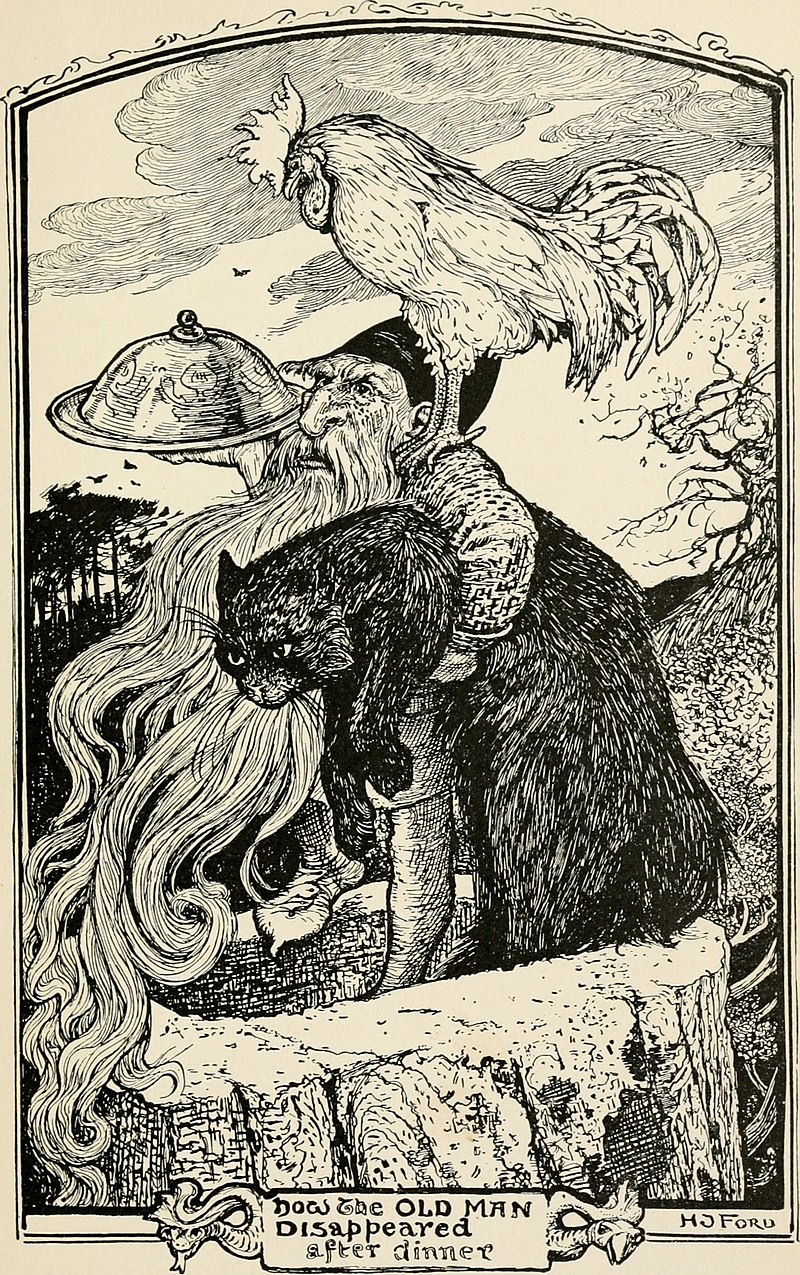
A rock of granite stood near the house. Every day, the old man with the long beard went to the rock, drew a silver wand, and struck the rock three times. A large golden cock sprang out and perched on the rock, flapping his wings and crowing. Out of the rock and into the house came a table and chairs, followed by one dish after another. When everybody had eaten enough, the old man knocked on the rock a second time with his silver wand. The golden cock crowed, and the bottles, dishes, plates, chairs, and table went back into the rock. But when the thirteenth dish came, from which nothing was eaten, a great black cat ran after it and sat on the rock with the cock. The old man took the dish in one hand, the cat under his arm, the golden cock on his shoulder, and disappeared with them under the rock. Not only food and drink, but everything else required for the household, even clothes, came out of the rock upon the crowing of the cock.

“OK, another magical device, but how extraordinary and complex,” I ponder.

Augustus glances at me warily, then blows a smoke ring.

One day Elsie asked why the thirteenth dish came to the table every day, although nobody ate anything from it. The lady of the house explained it was the dish of hidden blessing. They dare not touch it, or their happy life would come to an end. To not return anything in gratitude to the Heavenly Dispenser would be avarice.

“Ah! Here it comes.” I wave a finger in the air. “Elsie, human and sinner that she is, will not be satisfied until she samples the thirteenth dish!”

“Nope. Does not happen. How could you think that of our precious Elsie?” Augustus quips.

“No. Wait. Who collected this tale, and did they alter it like the Grimms did theirs?”

 “Dr. Friedrich Reinhold Kreutzwald. He was an Estonian writer, considered to be the father of Estonia’s national literature, and author of several moralistic folk books. So, yes, he put his mark on what he collected. Another reason for me to not like the story, but let me continue.”

Fairy Tale of the Month: September 2023 The Wood of Tontla – Part Three

Friedrich Kreutzwald by Johann Köler

The Departure

Nine years passed. Kiisike and Elsie were educated together by the governess. Elsie grew into a young lady, learned easily, and even learned their language. However, Kiisike preferred childish games and never grew any older.

With great sadness, the lady of the house informed Elsie that it was time for her to leave now that she was grown. Elsie pleaded, but to no avail. The lady told her that they—she, Kiisike, and the others—were beings of a higher order that Elsie could not comprehend. The lady consoled Elsie with the knowledge there was happiness in her future.

“Let me stop you here.” I feel my eyebrows frowning. “Are they fairies?”

“I’m thinking not,” Augustus returns. “The lady makes reference to their ‘Heavenly Dispenser.’ The fairies are fallen angels, not receiving aid from their former lord.”

“Are they then angels?”

“Again, I think not. They appear to be earthbound. A step below the angels, perhaps. Maybe an Estonian thing.”

The story shifted to the clay doll, again being beaten by the stepmother, when the stepmother’s rage overtook her, and she strangled the doll. Out of the doll’s mouth sprang the black snake, biting the woman’s tongue, and she fell dead.

After the wake was held for the deceased, the husband found the bread and three herrings on his table. He ate them and was dead by morning. The clay doll had disappeared.

“Wait again.” I puff on my pipe. “What did the husband do to deserve death?”

“He allowed the abuse and was culpable. Kreutzwald was strict in his morals. Now be quiet and let me finish,” Augustus glares.

Elsie spent one more night in her beloved home, and in the morning, the old man gently touched her head with his silver wand, and Elsie transformed into an eagle. For days, she flew southward until shot down by an arrow.

When Elsie awoke from her swoon, she was on the ground, in her human form, unharmed. In her company was a handsome prince—her soon-to-be husband—declaring that for half a year he had dreamt of finding her. This morning he shot an eagle and, while searching for it, found her.

On their wedding day, fifty loads of treasure arrived, a gift from Elsie’s foster mother. Elsie became queen and, in her old age, related her adventures. But no one has ever heard any more of the Wood of Tontla.

“It is certainly literary,” I say. “I never liked Anderson for that reason.”

“I agree, but the images of this story captured me.” He knocks the ashes out of his pipe.

“And here I will express another annoyance,” Augustus continues. “I first read Andrew Lang’s version, actually Lady Lang’s version, under the title A Tale of the Tontlawald in the Violet Fairy Book, which was inferior. Translations are always a problem. Let me make an example.”

Augustus rummages around on a desk in the corner of the room and comes up with the Violet Fairy Book.

“This is from the story’s preamble as translated by Mrs. Lang from a German version. ‘One old crone had a broad iron ladle in her hand, with which every now and then she stirred the fire, but the moment she touched the glowing ashes, the children rushed away, shrieking like night owls, and it was a long while before they ventured to steal back.’”

Augustus picked up a page of a computer printout. “I found this other version of the story on the Sacred Stories site, titled The Wood of Tontla. I could not find who translated it, but I suspect it came directly from the Estonian language.

“‘An old woman held a broad iron shovel in her hand, and every now and then scattered the red-hot cinders over the grass, when the children flew up into the air, fluttering about like owls in the rising smoke, and then sinking.’”

“Oh!” I say. “What a different image. I see your point.”

“How can I trust the Langs ever again, when through my own ignorance, I don’t know to spot a discrepancy? I caught it this time, but I could easily be seduced at another time.”

“And you like this tale, despite all your objections; for what reason?” I challenge.

Augustus pauses. “I think it is the images Kreutzwald creates in my mind that pull me in.”

Well, isn’t that what good literature and fairy tales do?

Your thoughts?

Fairy Tale of the Month: August 2023 Raja Rasalu – Part One

John D Batten

Another Picnic

Richmond Park, one of the royal parks, is the destination for our picnic. Oh yes, another picnic! What is summer without numerous picnics?

This one is Melissa’s idea. The park is her choice, the exact location in the park is her favorite, and the menu of her inspiration will be delightful if not as varied as our last picnic’s repast.

Both Thalia and Jini give quiet squeals of wonder when they spot a herd of fallow deer grazing contentedly, even before we reach our intended spot. We will hardly be out of sight of them the entire time, nor of the kestrels flying overhead.

I spread our blanket under an old, old oak tree, and we settle ourselves around it on low beach chairs. I, for one, need a bit of back support on such occasions.

Before opening Melissa’s basket, we look to Thalia for the traditional story. To my surprise, she nods to Jini.

“I have a story for you,” Jini says. “It’s from my people, called Raja Rasalu.”

Once there lived a great raja, whose name was Salabhan, and he had a queen, by name Lona, who, though she wept and prayed at many shrines, had never a child to gladden her eyes.”

To my pleasure, I realize Jini intends to recite, not read, her tale to us.

Eventually, before a child is granted to the queen, a fakir tells her that her son, whose name will be Rasalu, must not see the light of day for twelve years. If she and the king look upon his face for all that time, or all three will die.

The lad grows up constantly attended to, well educated, and in the company of a colt, born on the same day as he, and a parrot, both his constant companions. At eleven years of age and impatient, he goes out into the world before his time. His parents refuse to “see” him, and he leaves without meeting them face-to-face, never to be in their presence again.

Rasalu, fully armed, astride his faithful horse, ventures forth determined to play games of chaupur with Raja Sarkap, in which the stakes are always high. During his travels, he takes shelter in a graveyard during a lightning storm and has a long conversation with a headless corpse. The corpse turns out to be the brother of Raja Sarkap, through whose hand he lost his head. He warns Rasalu and advises him to make a pair of dice out of a bone from the graveyard to match against Sarkap’s enchanted dice.

Traveling on, Rasalu saves a cricket from a fire, and the cricket gives Rasalu one of his feelers, promising him aid if he burns the feeler to evoke the cricket. Bemused, Rasalu accepts the gift.

Coming to Sarkap’s kingdom, he is greeted by the raja’s seventy daughters, the youngest of whom falls in love with him. The other sixty-nine want him to pass a test. They mix millet seed with sand and order him to separate them out. Rasalu calls upon the cricket, and the cricket’s swarm easily performs the task.

The seventy daughters then want him to push them on their swings. He puts them all in one swing and gives it such a push, they land on their heads. The youngest, now disenchanted, goes to her father to complain. Sarkap understands who Rasalu is and challenges him to games of chaupur.

Before the games, Rasalu—always compassionate toward the needy—saves the kittens of a mother cat, who gives him one of her litter to put in his pocket. During the rounds of chaupur, Rasalu loses his armour, his horse, and is about to lose his head, when his faithful horse reminds him of the bone dice.

During the game, Sarkap’s rat, Dhol, had been running about, knocking over the pieces to distract Rasalu, but now Rasalu insists upon using his dice and brings out the kitten to keep Dhol at bay. After that, Rasalu is victorious and claims Sarkap’s head.

At this point, Sarkap is informed that one of his wives has had a daughter. Rasalu trades Sarkap’s life for the daughter. The daughter is shut into an underground palace for twelve years, and a mango tree is planted at its entrance. Rasalu declares that he will marry the girl when the mango tree blooms.

Jini bows to indicate the end of her story.

We applaud.

Fairy Tale of the Month: August 2023 Raja Rasalu – Part Two

Source not known

Plot Thickens

Melissa opens up the wicker basket, setting out the quinoa-kale salad. “If that is a story of your people, I will assume your family is from the Punjab?”

Jini smiles. “You are right.”

“Raja Rasalu is something of Northern India’s Siegfried. There are a number of legends about Rasalu, poetic sagas, if I recall.” She looks at me, knowing how little I know about the subject.

“Yes,” says Jini. “My parents brought me up to be English, pushing our own culture aside. I am only now beginning to teach myself about my origins, and, like Thalia, love the fairy tales and legends. I see so much in them.”

“Good,” says Melissa, setting out scotch eggs (I snatch one immediately). “But like the Arthurian tales, for which there are multiple sources that don’t agree with each other, you will find the same disagreements in the Rasalu tales.”

“Such as?” Jini’s eyes glimmer as she stretches out her hand for a Jaffa Cake.

“Well, there is Rasalu’s older brother, Puran. According to some legends, it was Puran who, at his birth, was sequestered for twelve years and could not have his parents look upon him.”

As Melissa slices some bara brith, she continues. “In another version, Salabhan’s second and younger wife makes false accusations against Puran, the son of Salabhan’s first wife, after Puran rejects the younger wife’s advances. In fury, Salabhan has Puran’s hands and feet cut off, and his body thrown down a well.

“Puran survives for twelve years at the bottom of the well, being fed by birds and animals, until a fakir discovers him, retrieves Puran from the well, and, through his powers, restores the severed limbs. Puran studies under the fakir and becomes one himself.

“As a fakir, he returns, unrecognized, to his father and stepmother and grants the queen the long-sought-for child, but with the stipulations of the twelve-year isolation and no visitation. Something of a reflection of his own travail.”

“Wow,” says Thalia. “In Jini’s version, it is some fakir who sets up the terms, and here it is Rasalu’s saintly half-brother. That’s some heavy editing going on!”

I nibble on some Jacob’s Cream Crackers topped with Cornish Yarg. “I am afraid this has often happened when foreign tales get taken over by a different cultural viewpoint. They get disassembled and reassembled, kind of like a Picasso painting.”

“All tales, including these, may get bowdlerized as well,” Melissa adds.

“By the way,” I ask, pouring myself some blueberry-and-mint iced tea (I am glad she had the sense not to bring wine with two young girls in tow) “What is the game of chaupur?”

“Oh, very old,” Jini says. “The board is made of cloth in the form of a cross full of very colorful squares. Each arm of the cross has three columns of eight rows. Each player has four pawns. There can be two players or two teams of two players each for each arm of the cross. The pawns move depending on the value of the seven dice thrown.

“What I don’t get is the dice I always see are made of cowry shells, not bones. Anyway, it’s popular with old people. I don’t have the patience for its impossible rules. The game can go on forever. The game ends when someone gets all four of their pawns to the center.”

“Hmmm,” I say. “I’m old. I may have to try it.”

Jini blushes.

Fairy Tale of the Month: August 2023 Raja Rasalu- Part Three

Cover of Joesph Jacob’s book

Number Twelve

“I have to wonder about the number twelve,” I say, turning my attention to some crisps. “Here in the West, there are the twelve days of Christmas, the twelve months of the year, and the twelve-hour clock, all dealing with time.”

“Ah, but,” says Melissa, “I never heard of twelve years of isolation or confinement. In the Grimm canon, Maid Maleen is shut in a tower for seven years. The six swans’ sister has to not speak or laugh and sew six shirts out of aster flowers for six years. A twelve-year sentence of this nature, I don’t recall.”

Our conversation falls off for a while as we enjoy Melissa’s picnic offerings.

“That cricket,” Thalia says, finishing off a scotch egg, “sounded familiar. He was an animal helper, but there was only one, not the usual three.”

“What about the kitten?” Jini asks.

“Not the same thing. Animal helpers give the hero some way of calling them when in need. The kitten simply ended up in his pocket for his use.”

“You make a good point,” Melissa muses. “We may be seeing the origin of a motif. Let me suggest that this notion of an animal helper giving the hero a token or evocative chant to use when in distress, in exchange for a service rendered, came down the Silk Road to Europe.

“Our tellers, knowing a good thing when they heard it, tripled the effect, creating the motif of the three animal helpers. The West is warm to the pattern of threes.”

“I like the notion,” I say, “but who influenced whom?”

“Oh, they influenced us. Rasalu legends date from the second century AD. The fairy tales, as we know them, with their body of motifs, were developed around the twelfth century.”

“Oh,” says Thalia, “there’s the number twelve again.” Both she and Jini giggle.

Melissa smiles. “I am sure it is coincidental.”

“And then,” I say, goading, knowing there are teenage girls in company, “we have a talking horse that gives Rasalu good advice.”

“Yeah!” they chorus.

Melissa rolls her eyes. “If there is a horse in the tale, it is bound to say something. Any animal in fairy tales can talk, but I feel horses are particularly chatty.”

“I did notice,” says Jini, “there isn’t an animal in my tale that Rasalu cannot talk to.”

“And no one is ever surprised by it,” Thalia puts in. “Where in any fairy tale are the words, ‘Oh! You can talk.’ Doesn’t happen.”

“Another good point,” says Melissa. “There are certain assumptions that the fairy-tale genre always makes.” She ticks them off on her fingertips.

“Animals can talk.

“Royalty has magical powers.

“Witches appear poor, even if they have hoarded wealth.

“Rather few heroes and heroines have a name—well, that only applies to the European tales.

“There will likely be a marriage in the story.

“If there are siblings, there will be two, three, six, or seven. Never four or five. Well, okay, in Jini’s tale, there are seventy sisters.

“There are very few fairies in fairy tales. We should be calling them ‘wonder tales.’

“If I thought more about it, I could come up with other notions.”

“Does that mean fairy tales, or should I say ‘wonder tales,’ are rather predictable?” I argue.

“Not at all. But if so, as most popular literature does, even if predictable, it aims to satisfy.”

I am satisfied with that answer.

Your thoughts?

Fairy Tale of the Month: July 2023 Kidnapped by a Mermaid and a Dragon – Part One

John D. Batten

Magic Picnic

Thalia and I wander into the Magic Forest, she carrying a wicker picnic basket hastily provided with egg-and-cress sandwiches, two apples, some parlies, and two bottles of Karma Cola. It was a last-minute decision. Looking out the window at a glorious summer day, I suggested a picnic, and Thalia chose the Magic Forest as the location. That surprised me, but why not?

We go no farther into the forest than the pond and find a grassy sward on which to spread our blanket. We are just getting settled, when down another path comes Ultima.

“Hello again,” she smiles. “I have come to contribute this!” She holds up a small, colorful box. “To add to your picnic for a story in exchange.”

“Well, Ultima,” I say, “First things first. This is my granddaughter, Thalia.” They simply wave energetically at each other.  “Now, what is in the box?”

“Caramel Dragon Nuts.”

“Hmmm, dragon,” says Thalia. She reaches into our basket and pulls out Folk and Fairy Tales from Denmark, Volume Two, a collection l know she has been exploring. “In exchange,” Thalia offers, “here is Kidnapped by a Mermaid and a Dragon.”

A poor fisherman, unable to provide for his family, is approached by a mermaid, who promises his wealth in fish if he will give her the son his wife is carrying in her womb. The fisherman, knowing he cannot feed another mouth, agrees to give up his son soon after the child’s twelfth birthday. The child, when he turns twelve, finds out what his father has done and flees from the sea to avoid the mermaid.

On his travels, he comes across a lion, a dog, a falcon, and a beetle arguing over a dead animal and who should consume it. The lion enlists the lad to solve their problem. Wisely, the lad divides the corpse among them, each to their own contentment. As reward, they give the lad the power to assume their shapes, only with twice the power, twice the speed, and twice the wisdom.

In the form of the falcon, he allows himself to be lured by a trail of breadcrumbs into the hands of a princess, who puts him in a decorative cage. That night, he turns into a beetle, crawls out of the cage, and approaches the princess’s bed as a man. She screams, and he retreats into the cage. The household thinks it is a bad dream, and this happens three nights in a row.

However, on the third night, before she can scream, he says, “Hush now. I am your falcon.” It was not long before they are plotting how to get married. The king, unfortunately, had declared no one could marry her until they could pick her out from her two other, identical sisters. Failing to do so carries the usual punishment.

There grew a hair on her neck that was unlike her sisters and with that clue, he picks her out three times in a row no matter how they dress.

But, as fate will have it, the newly married couple, on a walk, strolls too close to the sea, and the new prince is snatched away by the mermaid. The princess demands of her father a gold spinning wheel, a gold spinning reel, and a gold thread-winder—which with great reluctance he provides—for her to make a shirt for her husband. She does the spinning, reeling, and winding by the sea. The mermaid demands the devices, saying that she, the mermaid, should make the shirt for the husband. The princess agrees to surrender the gold instruments as long as she can once again see her husband. This the mermaid allows. The princess says, “If only my falcon were here.” The husband transforms into a falcon and escapes the mermaid.

Fate, once more, interferes. On their return, a dragon appears and steals away the princess. The king offers up one of his other daughters to the prince—they all look alike—but the prince will have none of that and sets out to find his wife.

In falcon form, he searches the world. One day, while resting on a mountaintop, he senses a strange odor. In dog form, he follows the scent to a mouse hole. In beetle form, he crawls into the mountain to find his wife and six other princesses crying into a vat. He stays long enough to discover how to destroy the dragon.

Every day, the dragon demands fifty pigs from the king of that land. The prince arranges to be the swineherd, then transforms into a lion and battles the dragon. This encounter happens three times. Each time, when they lay exhausted, no longer able to fight, the dragon says, “If I had the princesses’ tears to drink, you’d be dead by now.” To which the lion responds, “And if I had a sip of wine from the king’s table, your guts would be on the ground.”

On the third day, the prince brings a companion whose sole duty is to give him the wine. With that, the lion rips apart the dragon. As the prince knew would happen from his spying inside the mountain, a hare springs from the dragon’s body. In the form of the dog, the prince chases and kills it. From the hare, flies a dove. As a falcon, the prince kills the dove and dashes the egg inside it onto the mountain. The dragon’s mountain collapses, and everyone in it is freed. The prince and princess return home in honor.

Ultima applauds. “I am not sure about the evil dragon part. My dragon would not appreciate that a bit, but I like the story.”

Fairy Tale of the Month: July 2023 Kidnapped by a Mermaid and a Dragon – Part Two

dragon by Athanasius Kircher

Other Food

“Now,” says Ultima, “if this is a proper picnic, I am sure you brought a bottle of wine.” She peers into our picnic basket.

“Ah, well, you see, this was sort of a last-minute . . .”

“Oh, a bottle of claret, how nice.”

What?

“And here are three glasses.  There now, you did know I was coming. You did bring a corkscrew, I hope.”

I see Thalia’s eyes light up at the prospect.

“Only half a glass for her,” I declare.

“I do have a question,” Ultima asks as she pours out two and a half glasses. “It seems to me, there is more than one motif being borrowed by this story.”

“Oh my, yes,” I say. “Let’s enumerate them.”

We all pause to take a sip. Thalia’s eyebrows flicker.

“First,” I describe, “is a fisherman bargaining with an entity from the sea. They invariably want a child. The sea is equivalent to the fairy world—another place where abducted children end up—except that the fairy world is in another dimension. The sea is in front of us. Obviously a different realm, but one we can at least wade into, but if embraced, would drown us.”

“That’s a setup,” says Thalia, “for what happens later on when he gets kidnapped, but what about the four animals arguing over who gets the dead one?”

“That is another trope,” I say, “that appears in lots of stories. The unusual feature in this one is the four contenders for the feast, as opposed to the typical three. For me, the lion stands for strength, the dog for speed, the falcon for cunning, and the beetle for wisdom.”

“Is there a Carl Jung in your world?” Ultima asks out of the blue.

“Yes,” I answer.

“Right. He talks about the four personality types. For me, the lion is the Sensor, the one who has rules for himself and others; the dog is the Feeler, the one who is concerned about others’ comfort; the falcon is the Intuitor, the one with flights of fancy and insight; and the beetle is the Thinker, the one who reasons things out.”

“Sooo,” Thalia is thinking out loud, “in either case, the hero’s meeting the four creatures is more than something that happens to him and he gets gifts, they become part of who he is. He absorbs them—at least their gifts. They become a part of his personality.”

I wonder if a little wine clarifies her thoughts.

“I like that idea,” Ultima smiles. “Magic can become part of you, more than something you just have. Well, if there is wine, there must be cheese.”

“At this point, I am not sure,” I say.

Ultima peers back into the wicker. “Oh my, a whole wheel of Jarlsberg. You are extravagant. Where’s the knife.”

How did that fit in there?

We are soon nibbling on wedges of cheese.

“What was the next stolen motif in our story?” Ultima breaks the silence.

“Next,” says Thalia, “the falcon is captured by the princess, and his,” Thalia clears her throat, “somewhat inappropriate behavior.  Is that a motif?”

 I hesitate. “I’ll say ‘no.’ I have run across something similar in The Earl of Mar’s Daughter, but I will call that a borrowing, not a motif.”

“What’s the difference?” Ultima frowns.

“A motif,” I suggest, “doesn’t just travel down the road of story from one teller to another, although it might, but originates in the human psyche, the collective unconscious. It is not any teller’s invention.”

“Next is the identical-sisters contest,” Ultima chimes in. “Is that a motif?”

“Most certainly, although it is usually not sisters but a larger troop of women of identical appearance, sometimes magically produced.”

“And what part of the human psyche does that tap into?” she asks.

“I’ll have to think about that,” I say.

“Easy,” Thalia responds. “It’s about making the right choice when there are lots of choices, like finding who is your best friend among all the people you know.”

Does wine spur her thinking, or is it simply making her loquacious?

Fairy Tale of the Month: July 2023 Kidnapped by a Mermaid and a Dragon – Part Three

Rosarium Philosophorum 1550

More Food

Ultima lays out a platter of sizzling Angels on Horseback—bacon-wrapped oysters—and beside it, steaming Yorkshire pudding.

Hot appetizers?

“I believe that brings us up to the kidnappings.” Ultima samples a haggis sausage roll.

“Which brings us back to where the story started,” Thalia observes. “And why is it called ‘kid’ napping? Why not ‘princenapping’ and ‘princessnapping’?”

“Well,” I say, “in the plural, ‘princessesnapping’ would be hard to pronounce.”

Thalia giggles, and I continue. “As I said before, fairies and merfolk were given to bargaining for or stealing children. Losing one’s children is, I believe, rated as a primal fear among parents. But then, fairy tales have a way of reflecting all of our fears.

“In these abduction tales and similar stories, the silver lining is that the mother manages to get her  baby back, or the husband or wife regains their stolen spouse. Herein is a theme of loss and triumph.”

“Not in The Pied Piper of Hamelin,” Thalia states.

“True, but that only reinforces my idea of our fear of losing our children. The Pied Piper, a magical being, isn’t stealing a child for his benefit, but the children of an entire town as punishment for breaking their contract. No silver lining there. It is the other side of the coin, as it were.”

“I see the theme of fate being played out when the mermaid kidnaps the prince,” Ultima says.

“There is plenty of fate to be found in fairy tales,” I say. “However, we think of fate—at least in the English language—as the inevitable fall, or even demise, of its victim. Seldom, if ever, is the hero or heroine fated to good fortune. Good fortune comes of the defiance of fate. To use another simile, when the cards are stacked against the hero or heroine, they have an ace in the hole.”

“Oh!” says Thalia with wine-enhanced emphasis, “is that the role of magical devices? To help defy fate?”

“There’s another good thought,” says Ultima.

“Hmmm,” I analyze. “That is a good thought. The princess talked her reluctant father into providing her with golden thread-making tools. These were not magical, but being made of gold is just short of being magical.”

“Or,” says Ultima, “is gold magical?”

“We do treat it that way, don’t we.” I say. “In either case, the princess used these devices to trick the mermaid.”

“And so,” Ultima raises a finger, “the story comes full circle, fate is defied, and the story should end. But it doesn’t.”

“Yeah,” Thalia squints, “the dragon comes in as a random act of nastiness.”

“Right,” Ultima goes on. “What happened to the prince was a matter of fate. What happened to the princess—as you say, Thalia—was a random event. In either case, one mate had to save the other. That was kind of a given. It’s the origins of the dilemmas that I find interesting.

“I don’t think the teller was simply trying to make the story longer. I think the teller wanted to give equal time to the animus and anima within the listener.”

“The what?” Thalia’s eyes blink rapidly.

“My apologies for projecting Jungian thought into the story again,” Ultima says. “Simply put, the animus is the man in every woman, and the anima is the woman in every man. Just as everyone has elements of the four personality types, and one of the types will dominate, we all have elements of the animus and the anima, the dominance of which will depend on our sex.

“As I interpret the story, it tells us that the animus—the male part—may defy his fate through some device, be it physical or otherwise. Then the tale tells us that the anima—the female part—may solve an unlooked-for crisis through acquired knowledge and by getting to the origin of the matter.”

“Oh!” Thalia brightens. “The egg that held the dragon’s soul.”

“Egg-actly.”

I groan as I get around to tasting her caramel dragon nuts. “I don’t know if that would hold up as a scholarly paper, but I rather like your notion that the story speaks to all the different parts that make up our psyche.”

Ultima peers into the basket again, then looks at us warily. “Are we ready for the main course?”

Your thoughts?

Fairy Tale of the Month: June 2023 The Three Daughters of King O’Hara – Part One

The daughters of George II (Anne, Amelia and Caroline) Martin Maingaud

A Request

I am uneasy, and I don’t know why. I imagine that is why I am uneasy.

We are in my study for the evening read: Thalia, Jini, the fairy, Johannes, and the brownies (out of sight). There is an air of tension between Thalia and Jini; they are all business. There hasn’t been a giggle passed back and forth.

In Thalia’s hands is my copy of Myths and Folk-Lore of Ireland, by Jeremiah Curtin. I have rarely seen her reading it.

“Tonight’s tale,” Thalia announces, “is The Three Daughters of King O’Hara.”

 The eldest daughter of King O’Hara decided how she would marry. She put on her father’s cloak of darkness and wished for the most handsome man in the world. He immediately appeared in a coach pulled by magnificent horses and whisked her away. The second daughter did the same, settling for the second-most handsome man.

These men came with a price. Being enchanted, they could spend either the day or the night as men, and the other half of the time as seals. Their wives had to choose, and both preferred they be men during the day.

The youngest put on the cloak of darkness and wished for a white dog. Appearing in a splendid coach, a white dog whisked her away and offered a similar condition as had been offered to her sisters. She chose he be a dog during the day and a man at night.

They had three children, two boys and a girl, who were carried away by a gray crow a week after their births. The white dog had forewarned the princess not to shed a tear over the loss, but she cried one tear over the girl, a tear that she caught in a handkerchief.

King O’Hara, at first angered at his daughters leaving him, reconciled with them and offered a feast. The husbands were welcome, but the king did not wish to entertain a dog. However, the youngest insisted.

The queen that evening, in the company of the cook, snuck into her daughters’ bedrooms to find the youngest with a most handsome man and the others sleeping with seals. Unfortunately, she also found the dog’s skin and threw it into the kitchen fire.

The husband of the youngest daughter began his flight to Tir na n-Og after explaining that had he been able to stay under her father’s roof for three nights with her, the curse over him would have been broken. She followed him, and the next three nights he instructed her to stay in certain houses, in each of which she was hosted by a woman, met one of her children, and was given magical gifts: a scissors, a comb, and a whistle. However, her daughter had only one eye. The princess restored the other eye with the tear she had caught in the handkerchief.

On the fourth day, the husband explained she must not follow him, for having lost his dog form, he must now marry the queen of Tir na n-Og. The princess hesitated a while but eventually followed.

She was befriended by a washerwoman and used the scissors and comb to benefit the children of a henwife. However, the henwife warned the queen of these two magical gifts. The queen demanded them, and the princess traded them, each in turn, for a night with her husband. This the queen granted, but she drugged the husband.

After those two failures, the princess used the whistle to call the birds. From them, she found out what she must do. The queen found out about the whistle and wanted it as well. On the third night, the princess left a letter with her husband’s trusted servant, telling her husband what they must do to kill the queen.

In front of the castle grew a holly tree that the husband then cut down. Out of the tree sprang a sheep. The princess released a fox that ran down and tore open the sheep, from which flew a duck. The princess released a hawk that downed the duck, smashing the egg inside the duck. The queen’s heart, hidden in the egg, broke, and the queen died.

They held a great feast, the washerwoman and the servant were rewarded, the henwife burnt alive in her house, and the princess and her husband reign in Tir na n-Og until this day.

Thalia closes the book, glances at Jini, raises the book and stares directly at me. “Will you take Jini and me to Miss Cox’s garden to meet Mr. Curtin?”

Ah, that’s the uneasiness in the air. Will I let Jini visit the garden?

“Of course I will.”

They giggle.

Fairy Tale of the Month: June 2023 The Three Daughters of King O’Hara – Part Two

A Meeting

It is a gorgeous June day in Miss Cox’s garden. When we left the house, a fine drizzle filled the air, but not here. A bench and two chairs surround a small round table, all of wrought iron. On the table sits a larger-than-usual teapot in its cozy and four china cups. How does Miss Cox know what to anticipate?

Our eyes, trained on the garden gate, soon gaze upon an elderly man with a somewhat scraggly beard and sad eyes. Yet his countenance has a merry tone. This is a man who has seen the world and found peace with it.

“Mr. Curtin,” I say, “Let me introduce my granddaughter, Thalia, and her dear friend Jini.”

He nods his greeting, sits, and Jini springs up to pour the tea. Thalia, prepared with a script in hand, starts the interview. “Mr. Curtin, Jini and I are particularly interested in The Three Daughters of King O’Hara. How did you come to write it?”

“To be clear, I did not write it, I collected it. Oh, I did translate it from the Gaelic language through an interpreter. Although I am born of Irish parents, my specialty ended up being Native American and Slavic languages. I am fluent in many tongues but not Gaelic.

“I worked for the Bureau of American Ethnology as a field researcher and did much work on Native American culture and their stories. I have also translated literary works from Slavic languages. Eventually though, my Irish heritage called to me. My wife, Alma, and I visited Ireland a number of times to collect stories.

“We were afraid many of the older tales we had come to collect may have died out. We found that not to be true, but the tales survived only among the Gaelic speakers, that is, the areas where Gaelic was the everyday language, such as the Aran Islands. We did not collect a single tale from an English speaker. The tales we collected were totally tied to the Gaelic language.”

Thalia nods and refers to her script. “Jini and I were attracted to the youngest daughter. We liked her pluck. What attracts you to tales like this one?”

“A tale may be considered a thing of value from three different points of view. From one point of view, it is valuable as a wonderful story and the way in which this story is told. A beautiful tale has a value all its own.

“From a second point of view, a tale is interesting for the social or antiquarian data that it preserves or for purposes of comparison with tales of another race. This is the folklorist approach.

“From a third, and very small class, a tale is valuable for the mythical material it contains, for its contribution to the history of the human mind.

“As for myself, it is hard not to hold all three points of view at once. I am charmed by the simplicity and straightforwardness of the narrative. I am titillated by its similarities and differences compared to other tales, and drawn in by the subtle suggestions it makes about the human condition.”

We all take a round of sipping tea before it gets cold.

Fairy Tale of the Month: June 2023 The Three Daughters of King O’Hara – Part Three

The game birds and wild fowl of Sweden and Norway, Illustrations by : Lloyd, L. (Llewelyn)

A Conclusion

Jini, with a bit of impatience in her voice, pipes up. “Why does she wish for a white dog?”

“Ah!” Jeremiah raises a finger. “Here we return to the point of view of the folklorist, who values the tales for their comparisons. Let me rephrase the question: Are there white dogs in Celtic myths and legends? The answer is ‘yes.’ There are a number of them.

“I’ll skip over the hounds of hell—white dogs with red ears—and go straight to Bran and Sceόlang (Raven and Survivor), the hounds of Fionn mac Cumhail. Fionn’s aunt, during the second of her three marriages, is turned into a dog by her unhappy mother-in-law. She gives birth to two white hounds before returning to her human form. The dogs, keeping their canine shape, are given to Fionn; Bran and Sceόlang actually being his cousins.

“In a work known as the Book of Invasions, there appears a poem about a creature that is a sheep by day and a hound at night, and what water touches the creature turns to wine.

“I should also mention Cuchulain, the hero of the Ulster Cycle, whose name translates as ‘Hound of Culann.’ He does not turn into a dog, but does become monstrous in battle.”

“Wait. They aren’t exactly the same as the princess’s white dog,” Thalia questions.

“No, but they are comparable. That is what interests the folklorist.”

“And the seal thing?” Jini wants to know.

Selkies!” Thalia chimes in.

“Quite right,” Jeremiah acknowledges. “There is a long tradition about the people of the sea, who are shapeshifters. They can be seals in the water and humans on land by removing their sealskins.

“A typical selkie tale is about a fisherman who sees a female selkie, or a group of selkies, in human form, and steals a sealskin, forcing its owner to marry him. They have children and are a family until she rediscovers her sealskin, puts it on, never to return, abandoning the children and her husband.”

“Oh, how sad,” Jini pouts.

“Again, not exactly the same as our story,” Thalia observes.

“And the thieving gray crow?” Jini asks.

Mr. Curtin hesitates. “It almost has to be Queen Eriu or Erin, from whose name the word ‘Ireland’ is derived. She was one of the last three queens before her people, the Tuatha Dé Danann, were driven into the fairy world, Tir na n-Og. The other three queens were her sisters, all married to three brothers. As a shapeshifter, her form was that of a gray crow. There are many crows and ravens in Celtic mythology, but no other than Eriu’s form that I know of is described as a gray crow.

“If the gray crow in our story is a reflection of Eriu, and the three women who take charge of the princess’s three children are she and her sisters, then the irony is that these women give the princess the magical gifts that become the instruments to trap and destroy the queen of Tir na n-Og.”

“Wow,” says Thalia.

“I can’t help but think,” I say, “that the motifs of the white hounds, the selkies, and Eriu were thrown into a caldron by the storytellers, heated up and blended, reemerging to appeal to a different palate.”

“That is not a solid folklorist analysis,” Jeremiah smiles, “but you may be right.”

Your thoughts?

Fairy Tale of the Month: May 2023 The Girl Who Went To War – Part One

Battle of Castillon

Row Row

Rowing on the Isis with Duckworth is one of my delights. The month of May is the perfect time for such an exercise. He and I apply our backs to the oars. But something is not right.

“Duckworth,” I say, “you are being rather quiet.”

“Am I? Sorry. I am distracted.”

“Over what?” I ask, still applying strength to the oars.

“It’s my eldest daughter. She is thinking of joining the military. I am not at all fond of the idea.”

“Wait. How old is she?”

“Thirteen.”

“Oh, Duckworth, there is plenty of time for her to change her mind.”

“Yes, I know,” he concedes, “but she is single-minded.”

“Well,” I say, “call it synchronicity, but I read a tale last night dealing with this issue.”

“What? My daughter joining the military?”

“Quite so. It’s a story collected by R. M. Dawkins in his Modern Greek Folktales, called The Girl Who Went to War.”

Three sisters decide, taking a dim view of their marriage prospects, to become soldiers instead when their country is invaded. Their father dissuades them, one by one, as they venture out, by disguising himself as a warrior and threatening with his sword.

However, the youngest, who when younger, had found a colt by the seaside and raised it as her own. Fully grown, it could breathe fire and had the power of speech. When she dresses herself as a young man, arms herself, and sets off to war, the horse warns her of her father’s ruse. When confronted by him, she attacks. Realizing there is no dissuading her, he gives his daughter his blessing.

“Yup,” says Duckworth, “that’s my daughter.”

Coming to the battle, she draws her double-edged sword, and her horse is soon knee-deep in blood. Single-handedly, she drives the enemy into submission.

“That’s rather Joan of Arc-ish,” Duckworth comments.

Her king, who is unaware of her true identity, is delighted with his new hero, marrying this warrior off to his very own daughter.

“Oops,” says Duckworth.

The newly wed princess is distressed when her “husband” puts a sword between them in their bed, commanding she shall not cross over it. Both the princess and the queen are enraged and convince the reluctant king to send the “youth” on an impossible quest.

The king asks his esteemed warrior to bring him an apple from paradise. With the horse’s advice, the youngest steals the clothing of one of the girls of paradise while she is bathing and returns the garments for an apple.

“That’s one,” Duckworth nods. “I bet there are two more.”

Next, she is given the task of collecting seven years of taxes from a notoriously resistive village. However, with the horse’s advice and not too many deaths, she succeeds.

For the third task, it is the queen who makes the request. There is a wild mare that guards ten thousand acres of fertile land and wears a band plaited with diamonds and “brilliants” that shine so brightly that no one can go close to it. The queen wants the mare defeated and brought to her.

With great trepidation, the girl’s horse comes up with a plan, battles with the mare, and defeats her through trickery.

For the fourth task . . .

“Wait, a fourth task? That’s not right.”

For the fourth task, they enlist the horse’s mother, who rises from the sea and would devour the girl but for the horse’s insistence that she does not. The girl rides the mare into the land of the one-eyed giants to steal their fire. By throwing magical devices behind them, they outrun the giants. Unable to cross their boundary, the giants hurtle a curse upon the girl. “If you are a boy, you will become a girl. If you are a girl, you will become a boy.”

“Ha!” says Duckworth. “Brilliant.”

Fairy Tale of the Month: May 2023 The Girl Who Went To War – Part Two

Joan of Arc – 15th Century

More Rowing

“Would you call that a ‘trans’ fairy tale?” Duckworth inquires. “If so, the tale is way ahead of its time.”

“No, no, not at all. Questions of sexuality have always been with us. This tale only reflects that. I can think of another of this ilk, a Danish tale simply called The Princess Who Became a Man.”

The rhythm of our rowing lets my mind wander. “There is also another tale called The Lute Player. In that case, a queen disguises herself as a young male musician in order to rescue her husband. There is no question of sexual identity on her part, but she knows she’d make an attractive young man.”

“Ah, I see your point.” Duckworth stops rowing to tap a finger to his head. “Shakespeare was known to dress his female characters up as men. Let me remember; Rosalind in As You Like It and Viola in Twelfth Night.”

“I’m impressed with your memory. Have you ever considered going on a quiz show?”

Duckworth waves off my compliment. “Cross-dressing for comic effect, as Shakespeare did—having other women fall in love with the hero/heroine—and an actual ‘trans’ experience are two different things. This tale you just told me has both.”

“There is an irony in all that,” I say, still rowing, “In Shakespeare’s day, women were not allowed to perform on stage. Young men were used to represent women. In Rosalind’s and Viola’s cases, young men were pretending to be women who were pretending to be men. Did anyone ever notice?”

Duckworth takes up his share of the rowing again. “I quipped a few minutes ago about how Joan of Arc-ish the main character is, but I’m beginning to take my comment more seriously.”

“That sounds dangerous.”

Duckworth ignores the comment and continues. “When were the fairy tales, as we know them, created?”

“Oh, starting around the twelfth century they were first recorded, but certainly they evolved before that and since.”

Duckworth puts down his oars to fact-check. My shoulders are getting a bit stiff.

“Right, so, Joan of Arc is early fifteenth century. Goodness, she was only seventeen when all that started and burned as a heretic by nineteen. Ah, here is what I was looking for. She was captured by the Burgundians, who turned her over to the English. They put her on trial for heresy, one of the charges being blasphemy for wearing men’s clothing.”

Duckworth’s eyes are fixed on his cell. “This is all in the context of the Hundred Years’ War. It was her influence, even after her death, that inspired the French to keep fighting and eventually win.

“I can’t help but see shades of Joan’s history in this tale. A woman dressing as a man bursts onto the battle scene, driving the enemy before her, in a sense, single-handedly.”

Not keeping doubt from my voice, I say, “If that is so, should not there be a French version of this tale instead of a Greek one that has come down to us?”

“Stories travel,” he defends.

“Yes, they do, but the parallel between Joan of Arc and our heroine ends with the cross-dressing and the initial battle. There is neither talk of any kind of marriage concerning Joan nor does she have a talking horse.”

“Well, I did say ‘shades of Joan’s history.’ Joan’s history did not have a fairy-tale ending.”

That is true enough.

Fairy Tale of the Month: May 2023 The Girl Who Went To War – Part Three

John Bauer

Merrily Merrily

“What about all those horses in this story?” Duckworth has returned to rowing.

“Well,” I say, “talking horses are not rare in these tales. Horses contesting with each other are well enough known. However, a horse calling on its dam from out of the sea, I have not encountered before. I am not sure what to make of her.”

“I suppose,” says Duckworth, doing a good job at the oars again, “all animals can talk in the tales.”

I hesitate. “Not exactly. I think it falls into categories.”

“Ah,” Duckworth returns, “categorize away. I am listening.”

“I am thinking out loud,” I warn. First off, the animals that can talk are rather culturally dependent. For example, folktales from India can have snakes talking, which rarely, if ever, happens in European tales, despite Old Testament references to such a thing. I will stick to the European tales, which I know better.

“Category one: Animals talking to other animals. Actually, I think that category is pretty universal. I have been led to believe that in China there is a prejudice against animals and people talking to each other. I read somewhere that Alice in Wonderland was banned in China in the 1930s for that reason. Nonetheless, animals talking to animals was fine with them.

“Category two:—perforce—is animals talking to people.  Under this category, I can make a number of subcategories.”

“You are pretty detailed,” Duckworth interrupts, “for just thinking out loud.”

My turn to ignore. “Subcategory one: Talking animals who are actually royalty under enchantment.”

“Oh, lots of those,” says he.

“Think I’ll call this the “East of the Sun” category. It is well populated by bears but also foxes, as in The Golden Bird. I cannot forget the frog in The Frog King, nor the beast of beauty fame.”

“My favorite is the flounder,” Duckworth puts in.

The Fisherman and His Wife, yes, and interestingly, something of an exception. We hear from the start that the flounder is an enchanted prince and, in the course of the story, remains so. All the other tales have the talking creatures transformed at the end of the tale and revealed as humans.”

“What about,” Duckworth interjects, “characters that are transformed into animals by a witch or to escape a witch?”

“Such as in Brother and Sister? Hmmm. Difficult. That group is transformed during the story, not before the story began, and may or may not be of royalty, and may or may not talk while in that state. I might need a sub-subcategory.

“I will exclude characters that learn the language of animals and birds. That would be a bit of a cheat to get into one of my categories.”

“Oh,” says Duckworth, “now there is competition for this honor.”

I get to ignore him again. “Subcategory two comprises the animal helpers.”

“Lots of them too.”

“And here we return to the horse, mare, and dam of our story. The horse is the magical helper. He coerces the mares to do his will. I wonder if the mare and the dam were the same being in an earlier iteration of this tale. That would have been more logical, but the tales are weak on logical construction. The tellers/creators of the fairy tales were more in tune with emotional impulses than striving for believability.”

“Hmm. That might explain some things.”

“Also note, all talking animals, whether enchanted or helpers, nonetheless are helpful. The hero/heroine never receives a threat from a talking animal. From giants, witches, trolls, and dwarves, yes, but from animals, no.”

“I’ll try to remember that if ever my dog starts talking to me,” he smiles.

“And,” I’m not done yet, “horses are never enchanted royalty. They can be eerie, like the severed horse’s head hanging in the dark gateway of the city as in The Goose Girl, but not royalty.”

Duckworth nods in contemplation.

“My,” I say, “our conversation has wandered far from the subject of your daughter’s career options.”

I immediately wish I’d not said that as I see him slip back into gloominess.

“What career would you rather she follow?”

“Dentistry.”

Dentistry? Where did that come from?

“You know,” I say, “the military does offer the opportunity to travel.”

Your thoughts?

Fairy Tale of the Month: April 2023 The Enchanted Head – Part One

Circa 1870

Owl Scowl

It is a brilliant moon that shines down on the Magic Forest below me. The night air supports me as I push against it with the wiry strength of my wings. Summoned, I cannot resist the call.

Wait a moment. Why am I a bird? What’s going on? Aren’t I in my study sipping Proper Twelve whiskey?

Below is the pond with Melissa sitting on a stone along its bank. I land on the branch of a tree above her. She is looking hard at the path from my house into the forest.

“Hello, you called?”

Startling, she looks up into my tree. “What are you doing up there? Yes, I called, but . . .  Oh dear,” she laughs, “this is my fault.”

“How so?”

“Well,” she stammers a bit, “I’ve begun to frequently visit the Magic Forest when I want to contemplate. This time I wanted your reflections, so I called for you. I know Ultima has done that at least once, but I felt the calling should be, at least, a little poetic. I called out three times, ‘Come, my friend, wise as an owl. Come, my friend, and bear me no scowl.’ And here you are.”

“Well and good,” I say. “But you could have called me on the cell.”

“Not as romantic,” she pouts.

“Fine.” My talons resettle themselves on the branch. “What is the issue?”

“A story, of course.” She smiles. “What else do I concern myself about?”

I blink my eyes and let her continue.

“The story is from Andrew Lang’s Brown Fairy Book. As you know, the fairy books were his wife’s production. The story that caught my attention was The Enchanted Head.”

A poor, old woman and her two daughters earned their living by making veils that the old woman sold in the marketplace. To get to market, the old woman crossed a bridge, but one day a severed head lay on it. To the old woman’s horror, it spoke to her, asking to be taken to her home. The old woman fled, but the head rolled after her, following her into the house.

The head managed to ingratiate itself with the mother and daughters after sending the old woman out at midnight, back to the bridge, instructing her to call out, “Ahmet” three times, then asking Ahmet for the “green purse.” When she called out, a gigantic Negro appeared and fulfilled the request.

“I don’t think ‘Negro’ is the proper term these days,” I say.

“That is the word used by the story and wait, things get worse. I’ll explain in a minute.” Melissa returns to the narrative.

There was enough money in the purse for them to not only get food but also to rebuild their house, wear fine clothes, and not have to make veils. When the money ran out, the head sent the old woman back to the bridge to call out to a different servant and ask for the “red purse.” During the course of the story, the head has her call out to other servants, each one a Negro larger than the one before.

All goes well until one day the head requested the old woman to go to the sultan and ask for the princess’s hand in marriage to him. The old woman, although appalled, was convinced to carry out his wish. The old woman told the sultan that the suitor was very powerful. The sultan, mistakenly thinking the suitor was her son, proposed to test the suitor three times. The first task was to remove the mountain in front of the palace, replacing it with a formal garden, all within forty days.

On the thirty-ninth day, the head sent the old woman to the bridge with the request to remove the mountain and create a garden. It was accomplished in one night, which was a good thing because the sultan had planned to hang the old woman for trying to play a trick on him.

The next two tasks were to create a magnificent palace in forty days, and then staff the palace with forty beautiful, identical servants within the next forty days. On each of the thirty-ninth days, the old woman went back to the bridge.

However, the sultan was outraged when he discovered that his new son-in-law would be a severed head. Nonetheless, the princess agreed to the marriage, she finding it, after all, a handsome head.

After the marriage, the head appeared to her as a handsome man. He explained about the curse put upon him by a wicked fairy. Unfortunately, the curse was not broken, as one might expect. To her, he would appear as a man, but to everyone else, he would remain a severed head.

With that, the princess was content.

“What?” I say, ruffling my feathers. “That is an unusual ending.”

“Well,” Melissa smiles, “I rather liked the ending, until I discovered I’d been betrayed.”

Fairy Tale of the Month: April 2023 The Enchanted Head – Part Two

H. J. Ford

More Story

Hey, I really can turn my head all the way around.

“Are you listening to me?”

“Oh, sorry,” I say. “In what way were you betrayed?”

“Well, like you, I noticed the story ended on an unusual note. The origin of the story appeared to be Middle Eastern. The story source is Traditions Populaires de Toutes les Nations. The French I learned in college held me in good stead along with an internet word translator.”

“And what did you discover?” I am interested, but my body can’t help preening its feathers.

“I discovered Mrs. Lang told only half the story!”

“Only half?” I stop preening.

“Not only that, but where she left off, the story goes on to say that the enchanted head told her she must not tell anyone of this or the garden, palace, servants, and he himself would disappear. She would never see him again until she wore out three pairs of iron shoes and three iron walking sticks looking for him, and then he would appear as if dead until she filled a barrel with her tears.

“She, of course, promised to tell no one of their secret. However, the queen mother came to her daughter often to console her, only to find the daughter quite happy. The mystery of this intrigued the queen, and she would not relent until she discovered the reason. When finally she did, a pretty, golden canary flew out the window and the princess’s husband was gone.

“After a few days of crying, the princess, remembering his words, resolved to search for her husband. Three pairs of iron shoes and three iron walking sticks later, she found herself in front of a palace, which she entered to find her husband lying lifeless on a couch. Beside the couch stood a barrel.

“Again, remembering his words and seeing him, by all appearances, dead, she cried her tears into the barrel. By morning, the barrel was almost full. Filled with hope, she stopped crying.

“At that moment, a gypsy woman entered the room, asked what was the matter, offered to help—having pains of her own to cry over—and sent the princess off to rest. When the princess awoke, the gypsy had absconded with her husband. As she tore out her hair in lamentation, a Negro appeared, giving her three magical nuts to be opened when needed and a horse on which to ride to the capital city, where her husband would now be king.

“The gypsy, now queen, ordered the guard not to let her pass into the palace. The princess rented a room nearby and opened the first nut—a walnut—out of which came a hen with her chicks, all with brilliant plumage, and singing beautifully. These she put into a golden cage and hung it from her window where the queen could see it. The queen desired them and agreed to let the princess spend the night with the king, but not before she drugged his wine. The poor princess could not wake him up, and her entreaties went unheeded.

“The second nut—a hazelnut—produced a vast plain with rivers, streams, woods, and fields. This too she hung from her window.”

“Come again?” I say, blinking rapidly.

“That’s exactly what the story says. The same agreement occurs with the same result, only this time a faithful servant observed what happened and informed the king. When the third nut—a chestnut—was opened, out came a sea with its shores, islands, and all of its fish to be hung from the window. The king only pretended to drink the wine and was awake when the princess appeared.

“All was revealed and the false queen punished by being tried to the tail of a wild horse that dragged her over sharp rocks until she was torn to pieces.”

“Ouch.” My feather fluff out in empathy. “But, she did deserve it,” I resolve.

Fairy Tale of the Month: April 2023 The Enchanted Head – Part Three

H. J. Ford

Story’s End

I flap my wings, then focus my thoughts. “This is—I am sure you recognize—the Psyche and Cupid motif. At least the part that Mrs. Lang edited out.”

“Yes,” agrees Melissa. “There are many of those in the fairy-tale genre. I have to wonder if Mrs. Lang was simply tired of that trope and refused to face it one more time.”

“Perhaps,” I say, “but by doing so she obscured a marvelous version. Usually, the three gifts are items of clothing desired by the false bride. In this case, the walnut, with its multicolored, singing hen and chicks is striking enough. But then we are presented with the hazelnut containing a plain with rivers and streams, followed by the chestnut bringing forth a sea with islands and fish, all of them hung from the princess’s window. Well, it does stretch the imagination, in a good way.”

I begin preening as Melissa answers. “In that motif, the husbands appear in many forms, as beasts, bears, and even invisible beings, but I had not heard of any as a severed head. What do you make of that?”

“The severed heads do have their place. I am thinking of The Three Heads of the Well, not to mention the Celtic talking heads like Brân the Blessed and the Nordic Mímir. This story is Middle Eastern. I can’t speak to that, still, I’ll guess there is a similar tradition. I’ll suggest severed heads can appear wherever they want to.”

“Fair enough,” she agrees before going on. “While Mrs. Lang edited out the last half of the story, there are a number of things she did not include in the first half.”

I answer with a ruffling of feathers.

“First,” she enumerates, “the old woman and her daughters lived near the Bosphorus. Second, the market was in Constantinople. And three, the bridge she had to cross was called, in the story, “the bridge of the Golden Horn, which has to be the famed Galata Bridge.

“There is a conundrum. The story was told in February 1834, by Madame Martmerik Ge. The Galata Bridge had not been built by then. It had been talked about for a few centuries. I will have to assume a fairy built the bridge before the Ottomans could get around to it.”

“That was a lot of detail and color to have left out,” I observe. “Speaking of color, what was the ‘Negro’ thing all about?”

“Ah, the Langs, although highly educated and artistic, were still a product of their age. I believe the phrase ‘ethnic slur’ was not in their vocabulary or their understanding. Let me read to you parts of Andrew’s preface to the Brown Fairy Book.”

She produces a copy of the work from her canvas carry bag and reads.

“The stories in this Fairy Book come from all quarters of the world. For example, the adventures of ‘Ball-Carrier and the Bad One’ are told by Red Indian grandmothers to Red Indian children who never go to school, nor see pen and ink. ‘The Bunyip’ is known to even more uneducated little ones, running about with no clothes at all in the bush, in Australia.”

Melissa pauses and scans down the page. “Then there are tales like ‘The Fox and the Lapp’ from the very north of Europe. . . . The Lapps are a people not fond of soap and water, and very much given to art magic. . . . Other tales are told in various parts of Europe, and in many languages; but all people, black, white, brown, red, and yellow, are like each other when they tell stories. . . whether they go to school and wear clothes, or, on the other hand, wear skins of beasts, or even nothing at all, and live on grubs and lizards and hawks and crows and serpents, like the little Australian blacks.”

She closes the book.

“Good heavens,” I say, “I’d peck his eyes out if I could.”

Your thoughts?