Fairy Tale of the Month: September 2023 The Wood of Tontla – Part One

H. J. Ford

From Estonia

Why is it that every time I hear the bell over Augustus’s door to his tobacco shop I feel comforted by its announcement of my presence, my existence? The heavy aroma of the tobacco soothes my senses rather than overwhelming them as, really, they should. More sensitive souls would turn and leave, but I am drawn in.

“Let me guess,” says Augustus. “You are out of Elfish Gold.”

 “That is my favorite, but I also need an ounce of Angel’s Glory.”

“Quite so, but let me make two requests of you today. First, to sample my latest blend, Elven Quest, and second, to listen to a story.”

“I am always happy to try out your blends, but, Augustus, you have never told me a story before; I have always brought the story.”

Augustus smiles. “That I know. However, I have come across a tale that I like and think I should despise.”

“Well, let’s have to.”

We retreat to Augustus’s testing room, complete with comfy chairs, and light up.

“It’s Estonian,” he says, “called The Wood of Tontla.”

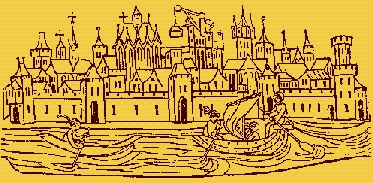
There once stood a forest in the middle of which many people claim to have seen an abandoned house, and in its environs were questionable gypsy-like beings. Tales told of a dwarf with a long beard and a huge black cat. When a woodsman tried to cut down a Tontla tree, it shrieked and bled.

Near Tontla, in a village, lived an unfortunate girl named Elsie . . .

“Hold on,” I say. “That first part sounded like a preamble. Fairy tales do not have preambles.”

“Quite right. Which is one of the reasons I should not like this story, but stay with me for a bit.” 

Near Tontla, in a village, lived an unfortunate girl named Elsie whose mother had died, and her stepmother hated her.

One day she picked strawberries with a group of village children when they realized they had wandered too close to Tontla and ran away, but not Elsie, who did not fear the wood.

She was approached by a young girl dressed all in silk, who asked Elsie to be her friend and playmate, taking her into the wood. To Elsie’s wonder, they came to a magnificent garden in the center of which sat a grand house built of glass and precious stones. The young girl, Kiisike, asked her mother if Elsie could stay.

“Both main characters have names? Will everyone have a name? That is a very Disney sort of thing to do, giving everyone names.”

“No, no, those are the only two, but I will agree, it is a little unusual.”

Elsie, in tears, explained her hardship to the mother, who promised to think on it and allowed the two girls to play together.

Kiisike, taking magical items out of a box, transformed the garden into the open sea, the two girls in a boat made from a mussel shell, surrounded by other boats with people laughing and singing. When called to supper, Kiisike transformed the sea back into the garden.

“Well, that is rather delightful,” I muse, drawing on my pipe.

Fairy Tale of the Month: September 2023 The Wood of Tontla – Part Two
H. J. Ford

Magical Devices

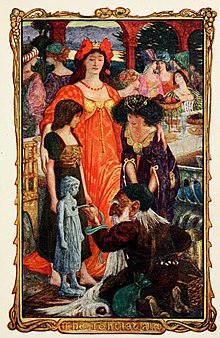
In the hall were twenty-four beautifully dressed women, plus the lady of the house, Kiisike’s mother, seated on a golden chair. They ate and talked softly in a language Elsie could not understand.

To Elsie’s joy, at the end of the meal, the lady of the house announced she wished to adopt Elsie, but a copy of Elsie must be sent back to the village. An old man with a long beard appeared and molded an image of Elsie in clay. Three salt herrings and a bit of bread were placed in the hollow body, along with a black snake and a drop of Elsie’s blood drawn by a golden needle.

The doll was placed in a case and, by morning, appeared to be alive. Dressed in Elsie’s old clothing, the doll was sent to the village to be, as the mother explained, beaten and abused by the stepmother, but it would feel no pain, being made of clay.

“I will guess that qualifies as a magical device,” I say, relighting my pipe. “I believe I ran across a similar doll in a Baba Yaga story. Oh yes, Vasilisa the Beautiful.”

“Hmmm.” Augustus frowns a little.

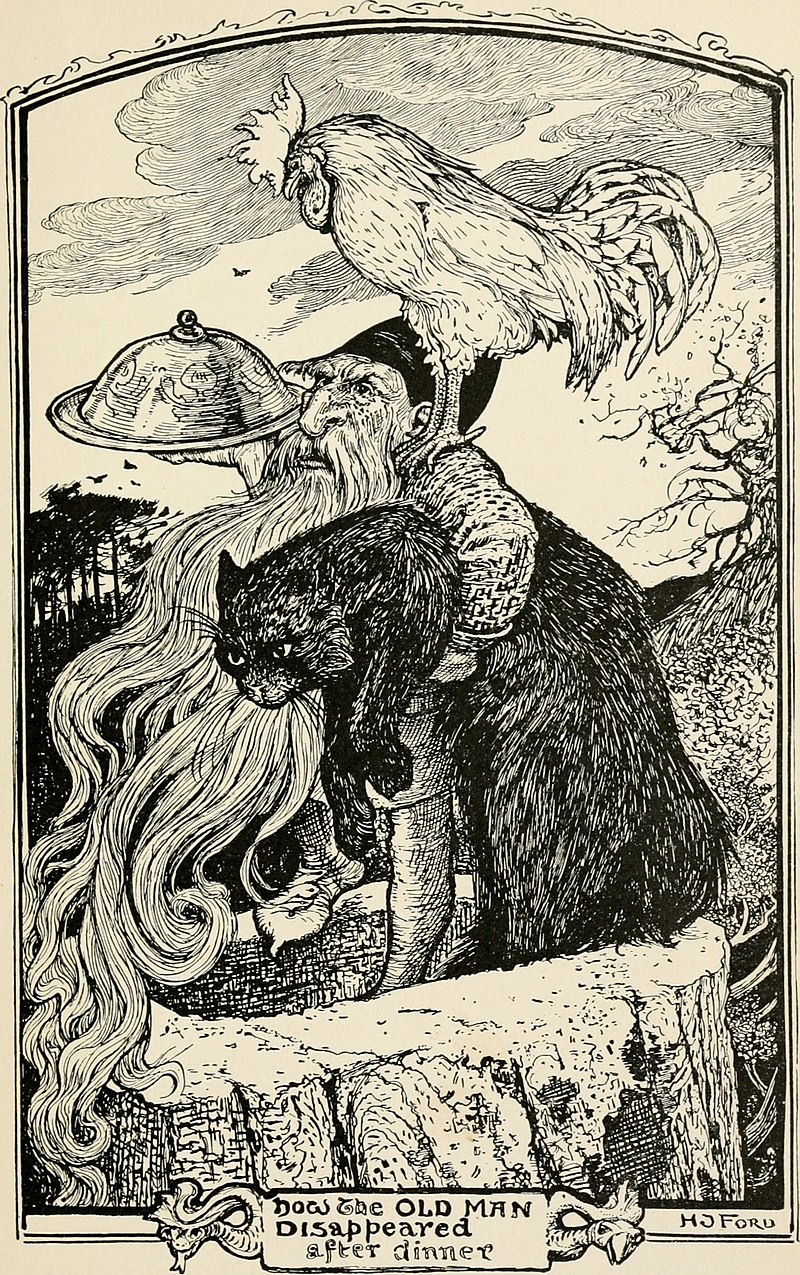
A rock of granite stood near the house. Every day, the old man with the long beard went to the rock, drew a silver wand, and struck the rock three times. A large golden cock sprang out and perched on the rock, flapping his wings and crowing. Out of the rock and into the house came a table and chairs, followed by one dish after another. When everybody had eaten enough, the old man knocked on the rock a second time with his silver wand. The golden cock crowed, and the bottles, dishes, plates, chairs, and table went back into the rock. But when the thirteenth dish came, from which nothing was eaten, a great black cat ran after it and sat on the rock with the cock. The old man took the dish in one hand, the cat under his arm, the golden cock on his shoulder, and disappeared with them under the rock. Not only food and drink, but everything else required for the household, even clothes, came out of the rock upon the crowing of the cock.

“OK, another magical device, but how extraordinary and complex,” I ponder.

Augustus glances at me warily, then blows a smoke ring.

One day Elsie asked why the thirteenth dish came to the table every day, although nobody ate anything from it. The lady of the house explained it was the dish of hidden blessing. They dare not touch it, or their happy life would come to an end. To not return anything in gratitude to the Heavenly Dispenser would be avarice.

“Ah! Here it comes.” I wave a finger in the air. “Elsie, human and sinner that she is, will not be satisfied until she samples the thirteenth dish!”

“Nope. Does not happen. How could you think that of our precious Elsie?” Augustus quips.

“No. Wait. Who collected this tale, and did they alter it like the Grimms did theirs?”

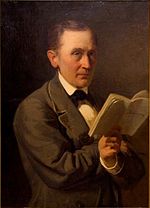
 “Dr. Friedrich Reinhold Kreutzwald. He was an Estonian writer, considered to be the father of Estonia’s national literature, and author of several moralistic folk books. So, yes, he put his mark on what he collected. Another reason for me to not like the story, but let me continue.”

Fairy Tale of the Month: September 2023 The Wood of Tontla – Part Three
Friedrich Kreutzwald by Johann Köler

The Departure

Nine years passed. Kiisike and Elsie were educated together by the governess. Elsie grew into a young lady, learned easily, and even learned their language. However, Kiisike preferred childish games and never grew any older.

With great sadness, the lady of the house informed Elsie that it was time for her to leave now that she was grown. Elsie pleaded, but to no avail. The lady told her that they—she, Kiisike, and the others—were beings of a higher order that Elsie could not comprehend. The lady consoled Elsie with the knowledge there was happiness in her future.

“Let me stop you here.” I feel my eyebrows frowning. “Are they fairies?”

“I’m thinking not,” Augustus returns. “The lady makes reference to their ‘Heavenly Dispenser.’ The fairies are fallen angels, not receiving aid from their former lord.”

“Are they then angels?”

“Again, I think not. They appear to be earthbound. A step below the angels, perhaps. Maybe an Estonian thing.”

The story shifted to the clay doll, again being beaten by the stepmother, when the stepmother’s rage overtook her, and she strangled the doll. Out of the doll’s mouth sprang the black snake, biting the woman’s tongue, and she fell dead.

After the wake was held for the deceased, the husband found the bread and three herrings on his table. He ate them and was dead by morning. The clay doll had disappeared.

“Wait again.” I puff on my pipe. “What did the husband do to deserve death?”

“He allowed the abuse and was culpable. Kreutzwald was strict in his morals. Now be quiet and let me finish,” Augustus glares.

Elsie spent one more night in her beloved home, and in the morning, the old man gently touched her head with his silver wand, and Elsie transformed into an eagle. For days, she flew southward until shot down by an arrow.

When Elsie awoke from her swoon, she was on the ground, in her human form, unharmed. In her company was a handsome prince—her soon-to-be husband—declaring that for half a year he had dreamt of finding her. This morning he shot an eagle and, while searching for it, found her.

On their wedding day, fifty loads of treasure arrived, a gift from Elsie’s foster mother. Elsie became queen and, in her old age, related her adventures. But no one has ever heard any more of the Wood of Tontla.

“It is certainly literary,” I say. “I never liked Anderson for that reason.”

“I agree, but the images of this story captured me.” He knocks the ashes out of his pipe.

“And here I will express another annoyance,” Augustus continues. “I first read Andrew Lang’s version, actually Lady Lang’s version, under the title A Tale of the Tontlawald in the Violet Fairy Book, which was inferior. Translations are always a problem. Let me make an example.”

Augustus rummages around on a desk in the corner of the room and comes up with the Violet Fairy Book.

“This is from the story’s preamble as translated by Mrs. Lang from a German version. ‘One old crone had a broad iron ladle in her hand, with which every now and then she stirred the fire, but the moment she touched the glowing ashes, the children rushed away, shrieking like night owls, and it was a long while before they ventured to steal back.’”

Augustus picked up a page of a computer printout. “I found this other version of the story on the Sacred Stories site, titled The Wood of Tontla. I could not find who translated it, but I suspect it came directly from the Estonian language.

“‘An old woman held a broad iron shovel in her hand, and every now and then scattered the red-hot cinders over the grass, when the children flew up into the air, fluttering about like owls in the rising smoke, and then sinking.’”

“Oh!” I say. “What a different image. I see your point.”

“How can I trust the Langs ever again, when through my own ignorance, I don’t know to spot a discrepancy? I caught it this time, but I could easily be seduced at another time.”

“And you like this tale, despite all your objections; for what reason?” I challenge.

Augustus pauses. “I think it is the images Kreutzwald creates in my mind that pull me in.”

Well, isn’t that what good literature and fairy tales do?

Your thoughts?
Fairy Tale of the Month: February 2020 The Three Kingdoms – Part One

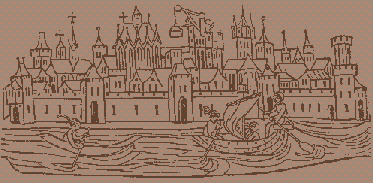
Three Kingdoms wood cut copper Copper Kingdom (woodcut)

Reading Aloud

I finish up the supper dishes and head down the hall. I hear Thalia’s voice drifting from the study.

Who could she be talking to?

Peeping around the study door, I see Thalia occupying my comfy chair, reading aloud. The fairy, her black hair floating in a static cloud around her head, is perched on Thalia’s shoulder. With a bit of a shock, I see that Thalia’s feet almost touch the floor.

My, but she is getting a bit gangly.

Cautiously, not to make too much noise, I add two logs to the fire in the hearth and peer over Thalia’s shoulder—not the one the fairy sits on—to see what she is reading to her miniature companion.

I recognize the book as my copy of Russian Fairy Tales, collected by Aleksandr Afanas’ev; the story title is The Three Kingdoms. I settle into my not-quite-so comfy chair to listen.

The parents of three brothers wish to get their sons married off. They send the eldest out to seek a bride. A three-headed dragon sets him a task to move a stone, declaring that when he fails the test, “There is no bride for you.”

The middle brother fails the same test, but the youngest, the Lazy Jack of the family, succeeds.

Under the stone is an opening to an underworld into which the dragon lowers him.

The youngest brother comes to a copper kingdom where a princess greets him and feeds him. He proposes marriage, but she counsels him to go on to the silver kingdom and gives him a silver ring. The same thing happens in the silver kingdom, and he is told to go on to the golden kingdom and he is given a golden ring. The princess at the golden kingdom agrees to marry him and he receives a golden ball.

They return through the silver and copper kingdoms, taking those princesses along with them. They come to the spot where he entered the underground world. There, above them are his brothers, come to look for him. They pull up the beautiful princesses, then decide to abandon their younger brother.

Wait, this is a Russian version of the Greek Underground Adventure!

Trapped in the underworld, he happens upon an inch-high man with a cubit-long beard, sitting in a tree, who tells him to find a little house in which lies a tall giant and ask him how to get back to Russia. The giant directs him to find the house of Baba Yaga, which stands on chicken legs. She tells him to go into the garden, take the keys from the sentry, go through the seven doors, climb onto the back of the eagle he finds there, and feed him meat as they fly back to Russia.

Yes, this is the tale that called to me and to Melissa at three in the morning. I must talk to her about this.

Unfortunately, he runs out of meat and the eagle takes a bite out of his shoulder. Then, and here I quote, “…dragged him out through the same hole to Russia.”

The youngest brother reclaims the Golden Princess from his brothers and they live happily ever after until this very day.

“Why did you choose this tale to read to the fairy?”

“Well, these are tales for fairies.”

“What?”

“Fairy tales,” Thalia answers.

“Oh, of course.”

The fairy glared at me with a superior expression, indicating I should have known that.

Perhaps I should have.

Fairy Tale of the Month: February 2020 The Three Kingdoms – Part Two

Three Kingdoms wood cut silver Silver Kingdom

What About

I am standing across the street from Serious Books, but even from here I can see through Melissa’s store window to her choice for the Book-of-the-Day display. Today’s choice is Russian Fairy Tales, identical to my copy.

As I enter the shop, Melissa is helping a customer but motions me toward the store’s reading room. In front of the sofa, on an occasional table, is a pot of tea wrapped in its cozy, and two teacups. She, apparently, expected me.

“You and I are being stalked by this tale,” Melissa declares when she settles beside me on the sofa. “You saw my choice for the Book of the Day? Why does it call us again?”

“I am guessing it wants us the make comparisons,” I say.

“Between The Three Kingdoms and The Underworld Adventure?” Melissa considers, then continues. “They are quite different in tone. Take the protagonist for example. In the Greek version, the hero is the eldest of the three brothers and does battle with a serpent to earn his way back. In the Russian version, the youngest and laziest brother is wined and dined as well as given presents by the princesses. The Greek hero is worthy; the Russian hero—well—not heroic.”

“The tales’ thoughtless treatment of women is the same,” I suggest.

“That they are. In both cases, the three women are the prize and where the brothers have their falling-out. I couldn’t help noticing, a number the Russian tales in this book were critical of women in general, such as in The Bad Wife, The Stubborn Wife, and The Mayoress.

“What about that three-headed dragon?” I interject, to keep Melissa from going down her favorite rabbit hole.

“Yes, unusual. Dragons are fairly rare in the Grimm fairy tales but thoroughly populate the Slavic tales. In any case, their role is to whisk away beautiful maidens, usually a princess. These tales are all heir apparent to Saint George and the Dragon.

“To have a dragon, no less a three-headed one, as a magical helper, potentially facilitating a marriage, is out of character for the scaly beast.”

“However,” I say, “as a device to start off the story, I like it better than its Greek counterpart. The dragon poses a challenge, to roll away the stone that conceals the underworld entrance. In the Greek tale, three brothers hear about women at the bottom of a well and they go to see what they can see; kind of offhanded for an inciting incident.”

“I will grant you that.” Melissa pours out our tea. “It will get cold soon.” She takes a sip before saying, “But after that odd opening, the Greek version makes more sense than the Russian. The eldest is give two nuts containing dresses that he uses to reclaim his bride at the end of the story. Our lazy Russian youth, as he goes from the copper kingdom, to the silver, to the gold, is given a silver ring, a gold ring, and a golden ball, all of which totally disappear from the story and serve no purpose.”

“Oh, but wait,” I protest. “I always like the progression through the copper realm, be it a kingdom, castle, or forest, followed by a silver one and ending in a golden or diamond place.”

“A little overused for my taste,” Melissa frowns. “But I get the attraction. As like as not, these copper/silver/gold castles or trees are part of the underworld and connote an image of the unnatural and strange.”

Fairy Tale of the Month: February 2020 The Three Kingdoms – Part Three

Three Kingdoms wood cut gold Gold Kingdom

Unnatural Images

“Speaking of unnatural images,” I say, draining my teacup, “when our Russian youth is abandoned by his brothers, he first comes across an inch-high old man with a cubit-long beard. Now, little old men with long beards are common enough, but this fellow is extreme.”

Melissa gives me a laughing smile. “I’ll suppose that has to do with the Russians’ bent toward exaggeration, which carries over into the tall giant lying in a small house.”

“He bothers me, too,” I say. “I am haunted by the notion that I have heard of him before.”

“Well,” Melissa reflects, “there are sleeping giants, like the Russian Svyatogor, and giants who are too big to live in houses, like the Welsh Bran, but I have not come across a tall giant in a small house before.”

I pour myself more tea. “Then those two visits are followed by a visit to Baba Yaga and her house on chicken legs.”

“Certainly unnatural but rather familiar to fairy-tale readers.” Melissa nods.

“Wait.” I put my teacup down. “I discern a pattern. I remember you describing The Underworld Adventure as being in three acts, the descent, the return, and the reclaiming of the bride. Here I see two acts that mirror each other.”

“How’s that?” Melissa peers into the teapot to see if there is more.

“In act one, after the dragon has lowered him into the underworld, each princess sends the youth on to the next kingdom. In each kingdom he is fed, receives a gift, and asks for marriage; all rather genteel and orderly.

“In act two, after he is abandoned by his brothers, he stumbles about, encountering rather frightening beings. The first one sends him to the second one, and the second one sends him to the third one, following the same pattern as the princesses.

“In act one, after the golden princess agrees to marry him, he retraces his steps, collecting the other princesses in his progress, returning to the underworld entrance.

“In act two, he is on the back of an eagle, feeding it meat until he runs out, at which point the eagle takes a chunk out of him; a pretty messy retreat.

“In other words, act one is sedate and orderly, act two, while the action is constructed in a similar manner, is full of disorder and danger.”

Melissa temples her fingers together. “About that bite the eagle takes out of his shoulder—the wording of the story is, ‘. . . dragged him out through the same hole to Russia.’ Which hole? The one just created in the youth’s shoulder or the same hole as at the start of the story?”

“Yes, I know,” I say. “That stopped me too. I wonder if we are being misled by translation. There is what the original teller intended, what the collector of the tale heard, and how that was translated into English.

“I feel having the youth dragged through the hole in his own shoulder is a little too surreal even for the Russians.”

Melissa smiles sadly. “I knew a Russian once. Actually, I married him. I wouldn’t put it past them.”

I’m not going to pry.

Your thoughts?


Fairy Tale of the Month: December 2012 Vasilisa the Beautiful – Part One

bilibinbabawhite Ivan Bilibin

Edge of the Forest

The forest before me is dark, darker than the twilight surrounding me. Really, it is too cold to be out here, but I have on my heavy fur coat and there is the warmth of the pipe I am smoking.

Vasilisa the Beautiful entered this forest, not of her own will, but not without good advice.

Although the daughter of a well-to-do merchant, she became the victim of a stepmother with two preferred daughters. A small wooden doll, given to Vasilisa by her mother, as she lay on her deathbed, protects the girl from harm. Vasilisa, heeding her mother’s instructions, feeds the doll food and drink, reciting, “There, my little doll, take it. Eat a little, and drink a little, and listen to my grief.” The doll’s eyes shine; it comes to life, eats, drinks, then gives Vasilisa advice and aid.

The stepmother’s cruelty finds its greatest expression when Vasilisa is sent to the home of the witch Baba Yaga for light when their own home falls into darkness. On her way to Baba Yaga’s  hut, she sees a man all in white on a white horse and a man all in red on a red horse. Standing before Baba Yaga’s home, she sees a man all in black on a black horse. Baba Yaga comes on a great wind, riding a mortar propelled by rowing the pestle.

Baba Yaga takes Vasilisa within the fence of human bones lined with skulls, to her hut, which moves around on chicken legs. Baba Yaga gives the girl impossible tasks to perform the next day—or be eaten for supper. With the aid of the wooden doll, the tasks are accomplished for two days.

The witch then encourages the girl to ask questions. Vasilisa asks about the three riders. Baba Yaga replies they are her servants, the day, the sun, and the night, but had Vasilisa asked about things inside of the hut she would have eaten her.

Baba Yaga then asked a question of her own. How was it that the girl could complete the tasks given her? Afraid to tell the witch about the wooden doll, she replies, “The blessing of my dead mother helps me.”

Not being fond of blessed children, Baba Yaga kicks the girl out, throwing a skull with flaming eyes after her as payment for her work. Carrying the skull at the end of a stick to light her way, she returns home. Upon entering the house the skull’s eyes burn brighter, incinerating the step-relatives.

The story does not end here. Vasilisa moves in with a kindly old woman, and takes to weaving flax into linen with such craft that the fine linen eventually attracts the attention of the tsar, who, upon meeting Vasilisa the Beautiful, marries her.

Vasilisa entered the forest and returned with power and wisdom she did not have before. Baba Yaga’s home is not merely the hut of a witch. Its boney fence, the profusion of skulls, and its resident’s desire to eat children, all speak of a realm of the dead. Yet, from there Baba Yaga flies forth daily with her mortar and pestle, along with the white rider and the red rider. In the evening she returns with the black rider, suggesting there are cosmic forces at work.

To such places we vicariously follow our heroes and heroines. We crept along with the old soldier as he stole behind the twelve dancing princesses into the underworld with groves of silver, gold, and diamond trees. Likewise, we traveled with the rosemary maiden when she sought out the sun, moon, and wind to help her reclaim her husband.  Did we not trail after the youngest daughter as she rode on the back of the white bear slouching its way toward a great mountain?

I stand at the edge of the forest as the last of the day’s light fades, and startle the night with my match as I relight my pipe, then turn my back to the wood and my eyes toward home. I will not enter the forest. I might not return. I suspect only children have the courage, born of naivety and lack of cynicism, to enter.


Fairy Tales of the Month: December 2012 Vasilisa the Beautiful – Part Two

bilibinbabayaga Ivan Bilibin

Visit With a Friend

When I got to Miss Cox’s garden, my friend Alexander Afanasyev, all bundled up in a coat, scarf, and cap, sat on the wrought iron bench waiting for me. Over time I have come to realize that all of the 19th century folklorists are comfortable in Miss Cox’s garden, despite the weather. They will always agree to meet me here.

I feel sorry for Alexander. He died at age 45 (1871). Tuberculosis, he told me. I knew things had gone badly for him toward the end. He kept himself alive by selling off his library. Tsarist Russia was never kind to commoners, especially those with socialist leanings.  Alex fell afoul of its authoritarian censors more than once.

His claim to fame remains his eight volumes of Russian folktales, plus other volumes, one meant for children and another not meant for children that was published anonymously in Switzerland.

“Alex,” I said. “What can you tell me of Baba Yaga?”

“Ah, she is either the witch of all witches or not a witch at all. The ‘Baba’ part of her name means ‘grandmother’ or ‘old woman.’ The ’Yaga’ part, I believe, is connected with the Sanskrit word for ‘snake.’ Another good translation might be the word ‘horror.’ Besides being unusually ugly, she is known for eating children.”

“She appears in a number of stories, not just Vasilisa the Beautiful. Common to these stories is her flying in a steel mortar, navigating with the pestle, and covering her tracks with a broom. A fence of human bones surrounds Baba Yaga’s hut, with skulls on top of the pickets. At night the eye sockets glow, giving off an eerie light. In some stories there is room on the fence for one more skull. The gate has a lock made of jaw bones that opens and closes with a spell.

“The hut stands on chicken legs, the door turned away from visitors. One needs to get it to turn around by saying, ‘Little house, little house, Stand the way thy mother placed thee, Turn thy back to the forest and thy face to me!’ Inside the hut are disembodied hands that do the witch’s bidding. Baba Yaga always eats a supper large enough for a crowd, then falls asleep stretched out over her stove.”

I am listening to Alex, but also distracted by a firebird strutting around the garden like a peacock. It has come over to us and is pecking at Alex’s shoe.

“I did,” he continues, “collect one version in which there are three Baba Yaga sisters, all named Baba Yaga. What do you make of that?” Alex lifts an eyebrow.

I consider for a moment. “Brings to my mind the White Goddess, whom Robert Graves called the threefold muse.”

“Very good,” Alex nods at me.  “I concur. The pantheon of nature gods and goddesses are numerous with triads. As I said, Baba Yaga may not be a witch at all, but rather a reflection of an earlier mother goddess or goddesses.”

I return his nod, and reply to his point. “The day, sun, and night are at her service.”

“Exactly!”

The firebird startles and flaps away, losing a tail feather in its flight. I pick it up to admire it; an exquisite feather. I think I’ll give it to Thalia.

Fairy Tales of the Month: December 2012 Vasilisa the Beautiful – Part Three

bilibinbabalightIvan Bilibin

In Exchange

Joseph Campbell’s The Hero with a Thousand Faces, lays out the hero’s journey, the various stages the hero or heroine is likely to enter upon. In one stage the protagonist crosses the threshold into adventure after being called to do so. Or the protagonist may refuse the call initially, and later will labor through an ordeal to achieve the reward. Not every story will have every stage Campbell writes about. However, few fairy-tales do not have the meeting with the mentor. In Vladimir Propp’s list of fairy tale character roles the mentor is the magical helper and/or donor (of magical devices).

This mentor/donor/helper appears in many forms. In Snow White the seven dwarves fill this role, in Cinderella the fairy godmother,or in The Golden Bird the fox. The old woman in the wood helps the old soldier in The Twelve Dancing Princesses. The heroine in Sprig of Rosemary is helped by entities no less than the sun, moon, and wind.

In our story, Vasilisa the Beautiful, the helper is a wooden doll given to the heroine by her mother. Vasilisa gives the doll food and drink in exchange for advice and help.  The story makes it clear; Vasilisa would not survive without the doll.

Stepping back and taking a look at all of these magical helpers, putting aside that they are an expected part of the fairy-tale genre, let us ask, Why are they there? If we say they function to help the protagonist, then we need ask, Why do our heroes and heroines need help? As story structure goes, are not the magical helpers a cheat, a convenient answer to the way out of trouble? Why do we, the readers/listeners, want there to be magical helpers?

Perhaps the magical helpers are there because they carry a message that bears repeating. In our story, when Vasilisa faces her first hardship, the story does not say, “But Vasilisa had a magic wooden doll to give her advice.” Vasilisa was not born with the wooden doll in her pocket; she acquired it from her mother. The doll served as an extension of the mother’s wish to protect her daughter.

Further, there is an exchange. For the doll’s advice and aid, Vasilisa gives the doll food and drink. Food and drink in exchange for magical help is ever so prominent in these tales. When the heroine in The Three Forest Gnomes shares her meager crust of bread, she finds the strawberries she is seeking and departs with three other boons.

In The White Snake the hero receives help from magical creatures in exchange for having helped them. The old woman in the wood did not walk up to the soldier and tap him on the shoulder, saying, “Here, take this cloak of invisibility; you’re going to need it.” An exchange takes place between them before that happens.

We—living in a society—do not exist in a vacuum. We are constantly in a state of exchange with each other. Sometimes we exchange coins for an apple. Sometimes we exchange greetings over the phone. We might exchange a kiss, but we are always in a state of exchange.

The best exchanges are those that occur when we are helping each other. There is the message that bears repeating. That is the message we need to remember and, perhaps in those helpful moments, there is some magic.

Your Thoughts?

PS. Let me make a personal note. For me, the wooden doll is the creepiest magical helper. Dwarves, fairies, animals, old women—fine. A wooden doll that comes to life, eats, drinks, talks, works, then returns to its dormant state? Sounds like voodoo to me.