Fairy Tale of the Month: October 2012 The Queen Bee – Part One

Of Little Consequence

Thalia had me read The Queen Bee three times before she would climb from my lap and amble off to bed, clutching her battered book and dragging her teddy bear.

In The Queen Bee the two eldest sons of a king have wandered off, ending up as wastrels. Their younger, simpleton brother goes out, finds them, and they travel on together. The youngest brother forbids the two eldest from harming ants, ducks, and bees for their pleasure.

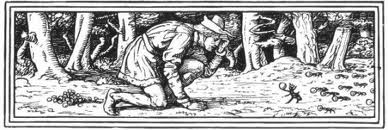
They come to a castle, the stable for which houses stone horses in its stalls. They explore the castle, finding it empty except for a mute gray dwarf. The dwarf shows them hospitality for the evening and, in the morning, presents to the eldest brother three tablets that describe three tasks to be performed. The eldest takes up the challenge, the first task of which is to find a thousand pearls scattered in the forest. He fails and is turned into stone. The second brother suffers the same fate.

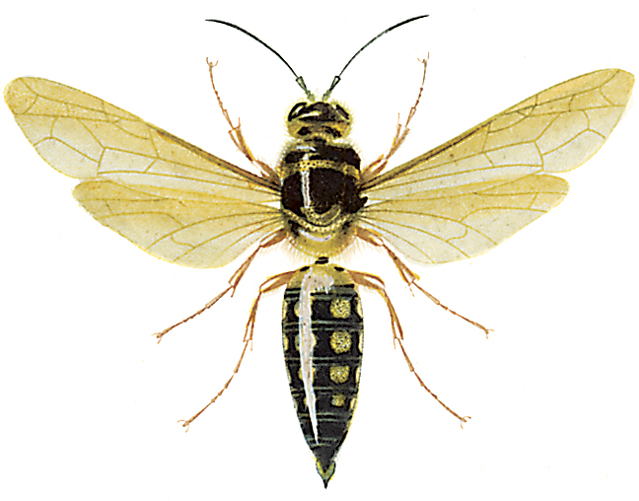
The third brother is helped by the creatures he spared. The ants gather the pearls, the ducks retrieve a key from the bottom of a lake, and a queen bee picks out the youngest sister from three sleeping princesses.

The spell is broken; the castle and its inhabitants return to life. Of course the youngest brother marries the youngest princess, they become king and queen, and the eldest two brothers are married off to the eldest two princesses.

“Again,” Thalia had said, upon returning to my study from her bedroom.

“I’ve read it three times.”

“I’m worried about the horses.”

“Oh! That part. I think I forgot to read that.” I reopened the book. “And when all the castle people returned to being themselves, including the stable boy, the horses nickered loudly for their grain. They hadn’t been fed in a long, long time.”

Satisfied, Thalia took back her book and, once again, toddled off with her teddy in tow.

Really, what about those stone horses?

It is one of the few descriptive details that the Grimms included in The Queen Bee, and certainly the most striking. What popped into my mind were the horses of the Wild Hunt in Tamlin:

O first let pass the black, lady,

And syne let pass the brown,

But quickly run to the milk-white steed,

Pu ye his rider down.

But certainly the horses of the Wild Hunt are not the stone horses.

Then there are the white horses with red ears seen by Childe Roland when he entered the fairy world and was obliged to cut off the head of the horse herder. These are not the stone horses either.

That the stone horses have a history, I have little doubt. Perhaps some teller, somewhere, at some time, could have made them up out of his or her imagination, but I am going to guess not.

My sense is that the old tellers were not out to surprise their listeners with something unusual and novel, but rather to present their audience with something familiar in new clothes. Often we find pieces of myth reflected in a fairy tale (A Sprig of Rosemary/Cupid and Psyche). Or a common spinning wheel becomes a device of magic (Sleeping Beauty).

One of the common crimes committed by modern-day storytellers and others who render these old tales for present consumption is to edit out elements no longer understood. How many twenty-first century children know about the duck in Hansel and Gretel, much less the cat and the pigeon on the roof?

I cannot say I know the significance of the stone horses, but when I tell that tale, or read it to Thalia, I leave in these immobile equine. Am I better off for facing my ignorance and passing it along, than to suppress those elements that cause us to wonder and question?

Fairy Tale of the Month: October 2012 The Queen Bee – Part Two
 Walter Crane


Perchance to Dream

The realm of the fairy tale and that place we go to when we dream may well be the same terrain. Those lands both share the feature of being surreal, always holding forth something inexplicable and unexplained to be treated as common fare within the illusion. The motif of the three sleeping princesses in The Queen Bee is one of those unexplained givens that populate the fairy tale.

In the Grimms’ Children’s and Household Tales we can find other sleeping princesses in the stories of Little Briar Rose, Snow White, and The Glass Coffin. The notion of the sleeping princess appears to be a borrowing from Germanic mythology. The Grimms boldly state in their notes that Briar Rose is the sleeping Brunhild of the Vőlsunga saga. There are various stories about the love between Brunhild and Sigurd, but common to them is Brunhild’s sleep within a ring of fire. Brunhild, one of the Valkyrie, offended Odin, who turned her into a mortal woman to be claimed by any man who could breach the magical flames. Only Sigurd had the strength and bravery to do so. Here was far too great an image to be left in the land of mythology. Storytellers quickly carried it off to the fairy-tale realm. (Content warning: this saga of love is mythological and therefore the romance ends badly, unlike fairy tales that, more than usually, end happily ever after, one of the defining differences between myths and fairy tales, as noted by Bruno Bettelheim.)

If I consider dreams and fairy tales as sharing the same ground, then how shall I view the three sleeping princesses, Briar Rose, or Snow White as they sleep within a dream?

The sleepers within the dream fall into a similar pattern. They are usually princesses for whom betrothal to a prince awaits them upon awakening. This sleep is not the property of commoners, although, in the case of the Grimms’ Little Briar Rose, everyone in the castle falls asleep, from the king to the kitchen boy; their sleep is conditional upon the princess’s sleep. In The Queen Bee it is implied that outside of the princesses all others are turned to stone, except their father, who is the gray dwarf. The Grimms’ Glass Coffin has a variation on the pattern in that the maiden is a daughter of a wealthy count, and the hero a tailor who rises in station with this marriage.

The sleeping-princess theme was popular with the Grimm brothers, but Giambattista Basile’sSun, Moon, and Talia and Charles Perrault’s Sleeping Beauty in the Wood, are both examples of sleeping princesses that predate the Grimms’ works.

Despite slight differences in the common theme, the tales feature the same progression from sleep, to awakening, then to marriage.

The subliminal fascination of the above stories is the magical nature of the repose of girls transforming into women. In what realms did they wander while we saw them as unsurpassed beauties in a death-like slumber?


Fairy Tales of the Month: October 2012 The Queen Bee – Part Three
 Walter Crane

Grateful Animals

There is an October rose in Miss Cox’s garden, one solitary bloom that has not given up on summer although the calendar marches toward winter. Today it was visited by one lone bee. A worker bee of course, but it turned my mind again to The Queen Bee.

I have found the queen bee in a second Grimm tale, The Two Travelers, and in another German tale, Rosemaiden (found in The  Seven Swabians and Other German Folktales.) In these tales she did heavy duty, making a castle of flowers in one story and a miniature castle of bee’s wax in the other, in each case fulfilling a young hero’s task. In The Queen Bee she needed only pick out the youngest of the identical three sisters. In all cases she was most helpful, taking her place among “The Grateful Animals,” which is Aarne-Thompson tale type 554.

These creatures are among the supernatural helpers so prolific in fairy tales. The grateful animals typically appear in sets of three who repay the hero for a kindness shown to them. In our fairy tale of the month they are ants, ducks, and bees, perhaps representing earth (ants), water (ducks), and air (bees). In The Two Travelers the supernatural helpers are a foal, a stork, a duck, and the queen bee (one more helper than the usual pattern allows).

Interestingly, in Rosemaiden the queen bee helps the hero at the beginning of the story entirely out of kindness. Later a raven, a fox, and a fish help the hero, as promised for having saved them in their moment of need.

Often there is only one helpful animal, as in Puss in Boots, where a young man’s inheritance from his father is a cat. The cat speaks to the lad, asking for a pair of boots and a bag, and goes about turning virtually nothing into great wealth for his master. The detail I find most interesting in Puss in Boots is the pair of boots that gives the cat almost human status, allowing him to be presentable to a king.

Another example of a sole animal helper is The Golden Bird. In this tale a fox inexhaustibly aids a foolish young man to win a princess. For his reward he asks the young man to slay him. Reluctantly the youth does, transforming the fox back into his human form, he having been a victim of enchantment. Along this line I could also cite The Frog King, in which the helpful but also annoying frog is actually an enchanted king.

All of these types of helpful and/or grateful animals are largely a European thing. Many other cultures are far less inclined toward talking animals. An animal talking to other animals is fine, but an animal talking to humans can be uncomfortable for non-Europeans. This kind of communication elevates them to human status, much like putting boots on a cat. Talking animals that are actually enchanted humans might be more acceptable, but, generally, talking animals are viewed as unnatural and offensive. At one time Alice in Wonderland was banned in China, largely because Alice conferred with dodos, mice, and mockturtles.

Curious to some other cultures is our willingness to elevate creatures to human status when we are as likely to eat, hunt, swat, or step upon them. What does that say about us?

The lone bee that flew about the October rose has come to settle on the sleeve of my coat. I wait for it to say something profound.

Your thoughts?
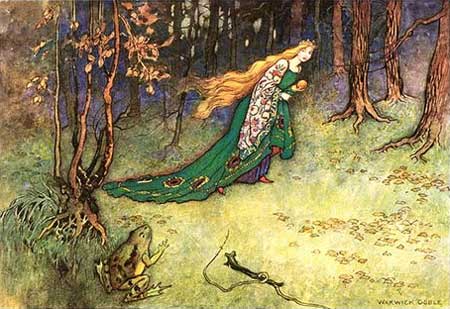
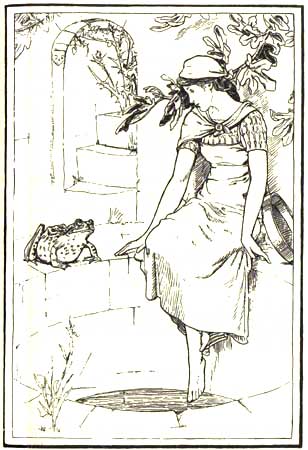
Fairy Tale of the Month: August 2012 The Frog King, or Iron Heinrich – Part One

  Warwick Goble

A Kiss

I had been lounging in my study long enough for my evening cup of Lapsang Souchong to grow cold, when my granddaughter, Thalia, wandered in, the edges of her flannel nightgown dragging on the floor, and her battered copy of Favorite Grimm Tales in her hand.

“Read?” she said, with a hint of demand in her voice. I happily obliged. As she settled contentedly in my lap, I opened her book to the first story, “The Frog King, or Iron Heinrich.” After the first few sentences I remembered the story, although I recalled the title as “The Princess and the Frog.”

The story unfolded again, just as it did for me so many years ago. The princess cries by the well into which her golden ball has fallen. Up rises the frog to bargain with the helpless girl. For promises of kindness he dives down into the depths of the well to recover the ball. Thoughtlessly, the princess runs back to the castle, leaving the frog to his well.

I felt, again her agony and embarrassment when the frog intruded upon the castle, demanding entry. Her father, the king, with moral authority, made her fulfill her promises. The frog wheedled his way into eating off of her plate, drinking from her cup, and then to sleeping in her bedroom.

“She picked up the frog with two fingers,” I read to Thalia, “carried him to her room, and climbed into bed, but instead of laying him next to her, she threw him bang! against the wall. ‘Now you will leave me in peace, you ugly frog!’ ”

What! Where’s the kiss? I turned quickly to the title page. The words “Fractured Fairy Tales” did not appear anywhere. Surely this was a jest.

“Read!” This time Thalia was clearly demanding. I finished the story with an overwhelming sense of dissatisfaction (And where did this Heinrich guy—faithful servant to the frog, who wore iron bands around his heart—come from?)

Unperturbed by this miscarriage of justice, Thalia gave me a kiss goodnight and swished her flannel way out of my study. I grabbed my Jack Zipes’ translation of the tales and turned to its first story. There to my disappointment stood the wall and no kiss.

After an evening of research (I didn’t get to bed until 3:00 a.m.—thanks Thalia), I uncovered the following facts.

The kiss appears in none of the older variants. When it first appears is not clear, but Maria Tatar implies that it is of American origin.

There are Scottish tales of this motif. “The Queen Who Sought a Drink from a Certain Well,” “The Paddo,” and “The Well of the World’s End.” The common element in these three is that the frog requests to have his head chopped off before transforming into a prince.

Another wonderful variant, from Germany, is “The Enchanted Frog,” which is also a variant of the “Beauty and the Beast” story. The merchant father with three daughters, whose youngest wishes only for a rose, picks a rose from a beast’s garden. The beast is an enormous frog, who demands the young daughter as payment. This Beauty is not as noble as other Beauties, and when the enormous frog’s servants come for her, they drag her kicking and screaming from under her bed where she tries to hide. The frog’s song lulls her and she allows him into her bed.

It is not until the English version of this story, taken from Grimm but altered by Edgar Taylor, that we have a kinder and gentler ending. It is not uncommon for twentieth century versions of fairy tales to have the violence edited out. Taylor’s book appeared in 1823, not ten years after the Grimms’ publication.

I went to sleep that night, to dreams fill with amphibious images, and awoke in the morning with this conviction. All these antique variants, reaching back to the Middle Ages, devoid of the kiss, have no standing with me. They are simply un-American.


Fairy Tale of the Month: August 2012 The Frog King, or Iron Heinrich -Part Two

 John Batten

Wellspring

I am sitting by a well. This might be in Wales. It could be in Scotland. I am not waiting for a frog to rise up from its depths. It’s not that sort of well. It’s a spring really. There is a stone wall built around it, but the water bubbles to the surface; I can see the bottom.

From where I sit meadowland slopes gently upward. By the well grows an ancient thorn tree covered in bits of rag tied to every branch. I know the meaning of these strips of cloth. They were left by visitors who came to partake of the healing powers of these waters. The rags are offerings, tokens, talismans, left behind as a plea to, and in honor of the spirit of the well. Rags hung in trees, or bent pins thrown into the water, serve to heal aches, sores, and malaise. The practice comes out of pagan beliefs, but most healing wells have been assigned a Christian saint and continue on with their healing nature.

The wells in fairy tales are of a different order. Fairy-tale wells are deeper.

There is a healing well in one of the Grimm stories, “The Water of Life,” in which the three sons of the king seek the well of the Water of Life to heal their father. The eldest sons fail in what the youngest achieves, finding the well in a mysterious castle with the aid of a magical helper. There are no bits of rag around this well.

In “The Queen Who Sought a Drink from a Certain Well,” the daughters are sent out, one by one, to the True Well to bring back healing water for their mother. The well’s guardian, the frog, wants them to marry him in return for the water, to which only the youngest agrees, then tries to avoid the bargain. The matter is settled when she cuts off his head and he transforms into a prince.

I am sure there are other stories with healing wells to be found, but more frequent are young ladies sent off on the impossible task of getting water in a sieve. “Well of the World’s End,” “The Maiden and the Frog,” and “The Horned Women” being three of these. The traditional solution to the problem of carrying water in a sieve is to stop the holes with mud and moss, an unusually practical answer in a world of magic.

Other more ominous wells include the one into which two children fell and were snatched up by a nixie. Then there is the dry well of a witch who abandons a poor solider there when he does not cooperate in retrieving her blue light. In one version of Tamlane, Burd Janet casts her lover, who is in the shape of a flaming sword, into a well, thus breaking the spell put upon him.

Only in our tale of “The Frog King, or Iron Heinrich,” does the golden ball appear, a mere toy, even if made of precious metal, which falls into a well. No sieve, no healing water, no high stakes. That this child, playing with a toy, is a day away from becoming a bride makes this story almost unsettling.

A glimmer of this golden ball appears in “The Three Heads of the Well.” As the maiden sits by the well three golden heads rise to the surface singing,

“Wash me, and comb me,

And lay me down softly.

And lay me on a bank to dry,

That I may look pretty,

When somebody passes by.”

She takes them into her lap, combs their hair with a silver comb, and lays them on a primrose bank. For these courtesies they grant her three boons.

I hope for a little luck myself. I cast a copper coin into the well and make my wish. It is the wish I always make, but one day it may come true.

Fairy Tale of the Month: August 2012 The Frog King, or Iron Heinrich – Part Three

Walter Crane

Iron Heinrich

Who is Heinrich, or more to the point, from whence does Heinrich come into the story, “The Frog King, or Iron Heinrich”?

The title would cast him as a central figure in the story, but this is not the case. After the princess has thrown the frog up against the wall, the creature transforms into a prince, who explains to her that in the morning he will take her away to his kingdom. At sunrise a team of eight white horses decorated with ostrich plumes and gold chains arrives drawing a coach. Riding on the back is Iron Heinrich, the young king’s faithful servant, who, we are told, when the prince was turned into a frog had three iron bands wrapped around his heart to keep it from falling apart with grief.

As they drive off to the prince’s castle, three times the prince hears a noise that causes him to think the carriage is breaking, and three times Heinrich tells him it is the bands of iron snapping as his heart swells with joy.

This add-on to the end of the tale has a pleasant ring, but hardly warrants being part of the title. Heinrich is an incidental character, having nothing to do with the inciting incident, the arc of the story, or its climax. Nor does Iron Heinrich appear in any of the other versions.

From whence does Iron Heinrich come? Out of Wilhelm’s head, and proudly he made it part of the title.

In the Grimms’ notes on this story, they cite a variation. A king, who is ill, asks his three daughters for a drink from his well. The eldest draws a glass, but finds it cloudy. A frog hops up, reciting,

“If thou wilt my sweetheart be,

Clear, clear water I’ll give to thee;

But if my love thou wilt not be,

I’ll make it as muddy as muddy can be.”

The two eldest sisters will not consent to the amorous frog, but the youngest does.

That evening the frog comes at her door.

“Open thy door, open thy door,

Princess, youngest princess!

Hast thou forgotten what thou didst say

When I sat by the well this very day,

That thou wouldst my sweetheart be,

If clear, clear water I gave to thee?”

She keeps her promise and on the morning of the third night the spell over the frog is broken.

The Grimms’ notes then refer to a third version in which the prince departs, leaving with his betrothed a handkerchief with his name written in red. If the name turns black, he is either dead or unfaithful.

When the name turns black, she and her sisters disguise themselves as soldiers and join his army. They end up riding behind the prince’s coach when he is about to marry a false bride. The prince hears a noise and declares there is a problem with the carriage. The true bride tells him it is the sound of her heartstrings breaking. On the third sound he finally recognizes her despite her disguise and marries his true bride.

Wilhelm may have gotten the character of Heinrich from the sixteenth century writer, Georg Rollenhagen and his Old German Household Tales. The Grimms’ notes are cryptic and confusing on this point. I can’t find an English translation of Rollenhagen’s work, but the tale appears to be about a war between the frog and mouse kingdoms.

Do my suspicions about Wilhelm messing with the story matter? Not much. Perhaps I am on the trail of one of the changes made to this story, but what about the kiss? Who changed that?

The Grimms liked to put snatches of rhyme into their stories. Let me put one into my blog.

“Stories keep changing, as stories will do.

It happens by chance; it happens on cue.

Somebody changed it; had to, you see.

It might have been Wilhelm; it could be me.”

Your thoughts?

Fairy Tale of the Month: Dec 2011 Sprig of Rosemary – Part One

William_Gorman_Wills-Ophelia_and_Laertes William Gorman Wills – Ophelia & Laertes

A story in Shadows 

            I walked into Wegmans one post-Halloween day to find Christmas attributes accumulated near the entrance (never mind Thanksgiving). Some of these items were little, live Christmas trees. Bonsai Christmas trees? No. Conically trimmed rosemary bushes. Talk about smelling good. I bought one, nursing it through the winter, and planting it in the spring. By summer I owned a dry, dead twig. It still smelled good.

            Although it proved an arboreal failure, I have ever since equated rosemary with Christmas.  To me, “The Sprig of Rosemary” is appropriate for my December entry.

            The tale is little known, included in Andrew Lang’s “The Pink Fairy Book”, and first appearing in “Cuentos Populars Catalans” by Dr. D. Francisco de S. Maspons y Labros. In the story, a maiden uproots a rosemary plant, evoking a handsome lord and revealing his underground palace. (Shades of Janet evoking Tam Lim in that old Scottish ballad.) It doesn’t take long for them to fall in love and get married. Upon receiving the keys to the palace, as its mistress, she is instructed to never open a particular small chest. (Shades of Pandora’s box from Greek myth.)

            Unavoidably, she opens the chest to find inside a snake’s skin. Immediately all disappears, leaving her standing in a meadow. (Shades of Lucius Apuleius’ “Cupid and Psyche.”) Breaking off a sprig of another rosemary bush, she becomes determined to find her husband.

            Before questing, she tarries at a house built of straw, becoming a servant to the mistress. The mistress gives her the advice to seek out the sun, moon, and wind, who travel far, see much, and may know where to find her husband. (Shades of the Russian epic, “The Lay of Igor’s Campaign,” in which Igor’s wife, Yaroslavna, calls upon the sun, the wind and the River Dneiper. Or Grimm’s “Seven Ravens,” although the sun and moon are pretty nasty.)

            The sun, moon, and wind cannot help her, but each gives her a nut to be opened in her greatest time of need. The wind, however, does her one better, going out to seek news of her husband and finding him, but bears the sad news that her lord, under a spell, is to be married the next day to an ugly princesses.

            Cracking open the nuts, out springs a mantle, petticoats, and a gown. (Shades of Grimm’s “All Fur”.) These she exchanges with the ugly princess for a visit with the bridegroom, her husband. Only after he smells her sprig of rosemary does he recognize her and declare her his wife, whom he loves. (Shades of the end of Grimm’s “Sweetheart Roland. Actually, the whole story bears shades of the Norwegian fairy tale, “Soria Moria Castle,” made famous by Peter Christen Asbjørnsen and Jørgen Moe, and appearing in translation in Lang’s “The Red Fairy Book.”)

            Between this story, the song refrain “parsley, sage, rosemary, and thyme”, and Ophelia’s mention of rosemary in her decent into madness in Shakespeare’s “Hamlet,” the herb has its own special place in the arts. In the art of herbology, the association of rosemary with memory goes back to the ancient Greeks

            The tale appeals to me because of its surreal nature: underground castles, the maiden seeking out celestial beings, magnificent clothes sprung from nuts. This is a dream world in which we follow the heroine through her travail. I fear I will wake up and forget the dream, forget the maiden as did her husband when their castle disappeared. Did the castle disappear or was it forgotten? May this herb preserve my memory. As Ophelia says, “There’s Rosemary, that’s for Remembrance. Pray you, love, remember.”

Fairy Tale of the Month: Dec 2011 Sprig of Rosemary – Part Two

 H. J. Ford

An amble

Take my hand and walk with me through Fairy Tale, down by the Sea of Stories. Look, a few of those stories rise up from the murky depths and wash ashore to our feet. Which ones are so chosen? Pick one up; I will tell you.

Ah, look, it’s “Cinderella.” Now, turn it over. What is there? “By Charles Perrault.” Why do we easily find this one, and not one of its hundreds of variants—really, hundreds—that remain in the depths out of sight?

In this world it’s the perfect ones that wash ashore—perfect because they are crafted. “The Sprig of Rosemary” I fished out of the murky waters. It is not perfect.

I see two blots on the story. In one of the inciting incidents, the heroine, determined to find out what lays in the box she has been warned not to open, finds that the key cannot work in the rust-stiffened lock. Undeterred, she breaks the lock. Inside she sees a snake’s skin. Immediately her world of wealth and her loving husband disappear.

I find this a striking, powerful image. The narrator then attempts to explain it all away. We are told that her husband, unknown to her, is a magician and wears the snake skin when he performs magic. All the internal evidence in the story is against this assertion. The lock is rusted, unused. When did he last perform magic? We already know that he is magical. He lives in an underground palace, for goodness sakes, but nowhere in the story does he perform magic. Rather, he falls under the magic spell of another character. Some magician!

Somewhere in the course of the telling someone felt the need to explain the inexplicable, thereby defusing the image’s power.

The second blot involves loss of consistency. When the heroine learns from the wind that her husband is to be married the next day, she pleads with the wind to delay the wedding for two or three days until she can travel to this distant kingdom. The wind agrees and rushes off to snatch the wedding dress away from the tailors and scatter its parts over the countryside. The King, furious, allows the tailors a few hours to come up with a new gown. Into this chaos arrives the heroine. What happened to the days of travel?

Perhaps the confused time lapse comes from a bad translation of the story out of Spanish, its original language. (Imagine “in the twinkling of an eye” being translated into another language as “He closed his eyes than opened them.”) Was Andrew Lang (the English collector of this tale) more of a folklorist than an author, reticent to make corrections? In any case, this tale bears few marks of skillful crafting.

May I craft this tale, make it perfect, throw it back into the surf, and see it if washes ashore somewhere else? Or has the time for crafting these tales passed? Are fairy tales the Latin of literature? Latin is the basis for the Romance languages, but is, itself, no longer spoken. Are the fairy tales a dead language, not longer allowed to evolve?


Fairy Tale of the Month: Dec 2011 Sprig of Rosemary – Part Three

 H. J. Ford

Oh Nuts!

Nuts constitute one of my reasons for covering this tale. What is with full garments springing out of nuts?

In “The Sprig of Rosemary” the maiden uses the three nuts given to her by the sun, moon, and wind in her greatest moment of need. Each contains a marvelous article of clothing: a mantle, petticoats, and a gown, which the maiden ultimately uses to regain her husband.

The sun’s gift is described as being in a nut, the moon’s gift in an almond, and the wind’s in a walnut. Why the sun’s gift is not in a specific type of nut may have to do with the lack of crafting in this story as it appears in Andrew Lang’s “Pink Fairy Book.” I will ignore that problem, and focus in largely on the walnut.

Looking at this story, all we can see is that the walnut holds the most important article—the gown. Looking at this story’s variants and other stories in which nuts appear, casts a brighter light, and longer shadow, on the role of the walnut in these tales.

In Grimm’s “The Two King’s Children,” we revisit the three garments used by the heroine to reclaim her bridegroom in the context of a far more complex story than “The Sprig of Rosemary.” In this story all three garments are in walnut shells.

In another Grimm story, “All Fur,” the princess, running away to avoid a forced marriage to her father, takes with her a number of magical items, one being three gowns associated with the sun, moon, and stars, which she packs in a nut shell.

In “Romeo and Juilet,” Mercutio describes Queen Mab—the midwife of dreams—as driving a chariot made out of an empty Hazelnut shell.

In “The Magic Egg and Other Tales from Ukraine” by Barbara J. Suwyn, I found a version of “Pea-Roll-Along” in which the antagonist’s soul is hidden in a walnut on the world tree, and he cannot be destroyed until the nut is found.

Certain images in fairy tales resonant with the listener: Cinderella’s glass slipper, Sleeping Beauty’s spinning wheel, Rapunzel’s golden hair. To a lesser degree, the walnut (and to the extent it represents nuts in general) is one of those imagines. Why this is so may be a hard nut to crack.

Immediately, two possibilities jumped to my mind. First is the secretive nature of the nut, with the edible heart hidden away inside the shell. We discover its secret by breaking into the inner sanctum. However, the content is pretty predictable. Why would the expectations of our fancy jump from finding an edible nut to some other sort of gift?

My second notion involves the brain-like shape of the nut, particularly the English walnut. It does look rather like a brain sitting inside a brainpan. Certainly the peasants, who butchered mammals and used every part of the mammal short of the sound they made, would have recognized the similarity. However, this line of thought leads to zombies, who simply are not part of the European fairy tale tradition. I will go not farther down that path. Something at the end of it might attack me.

I abandon both of my notions (after some prowling on the internet) in preference to the walnut purse. These were little drawstring bags made from covered walnut shells given as gifts in the time of Elizabeth I. By the 18th century, Limerick gloves, similar to kid gloves, being so sheer and delicate, were presented inside a walnut shell.  That the garments in our stories could also fit inside a walnut shell was a testament to the exquisite nature of these articles, and not so much a matter of magic. Well, good things come in small packages, do they not?

Your thoughts?


From the Hunt Museum collection, Limerick, Ireland.


 PS. While we old hippies think of “parsley, sage, rosemary, and thyme” as one of the lyrics in Simon and Garfunkel’s “Scarborough Fair,” the source is much older. Check out “The English and Scottish Popular Ballads, Volume 1” by Francis James Child, ballad #2 “The Elfin knight” version G. While this five volume work is highly scholastic, there is here a wealth of folkloric themes.

Fairy Tale of the Month: Oct. 2011 The Horned Women – Part One

 John D.  Batten

Dark Reflections

The medieval rituals of witches, as they have been recorded and passed down to us, are imitative of their Christian counterparts. One description of a witches’ coven is twelve women and a devil, a dark reflection of Jesus and his twelve apostles.

In “The Horned Women” we clearly have a witches’ coven. One Samhain evening, twelve witches (in one variant thirteen witches) make visitation on a hapless, good woman to occupy her home, where they go about the mundane tasks of carding, spinning and weaving wool. Having invaded the mistress’s home, they make the demand that she bake them a cake, and get the water needed from the spring with a sieve. After sending her off, the witches finish the cake with blood drawn from her family, putting it on the hearth to bake.

The spirit of the spring takes pity on the woman and instructs her in how to fool the witches into quitting her house, and then in how to bar them from entry. Water used to wash her children’s feet is poured over the threshold; the cake broken and placed in the mouths of her family; the cloth that the witches are weaving is placed half in and half out of a locked chest; and a crossbeam set against the door jambs. In this way she defeats the witches who, when they soon return, cannot reenter.

I can’t argue that there are strong correlations between the events in this story and Christian church rituals, but there are allusions that suggest such links.

Foot washing has ancient origins and carries on to the present. In the Christian tradition, it is a show of humility, practiced both by Roman Catholics and some Protestant sects. Christ famously washed the feet of his twelve apostles. In our story the mistress uses the water brought from the spring to wash the feet of her children (innocents) and pours it over the threshold as a talisman against the return of the twelve women.

The Eucharist speaks of the bread and wine of communion as the body and blood of Christ.  In “The Horned Women” the cake the witches bake conflates these two elements. The cake is broken and placed in the mouths of the mistress’s family members, restoring them to life.

The cloth that the witches were weaving the mistress puts into a chest, half in and half out, locking the lid on it. Perhaps this is only me, but my mind jumps to the Shroud of Turin, probably the most famous of the Christian relics, which is said to have covered Christ when he was laid in the tomb and yet, according to Christian belief, not consigned to the tomb.  The cloth that the witches made feels like the opposite of the Shroud. The Shroud of Turin is white and served a sacred purpose. In my imagination, the witches’ cloth is black and being made for some unnamed, nefarious use, in mockery of the Shroud.

I have gone too far in my assertions to stand on solid academic ground. Like the mistress’s sieve, they don’t hold water. However, in the untrained minds of the Irish peasants who listened to this story, I cannot help but wonder if they didn’t make the same loose associations that I have allowed myself. The distinction between the symbolic gestures of Christian ceremony and the shamanistic magic of peasant superstition might not have been too clear for the first listeners who gathered around the peat fire while their shanachie told “The Horned Women.”


Fairy Tale of the Month: Oct. 2011 The Horned Women – Part Two

 John D.  Batten

Impossible tasks and spirit helpers

One of the mainstays of folk tales and fairy tales is the impossible task. Sometimes the task is the central thrust of the story, other times simply an obstacle as part of the storyline. In “The Horned Women” the impossible task is manifest in two ways: as an immediate problem and as a broader dilemma, both answered by the spirit of the spring.

Before I get started on the tasks, let me take a drink at the spring. In Celtic times numerous springs and wells throughout the British Isles and Ireland were held to have healing properties, be it for ears, eyes, nose and throat; or twisted limbs; or skin affliction. To assure a cure one needed only leave behind an offering to the resident spirit: a crutch no longer needed, a coin thrown into the water, a nail hammered into a sacred tree, or a rag tied to a bush. These springs and wells also could serve as an entry place to the fairy world.

As Celtic pagans converted to Christianity the spirits departed; springs and wells were assigned to saints, the water flowing from where the saint thrust his staff into the ground, or from the spot were a martyred saint fell. As Protestantism rose, the popularity of saints diminished in many areas and along with them the reputation of their springs and wells.  Be that as it may, a spring refreshes, even one dispirited. I take a drink and move along.

Carrying water in a sieve, as was required of the mistress in “The Horned Women,” I see as the classical impossible task. Shakespeare refers to it in “Much Ado About Nothing”, when Leonato says to Antonio, “I pray thee, cease thy counsel, which falls into mine ears as profitless as water in a sieve.”  There also is a Buddhist story of a master and a student contemplating the implications of water in a sieve. What our mistress held in her hand is a universal conundrum.

The spirit of the spring tells her to line the bottom of the sieve with yellow clay and moss, allowing the sieve to hold water. The solution is simple and uninteresting. Storywise, I find it a cheat, and, in the world of fairy tales and folklore, the usual, boring answer to the mistress’s problem. But, immediately, the spirit of the spring adds, “Return, and when thou comes to the north angle of the house, cry aloud three times and say, ‘The mountain of the Fenian women and the sky over it is all on fire.’” Here the spirit begins to address the mistress’s broader dilemma.

With these words in our thoughts, we enter into a complex world of images and inferences. Holding water in a sieve is the entry point into a world of subtle and layered strata of magic. Although arcane and inexplicable, the advice the spring gives the mistress guides her through impending missteps, coaching her to drive out beings that would use her for their own diabolical ends.

Within this dark tale of evil manipulation emerges a heroine, who throws off the usurpers, over comes the impossible task by adhering to mystical injunction, and reclaims her rightful place. Might we take some encouragement from such a cautionary tale, each finding our own spring and our own life-giving sources, as we face those who would usurp our energies for themselves?

Fairy Tale of the Month: Oct. 2011 The Horned Women – Part Three

 The Many Horns

The most striking feature of “The Horned Women” is, of course, the horns. I don’t recall encountering horned witches in folklore before this tale. Horns are usually reserved to accentuate masculine prowess, but this does not appear to be the case. As to the symbolism, meaning, purpose and origin of the witches’ horns—I haven’t a clue.

The first reference I know of to this tale appears in John O’Donovan, The Tribes and Territories of Ancient Ossory, (Dublin, 1853).The version in this work pre-dates 1851, collected by James Fogarty from the peasants of Ivewrk. This suggests the story is of folk origins and not from a literary tradition where we could expect fanciful elements to creep into the storyline.

There is a recognizable pattern. The first witch identifies herself as “the witch with one horn”. The second witch has two horns, the third has three, and so on, up to a witch with twelve or thirteen horns depending on the version.  Nothing in the story indicates that the horns create any kind of ranking among the witches; the one with the most horns is not spoken of as their leader. There seems to be no functional purpose for the horns growing on their heads.

Medusa comes to my mind, because of the similarity of the image, but those are snakes coming out of her head. There are plenty of horned gods, but no horned goddesses.

Cuckoldry can involve horns, but they are placed on the heads of the deluded husbands.  A devil, who has horns as a mark of his virility, is a member of the witches’ coven.However, I am not sensing any sexual allusions to the witches’ horns. Nor are the witches of an animal nature. They are doing the women’s work of carding, spinning and weaving wool, which comes from sheep, and the rams have horns, but I see no reason to make connections between witches and rams.

Enough. I feel I have adequately demonstrated my cluelessness. (I don’t think that is a word, but it is my condition.) Your thoughts?

Fairy Tale of the Month: June 2011 The Three Little Men in the Wood – Part One

 Edmund Dulac

Water

One of the charms of fairy tales is their reminder of pagan thought. These reminders are vital if fairies, ogres and genies are to survive into the modern day. If we forget them, they will disappear. What then would become of the gnome that haunts my study?

I know he’s there. Usually in the vicinity of my copy of Jack Zipes’s “The Complete Fairy Tales of the Brothers Grimm”, wherever it may be setting. He pops out of sight the moment I look up. I can almost believe he is not real.

Pagan allusions in fairy tales often refer to earth, wind, fire and water, as well as the sun, moon and stars. As Maria Tater says in “The Annotated Brothers Grimm”, “These cosmic forces are central to the fate of the hero, and they often shape the course of events in ways that escape our attention.” The cosmic force in “The Three Little Men in the Wood” is water.

The tale starts with the future stepmother promising that the heroine will bathe in milk and drink wine while the stepsister will bathe in water and drink water; a situation that is soon reversed. Presently, water is poured into a boot to test the fates. The boot, despite a tiny hole in the sole, holds water.

Three times the stepmother tries to destroy the poor heroine. First she is driven out into the snow to search for strawberries, then forced out onto the frozen river to chop a hole in the ice and wash yarn, and finally flung from the castle window to fall into the river and drown.

In spirit form the girl returns to the castle as a duck swimming up the gutter drain. The villainous women meet their end inside a barrel rolled into the river. It is not unusual in these tales, so filled with paganism, to end the story with a Christian gloss; in this story, a baptism.

Water is generally taken as a symbol for the source of life, fertility, and the feminine aspect. Given the preponderance of water images, I might feel safe calling this a female-centric story.

Forgive me now, as I jump off the deep end. Water or no water, It’s a male-controlled story. There is hardly a Grimm story that is not.

At the heart of this story, two female aspects battle for dominance. One of them, the heroine, always supplicant, has the support of the male aspect. The male characters in the story are enablers, or at worst, they take sides. Her father, although he makes a bad choice then disappears, (common fare in fairy tales) sets in motion the events that lead to her success. The three little men heap good fortune upon her and heap curses upon her stepsister. The King rescues her, and performs the acts to return her to life. The stepmother and daughter have no such support. What does the heroine bear for all this effort? A son.

In the Greek pantheon the goddesses had power and a role to play, for good or for ill.  In Irish legend, the competition between queen Medb and her husband Ailill led to the deaths of Ireland’s greatest heroes of the Ulster Cycle. By the time the monotheistic religions replace the pagan religions, God is male in aspect; there are no goddesses. Although pagan thought is reflected in fairy tales, the former higher status of the feminine is not to be found. Fairy tale women may be put on a pedestal, but it is the fairy tale men who put them there.

Fairy Tale of the Month: June 2011 The Three Little Men in the Wood – Part Two

 John B. Gruelle

Strange Details

I enjoy telling “The Three Little Men in the Wood” partly because bobbing around within the tale are a number of peculiar events. Leaving one’s fate to a leaky boot is one. Washing yarn in a frozen river is another. Sent to find strawberries in the snow? Simply impossible.

The event that caught me was the drowned heroine’s transformation into a duck, instead of descending into death. I hadn’t come across this idea before. The word “motif” floated to the surface. I dove in, to search it out.

A good reason to join the National Storytelling Network is to have access to the Greenwood Folklore & Folklife database. I floated my mouse over to “Advance Search”, entering the word “duck” as keyword. I paddled by the North American Indian duck dance (may have to get back to that one) and let the list divert me to “A Guide to Folktales in the English Language” by  D. L. Ashliman, landing upon his summary of “The Black and the White Bride”, also in Grimm. A list of related stories followed the article, with “The White Duck” (Russian) and “The Bushy Bride” (Norwegian) among them.

Let me here confess the spotty nature of my research. I haven’t read Grimm cover to cover, therefore, had not read “The Black and the White Bride”. Nor have I read Andrew Lang’s colored Fairy Books cover to cover, nor Francis Child’s five volumes of English and Scottish ballads, etc, etc. I dive in at random or to find a particular tale; then come back up for air.

While submerged in the Greenwood database, I saw a reference to the white duck in “Hansel and Gretel”. Never gasp under water. I came to the surface sputtering. One strange detail gained clarity.

In “The Three Little Men in the Wood” and similar variants, the young queen, after being drowned, returns as a duck in an attempt to care for her child. In “Hansel and Gretel”, the children are trying to find their way home after their ordeal, and are aided by a white duck that carries them across the lake that bars the way. Who is that duck other than the spiritual remains of their mother?

Everyone knows the story of “Hansel and Gretel”, but unless they read the Grimm version they will not know about the white duck. The grocery store versions of “Hansel and Gretel” routinely edit out the duck.

Let us admit, a duck can not carry a child across a lake. Unless there is something particularly charming about the image, there is no reason to keep it in the story. The spiritual mother helping her children on the last leg of their journey is lost.

Why?

We, as a society, don’t understand the language of fairy tales. We understand body language. We understand the language of our politicians, and how to read between their lines. We understand the language of sit-coms, and recognize the one-liner, knowing why it is there. We don’t understand the language of fairy tales, and why nonsense and impossibilities are not nonsensical nor impossible.

  1. Be kind to your web footed friends, for a duck may be somebody’s mother.


Fairy Tale of the Month: June 2011 The Three Little Men in the Wood – Part Three

Colored Memory

The Three Little Men in the Wood” contains a number of abiding images, the gentlest of them being the strawberries in the snow. This story, along with its Slovakian companion, “Strawberries in Winter”, are Cinderella variants, although I don’t know of any other Cinderella stories involving strawberries.

As an impossible task, it comes up in a number of stories, especially the farther north we search. The Norse goddess Frigga uses strawberries in which to hide the souls of dead infants, smuggling them into the afterlife. Connections were made in medieval times between this member of the rose family (really not a fruit) and the Virgin Mary, even though the strawberry is not mentioned in the Bible.

As an image, the contrast of a lush, red strawberry, a favorite spring treat, hidden under the cold, white, relentless snow of winter, evokes an immediate sense of magic and delight for most readers.

Not for me.

I am stopped by a color scheme that conceals its true nature. In Grimm’s ghastly tale “The Juniper Tree”, the childless wife, while standing under a juniper tree peeling an apple, cuts her finger. Drops of her blood fall onto the snow. Not being able to take her eyes from the sight, she declares, “Oh, if only I had a child as red as blood and as white as snow.” The granting of her wish leads to attempted abortion, decapitation, cannibalism and death by crushing.

My personal feeling about the pairing of red and white goes deeper. I grew up in an old, stone, Pennsylvania farmhouse. The thick stone walls allowed for an inner and outer door with room to stand between the two. The two doors and space cut down on drafts and conserved heat during the winter. The modern adaptation is an inner door with glass panes and an outer storm door.

Sometime after my mother’s death, I had a dream. I am standing in that space between the two doors. On the inside is my mother calmly talking to me. Outside, racing across the field, is a pack of white dogs with red ears. I know, as one knows things in dreams, they are coming for my mother. I am struggling to keep both doors shut, which, for reasons I can’t understand, proves difficult. As the dogs near, I manage to hold both closed, trapping myself in a sort of limbo.

Years later, when I became interested in folklore and mythology, I sat one evening on my living room couch reading Robert Graves’ “Three White Goddess”. He talked about the hounds of hell—white dogs with red ears. Since then I have often encountered white creatures with red ears from beyond the veil in Irish and English legends, but I know I had not run across them before that night.

Where does foreknowledge come from? Is racial memory coloring our storytelling? For me, red and white have diabolical undertones, even if they rest on innocent strawberries and the clean, cold snow.

Your thoughts?

Fairy Tale of the Month: Jan 2011 The Goose Girl – Part One

 Arthur Rackham

Growing Up

Good triumphs over evil. The fairy tales without this message are few. Many heroes and heroines achieve a new status because of their pure and simple, even excruciating, goodness. The Goose Girl falls into that category. What stands out in our tale is her fall from status because of her flaws, and those who try to aid her to become a whole person.

The Goose Girl, as a young princess, receives from her mother, the elderly queen, all the material aid that can be offered for the princess’ journey: a dowry (wealth), a serving maid (assistance), a horse (transportation), and most precious of all, a handkerchief with the three drops of blood – protection.

OK, the maid wasn’t of much assistance. Getting decent help remains a perennial problem. In our story she embodies evil.

The princess, in her state of immaturity, does not know how to deal with the usurping maid, who refuses to serve, then denies the princess the golden drinking cup. The princess, lowered to the state of an animal, drinks from the stream on all fours. When the princess, through carelessness, loses the handkerchief—her protection—she loses all of her possessions in a moment, including her clothing—her identity.  Given the apparent age of this tale we may be witnessing the original identity theft.

The elderly queen could give her daughter things, but not inner strength. This, the Goose Girl needed to develop herself, which she does under distress. With the last of her world wealth, a coin, she pays the hacker to hang the horse’s head in the dark gateway of the city. With this odd gesture the Goose Girl, for the first time in the tale, has acted, rather than been acted upon.

She is bullied by another usurper, Conrad the goose boy, who wants to steal her golden locks.  She draws upon her innate magical powers to raise a wind to carry off Conrad hat. This starts a series of events that restores the Goose Girl to her rightful status. It is the old king who recognizes her true nature after she has matured, and begun to assert herself.

Although the Goose Girl has to learn to grow up on her own, she has the aid, or at least the attempted aid, of her elders. Note the odd construction of this story. The elderly queen’s husband has died many years ago. That is an unnecessary detail, having nothing to do with the situation in progress. In the second half of the story we meet the old king. His son is not referred to as the prince, but rather as the young king. Two kings? Note also, there is no mention of a queen.

At one end of the story we have a widowed queen holding forth material possessions to her daughter, and an old king (no queen) providing spiritual recognition of who the Goose Girl has become at the other, with the heroine traveling between the two. The moon and the sun? Ying verse Yang? Might Siddhartha have traveled the same road?

Fairy Tale of the Month: Jan. 2011 The Goose Girl – Part Two

Severed Heads

The casual reader of fairy tales may be struck by their imaginative nature: enchanted sleeping women, a child playing with a golden ball (think about that for a moment, it’s not going to bounce), someone wearing glass slippers, and, of course, talking beasts. In theGoose Girl, her horse, Falada is no generic talking animal, rather he is a severed head who talks to her.

From where comes such a grotesque thought? Is the head there for shock value? Had some storyteller, in the forgotten past, gone a little too far with the imagination thing when it came to Falada?

Have you heard of the Mari Lywd? That horse’s skull annually paraded around on a stick in Wales? This old (as in pagan) New Year’s tradition involved a group of men and boys meandering from house to house in mummer’s fashion, one of their number being the Mari Lywd.  Covered in a white shroud, he held the stick with the skull attached above his head, usually with the jaw bone spring operated to bite people. A “sergeant” accompanied the Mari Lywd, along with other Punch and Judy like characters, and at each house they would sing a song, then address the occupants of the home in rhyme, not unlike Falada when he spoke to the Goose Girl.

Incidentally, the Mari Lywd and company, though begging for food and drink, were quick to insult those inside if the occupants did not bring forth the expected treats. In this scenario the occupants felt obliged to return the insults, also in rhyme. It was considered bad form for the Mari Lywd to break down the door, however…

Have you come across, “The Three Heads of the Well”? This is a tale I know from Joseph Jacobs’, “English Fairy Tales”. In this, a young princess is pushed out into the wide world by an evil step-mother queen, then through acts of kindness, she is given a wand and instructions to approach a magical well. Up from the well’s depths floats three golden heads, whom she takes from the water and grooms. The salient point for me is that the heads talk to the princess in rhyme.

Did you know that the ancient Celts had a propensity for heads? During battle they hung the heads of their enemies around their horse’s neck. Important heads would be preserved, sometimes decorated with gold.

Forgive me as I get carried away with these tenuous links that I have been boldly making, and point your attention to the similarity between “The Three Heads of the Well” and “The Princess and the Frog”. One has a golden ball falling into a well, and the other has three golden heads bobbing to the surface. Not the same thing… but… sort of… similar?

Returning to my severed heads theme, I will let you look into “Sir Gawain and the Green Knight” and the legend of St. Denis yourself. Suffice it to say—more heads.

Had some storyteller, in the forgotten past, gone a little too far with the imagination thing when it came to Falada? I say no. The talking heads were ready and waiting to speak to us. Why make this stuff up?


Fairy Tale of the Month: Jan. 2011 The Goose Girl – Part Three

 Arthur Rackham

Royalty and Magic

Implicit in The Goose Girl is the idea that royalty have magical powers. We usually think of magic as the province of witches and warlocks, but that royalty posses it as well gives fairy tale listeners no pause. Let me argue it should. In what other literature are kings, queens, princes and princesses given supernatural powers? None come to my mind.

The Goose Girl provides us with three drops of on a handkerchief that cry out, “If your mother only knew it would break her heart in two.” There is a talking horse, whom we don’t hear until its severed head hangs in the dark gateway of the city. It also recites, “If your mother only knew it would break her heart in two.” The princess/goose girl harries her companion, Conrad, by raising a wind to blow his hat away. Toward the end of the tale she uses the talismanic power of iron to protect her when she crawls into a stove to confess her woes. (Oddly similar to a catholic confessional, with the King listening at the stove pipe.) And all this without a witch in sight.

Why did fairy tale tellers and listeners of these tales grace royalty with these powers? It has to do with assumptions.

Consider the time of the Goose Girl’s origins. A variant can be traced back to the Carolingian myth (9th century) of Bertha, the betrothed wife of Pepin, who is supplanted by her waiting-maid. The assumption at that time, among the peasantry, who gave these fairy tales life, was that royalty were born superior. Not lucky to be born that way, but ordained, by God, to be that way. The distinction between god, religion, and magic among the illiterate peasantry could have used some refinement. Remember the services were conducted in Latin, and meant to awe, not instruct.

There is a vein of wishful thinking expressed in some fairy tales with the motif of the commoner who gets to marry a princess and become a king. Two examples: “The Queen Bee”, and “The White Snake”. In both tales the hero does not set out to achieve that goal, and does not succeed on his own merit. He becomes a king through the aid of magical (note magical) helpers who reward him for excruciating goodness.

That royalty are not super-human is (historically) a new thought for us. It is not until the “Age of Reason” that chinks appear in the royal amour. The French Revolution can be seen as the water shed between absolute monarchy and constitutional rule. Still, it would take most of the 19th century for the assumption to be that we are who we are because of our socio-economic condition, and not the condition of our birth. Previously, royalty were born to be above commoners, their rule ordained by God. Why shouldn’t they be able to raise a meager wind to blow away a commoner’s hat?

Your thoughts? 


Fairy Tale of the Month: Dec. 2010 Rapunzel – Part One

 Kay Nielsen

Beneath the surface.

In many versions of Rapunzel our heroine is taken by the witch and locked up in a tower, a description that circumvents an important element. In the Grimm version Dame Gothel promises to care for the unborn Rapunzel as if she were her own. Rapunzel grows up to be the loveliest child on earth. At the age of twelve, let me repeat this, at the age of twelve, Dame Gothel locks her in a tower. In psychological terms, our story is about the often repeated struggle between an emerging youth and their protective guardian.

We can re-cast this story from Dame Gothel’s point of view, though, in story terms, it is not a satisfying tale. Dame Gothel discovers someone has stolen produce from her garden. The next night the brazen thief returns to do more damage. Upon capture he reveals he has a wife driven by cravings. Conjecturing that this man of questionable moral value, and his addiction driven wife may not make ideal parents, Dame Gothel shows a kind of mercy by proposing trade of produce in exchange for a child. The man agrees and it is not recorded that his wife protested. All goes apparent well for the first eleven years as Rapunzel grows to be a beautiful child.

Historically, the onset of puberty has affected parental blood pressure. Dame Gothel attempts to shelter Rapunzel from the world and all its ills, resulting in Rapunzel betraying the witch. Dame Gothel flies into a regrettable rage at her daughter’s guilt ridden Freudian slip. Rapunzel thoughtlessly compared Dame Gothel’s weight with the Prince’s.  As in many family conflicts it does not end well. Dame Gothel sends Rapunzel away and washes her hands of the affair.

Let me support my three-little-pigs-from-the-wolf’s-point-of-view approach with internal evidence. These Grimm stories were clear on one of their moral messages. Evil must be punished. In Hansel and Gretal the witch must be shoved into the oven and burnt alive for the story to work. Dame Gothel receives no such punishment, because she has done no evil. Her punishments are harsh, but harsh is no problem for the Grimms. They were German.

If this story ended here it would be a cautionary tale. What follows is a period of growth and maturity as both the prince and Rapunzel learn to take care of themselves through travail, she raising infants in poverty and he wandering in blindness. Not until then can they come together and have a successful relationship do we come to a satisfying ending. This ending carries a life lesson with it; stage directions for the acts pre-adolescents will soon play out.

What of Dame Gothel. I have called her a witch. The Grimms referred to her as an ‘enchantress’. The name Dame Gothel is generic in German for ‘godmother’. Rapunzel, the character and the story, come to a happy end. Not so Dame Gothel. For fourteen years she shepherd her daughter, to be overthrown by a youth. Might this not be a story of loss?


Fairy Tale of the Month: Dec 2010 Rapunzel – Part Two

 Walter Crane

Rapunzel the plant

Rampion, a salad green craved by Rapunzel’s mother that led to the inciting incident of our tale, is little known to modern audiences. It is a bitter green with edible roots popular at the time of the Grimms, but now fallen out of favor in an age dominated by high fructose corn syrup.

The Rampion is key toward understanding this tale. An alternate name for Rampion is Rapunzel. The 19th century listener would have gotten the pun. The Rampion plant puts out a stalk (tower), which, because the Rampion is self-fertilizing, may split, causing tendrils (hair) to curl down toward its base.

I am not going to take up space here to substantiate this next claim, but will leave it to your imagination how many times modern re-tellers of this tale have edited out the unfamiliar Rampion, and replaced it with a common head of lettuce, which begs the question, “How many times has this sort of thing happen?”, which I am also not going to delve into, largely because I really don’t want to speculate on what has been lost, and, besides, this sentence has gone on far too long.

Another, somewhat unsettling, comparison can be made between Rapunzel and the Virgin Mary. The Virgin Mary appears as a character in a number of the Grimm tales such as “the Virgin Mary’s Child” and “The Blessed Virgin’s Little Glass”. In the Rapunzel tale, given the Rampion connection, she appears again, indirectly.

The Virgin Mary is engaged to Joseph, but before the marriage can be concluded she is with child through the agency of the Holy Spirit. In our tale, the prince vowed to marry Rapunzel, but before they are wed she bares two children, a boy and a girl, through, by implication, self-fertilization—without sin. Both women bore their children in poor and dire circumstances. What this parallel achieves is harder to define, other than to put Rapunzel in favorable company.

What is easier to see is that this story is about procreation/propagation and seasonal repetition. Rapunzel’s mother is looking from a high small window into a walled garden. Rapunzel’s father has to climb up the high garden wall to get the Rampion (Rapunzel). Rapunzel finds herself standing at a small window looking out. The Prince has to climb a high wall to get his Rapunzel. Near the start of the story is the birth of Rapunzel. Near the end of the story is the birth of Rapunzel’s children. When I tell this tale I stress the passing cycles of the year.

The Grimm Brothers ultimately missed these points, or were willing to abandon them for modesty’s sake. The Grimms issued numerous editions of their fairy tale collection, and with each one they dropped questionable elements. After the first edition they changed Rapunzel complaining that her clothing were getting tight with remarking how Dame Gothel was harder to pull up than the prince. By the last edition the birth of Rapunzel’s children is gone. Rampion would have been next.

Fairy Tale of the Month: Dec 2010 Rapunzel – Part Three

 Arthur Rackham

A tangled Story.

Rapunzel is on our minds this month, given Disney’s release of “Tangled”. Let me push beyond the mandatory cry of “They changed it!” and answer, “Of course they did.”

Here is one of the surprising features of fairy tales; they change. They always have. As they move through time and space they fit themselves into the surroundings they occupy.

Example: In the Grimm version of “Queen of the Tinkers” the princess, who refuses to marry the suitors her father suggests, is obliged to marry the King of the Tinkers, and does not get to be married to a real king until she relents in her haughty ways. To bend to social norms was the proper role for early 19th century women in the Austrian Empire.

In the contemporary Irish version, the princess doesn’t get to be married to a real king until she refuses to give up her Tinker King. In both cases the Tinker King is a real king, the reveal not coming until the end after the princess’s rightful nature is established. The story fits itself into its surroundings by adapting to that culture’s norms.

Let’s review Rapunzel as she travels through time and space from the 19th century Austrian Empire to the 21st century United States. In Grimm’s version, Rapunzel acts at the behest of Dame Gothel, and then of the prince. For her deceit, secretly preferring the prince over Dame Gothel and planning an escape, she is banished to a desert land where she conceives two children, and raises them in hardship and poverty.  She is not released until the blinded prince discovers her. His blindness cured by her tears, he then brings her out of her travail. This Rapunzel can not act directly for her own benefit.

Disney’s Rapunzel is trapped, but seizes an opportunity when it presents itself, and exercises much more control than her historic counterpart. Try to imagine Grimm’s Rapunzel clunking her uninvited guest on the head with a frying pan (the ‘frying pan’ motif also a modern add-on to the story). In short, she is a plucky female.  Our Disney’s Rapunzel is a more acceptable role model for current audiences than Grimm’s, despite her bent toward violence.

“Hold on.” You should say. “Disney is a big strong corporation, but does that give them the right to screw up a story?” The simple answer is “Yep.” In Grimm’s time it was the Roman Catholic Church that got to put a Christian gloss on this story (the earlier French version was much bawdier). In our time it’s a corporation that gets to tweak it.

Here’s my theory. The entity that gets to call the shots is the entity than can come to a consensus within itself.

In Grimm’s time that was the Roman Catholic Church. They had the coherent message. In our time there are many churches, with many messages, and despite the National Council of Churches (have you heard of them?) they do not have one voice. Our national government—well, the word coherent does not apply.  However, a corporation, or more correctly the corporate mind set, has the capacity to come to a consensus, assemble a message, and the wherewithal to get it out. I believe they call it branding. 

My personal turmoil with the above theory is that my right brain wants to rip out my tongue for having said it.

Your thought?