
Bird Songs
I’ve had a very pleasant evening with Duckworth. Nothing special. I proposed a meal, followed by our sitting in the study drinking espresso. Duckworth does love a good cup of espresso, and I always make an effort to provide the best. I only drink espresso when he visits. I like it well enough, but it is strong. I keep my machine for it in the walk-in closet on the third floor.
My third floor can be a little “wonky,” I like to say, but lately I have had no problems. Up the stairs I go to return the machine to its storage place.
Apparently, there are lessons I refuse to learn.
Opening the door to the walk-in closet, I find myself in Melissa’s bedroom. She is dozing in a stuffed chair beside her bed but startles awake at my entry. She pulls her night shift about her.
“What are you doing here? How did you . . . I locked up hours ago!”
“I am not here,” I say. “I’m in my attic.” I look behind me, through the door, to see my third-floor hallway.
Melissa glares at me until her countenance quickly softens. “Oh, no. It’s my fault. I’ve summoned you again. Sorry. I didn’t intend to.”
“Well,” I say, “I am sure my cursed attic has something to do with it.”
“Oh, please, have a seat.”
I take a chair with the espresso machine resting heavily on my lap. Melissa continues.
“I just read a variant of The Juniper Tree and decided to talk to you about it as I fell asleep, and now you are here.”
“Well then, what is the story that has brought me here?”
She holds up the book from her lap. “Folk and Fairy Tales from Denmark, volume two, collected by Evald Tang Kristensen and translated by Stephen Badman. This version is called The Little Bird’s Song.”
There was a husband and wife with a son named Hans. The mother died, and the husband remarried. By his second wife, he had a daughter. The new wife much preferred the girl over her stepson and was abusive toward him. His father did little to protect him.
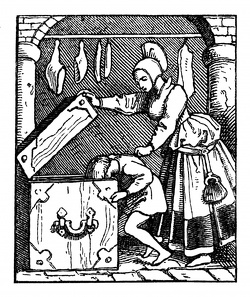
Events came to a head when the woman decided to dispose of Hans. When her husband was at the mill and Hans returned from school, she proposed treating Hans and her daughter, Berline. She took them to the attic, where there was a chest filled with apples. She gave one to Berline, who took her treasure back downstairs, and allowed Hans to choose an apple for himself. As he bent over the chest, she slammed down the lid, decapitating the boy.
She then set the body up, sitting in a chair by the stove, tied the head back on with a scarf, and placed an apple in his hand. In a short time, she sent Berline to ask Hans if he had finished his apple. The corpse, of course, did not answer. The mother sent Berline a second time and then a third, with the instruction to box his ears if he did not answer.
When his head fell to the floor, Berline thought she had killed her brother. Without pause, the wife cooked up Hans for the evening meal, turning him into a soup. Berline warned her father about what her mother had done, but he took no heed. During the repast, Berline sat under the table, crying, and collected the bones as they were thrown to the floor. These she put into a gilded chest.
Sometime later, she reopened the chest to gaze upon her brother’s remains. Out flew a lovely little bird, the prettiest she had ever seen. It flew off to sit on the roof of a goldsmith’s home and sang a morbid song about its previous life. Nonetheless, the song charmed the goldsmith, and the bird sang the song again in exchange for a string of pearls.
The next visit was to a blacksmith to sing for an axe. That was followed by a visit to a miller to acquire a millstone. The bird flew back to its home, perched on the roof, and sang its morbid song. Berline came out to see if it was her little bird. The bird dropped the pearl necklace down to her. When the mother came out to see what was going on, the bird chopped off her head with the axe. When the father came out to see what had happened to his wife, he was crushed by the millstone.
Berline kissed the little bird, and it turned back into Hans. They lived happily together ever after.
“Well,” I say, “that is different for The Juniper Tree. Different enough to be interesting.”
“My thoughts exactly,” Melissa replies.
Part Two
Let’s Compare
“The Juniper Tree has an interesting and particular history.” I feel a pontification coming on.
“Yes, it does, but please remind me,” Melissa says. “You just startled me out of sleep.”
“Right. I’ve been drinking espresso all evening with Duckworth. So I’m wide awake.” She’s given me free rein. “The Grimms were not field collectors of fairy tales. That science had not been invented when they wrote Kinder und Hausmärchen. Rather, they collected the tales from friends, family, and acquaintances. One of the acquaintances was Philipp Otto Runge, a German Romantic artist, something of a polymath, who died too young.
“He sent to the Grimms The Juniper Tree, and The Fisherman and His Wife. Runge’s ‘voice’ for his two stories is what Wilhelm adopted as the voice of the Grimm fairy tales. All the stories in Kinder und Hausmärchen were vigorously edited and reedited, even though the Grimms’ goal was to find the German folk voice. There was a nationalistic spirit driving their work, facing down the culture of the Holy Roman Empire.”
Melissa taps her finger on the cover of the book that lies again on her lap. “Let’s compare the stories side-by-side.”
“I’m game. How does the Danish version start?”
“By the end of the first paragraph, we know a husband and his wife had a child, Hans, but the wife dies, and the husband remarries. The second wife has a daughter with him, whom she dotes over, treating Hans badly.”
“Oh, my,” I say, “Runge’s version has quite an opening scene. One winter’s day, a rich man’s wife is peeling an apple under a juniper tree. She cuts her finger, and drops of blood fall onto the snow. She wishes for a child as red as blood and white as snow. The story follows her progression month by month, tracing her emotions that move from happiness to sadness. In the seventh month, she eats the juniper berries.”
“That,” Melissa says, “was considered an abortive drug at the time.”
“Correct. In the eighth month, she asks her husband to bury her under the juniper tree. In the ninth month, she gives birth to a boy as red as blood and as white as snow, then dies. The husband buries her beneath the tree as promised. The story does not give a name to the boy.
“He remarries and has a daughter by his second wife. The new wife has it in for the boy, just as in the Danish version, but a motive is given that the boy stood in the way of her daughter inheriting her husband’s wealth. The story suggests the devil is also at play.”
“Therefore,” Melissa temples her fingers, “what my tale covers in a paragraph is a couple of pages in the Grimms. Juniper is much more detailed and dramatic. Then we come to the chest of apples. On the surface, the events are the same or at least similar.
“The children are offered an apple, the boy loses his head—literally—the wife props up the body, ties the head back on with a scarf, the daughter knocks off his head (this is where we hear her name as Berline in the Danish version and Marlene in the Grimms), and the boy is cooked up and served to the father as the daughter, weeping, collects the bones.”
“Yes,” I say. “But we both know the circumstances are different. In the Grimms’ tale, the second wife acts out of evil impulse, inventing the crime as she goes along. In The Little Bird’s Song, the wife plots it out beforehand. However, it is in the Grimms’ version that she comes up with an excuse for the husband’s son not being at home. In the Danish, Berline warns her father about what has happened, but he does not seem to believe her and does not question.”
I raise a finger. “Marlene collects the bones in a silk neckerchief and puts them under the juniper tree.”
Melissa nods. “Berline collects the bones and puts them in a gilded chest.”
“Marlene watches as smoke and flame rise up, out of which flies a beautiful bird.”
“One day, Berline opens the gilded chest, and out flies a beautiful bird.”
“The bird flies off to a goldsmith.”
“Aren’t you uncomfortable with that espresso machine in your lap?”
I set it down on the floor.
Part Three
The Differences
“Where were we? Ah yes,” I say. “The beautiful bird flies off to a goldsmith’s house, perches on the roof, and sings his morbid little song.”
Melissa echoes, “The beautiful bird flies off to a goldsmith’s house, perches on the roof, and sings his morbid little song.”
“The bird sings his song a second time after the goldsmith promises him a golden chain.”
“This is an odd note in my version. The goldsmith gives the bird a pearl necklace, not a gold chain as in Runge’s tale. The illogic cries out to me.”
“Granted. My bird flies off to a shoemaker, landing on his roof. He brings out his whole family and all the servants to hear the bird sing after promising a pair of red shoes.”
Melissa knits her brow. “The bird flies off to a blacksmith to sing for an axe.”
“The bird then goes to a miller, whose twenty workmen are finishing a millstone. This, for repeating the song, is given to the bird, who wears it like a collar.”
“There are twenty workmen in the Danish version. That always struck me like a Greek chorus. My miller also gives the bird a millstone to wear like a collar.”
“The bird returns to his father’s house to settle in the juniper tree.”
“The bird returns to his father’s house to settle on the rooftop. There is no juniper tree in my version.”
“Here,” I say, “is where our stories diverge even more. The bird sings his song, which is heard by the household. Marlene begins weeping again. The mother is filled with horror. The clueless father falls into a blissful state. He goes out to see the beautiful bird, who drops the golden chain about his neck. He returns to the house, showing off his prize.
“The wife has fallen into madness. Marlene visits the bird to be given the red shoes. She, too, like her father, is filled with joy. The wife, in her madness, flees from the house. The bird drops the millstone upon her. The father and Marlene come back out of the house to see smoke and flames rising out of where the millstone has fallen and sunk into the earth. When all clears, there is the son, returned to life. Happily, they return to the house and eat.”
Melissa, again, taps her finger on her book. “The bird flies back to his father’s house, settles on the rooftop, and sings his song. Berline comes out, and he drops the pearl necklace down to her. The mother comes out and gets the axe, literally, perhaps a retaliatory beheading. The father comes out to see what has happened to his wife and receives the millstone on his head. The little bird flies down, and Berline kisses him, turning the bird back into her brother. They live happily together for the rest of their lives.”
Melissa and I pause to contemplate.
“Both end a little uncomfortably for me,” I conclude.
“Violently, certainly.” Melissa nods. “Another odd item: I recall Runge’s version starting out stating this story might be two thousand years old.”
I raise a finger. “I think Runge is making an historical reference, comparing his story to the curse of the House of Atreus.”
“My thinking as well. Here are more oddities. Why in my story are there apples in a chest in the attic? And why would a goldsmith be handling pearls? Runge’s story is much more consistent in these matters.”
I am back to pontificating. “Let me suggest that Runge, as a folklorist, is not to be trusted. He was an artist; he made sense out of the material he covered. Real folk material is full of inconsistencies and nonsense given its dream-based origins.”
I think that is a good point, but missed by Melissa, who has fallen asleep again. I pick up my espresso machine and quietly close the door.
Standing in the attic hallway, I open the door again. It is my walk-in closet. I return the machine to its shelf.
Will Melissa think this was all a dream?
I stop at the top of the stairs.
Are we all someone else’s dream? Might I be the imagination of some wacky author? That would explain a lot.
Your thoughts?

