
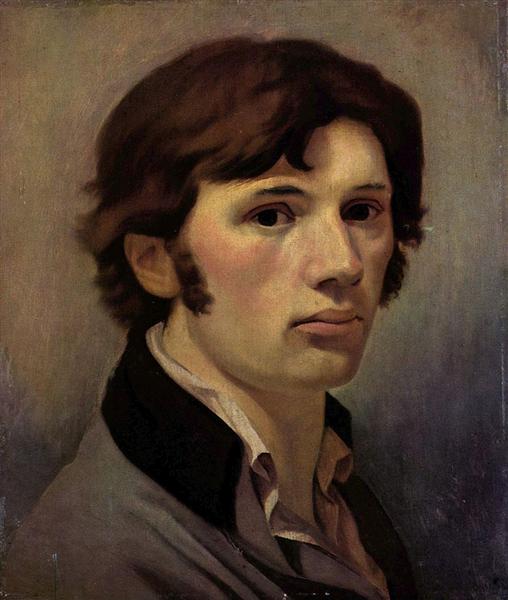
Philipp Otto Runge, who?
For those who also read my Fairy Tale of the Month blog, you know I talk about Philipp Otto Runge, not a household name (there is a pun buried in there). I have more to say about him.
Everyone knows about the Brothers Grimm.
Let me refine that statement. Are all the inhabitants of Indonesia interested in Western children’s literature? Perhaps not.
Everyone in our Western culture knows about the Brothers Grimm.
That is more likely, but are there still illiterates among us?
Every educated person in our Western culture knows about the Brothers Grimm.
Now I feel pretty safe, but do they know the first names of these two brothers? I’ll guess the percentage falls by about 50%. When we come to Philipp Otto Runge, I think the “everyone knows about” lands at about 1%.
I invite you to become a member of this exclusive 1% club with the following information.
Runge was an artist, draftsman, painter, writer, and color theorist regarded as a leading figure in the German Romantic Movement. His submission to the Brothers Grimm’s call for German folk fairy tales—The Juniper Tree and The Fisherman and His Wife—so affected Wilhelm that Runge’s style became the voice of the Grimm’s tales. However, he was known better for his paintings and portraits.
Born into a well-to-do shipbuilding family, the ninth of eleven children, he contracted pulmonary tuberculosis as a child and continued to be in frail health all his life. In his early twenties, he took up the career of an artist with his older brother’s support. He spent most of his adult years in Hamburg. He married, had four children, the last of which was born the day after Runge died at the age of thirty-three.
Runge, having a mystical, deeply Christian faith, conceived of a multimedia work of art before the word “multimedia” was current. The project bore the name “Times of the Day,” centered around four paintings to be housed in a chapel, accompanied by music and his own poetry. He hoped it would spark a new religious movement based on his notions of the harmony of the universe.
Some of his works are compared to those of William Blake. There is the suggestion that Runge served as an inspiration for the Art Nouveau Movement. In any event, his early death has denied us the full development of a genius.
You can find images of his works Here.

